
Fridays for Future facts for kids
Fridays for Future (FFF) is a worldwide movement where students skip school on Fridays. They do this to protest and ask grown-ups and leaders to take action against climate change. They want the world to switch from burning fossil fuels to using clean, renewable energy. This movement started in August 2018. A Swedish student named Greta Thunberg began protesting outside her country's parliament. She held a sign that said "School strike for the climate." Her actions quickly inspired students all over the world.
A huge global strike on March 15, 2019, brought together over one million students. They protested in 2,200 events across 125 countries. On May 24, 2019, a second global strike saw hundreds of thousands of students protest. These protests happened in 1,600 locations across 150 countries.
The 2019 Global Week for Future was a series of 4,500 strikes. These took place in over 150 countries, mainly on September 20 and September 27, 2019. These were likely the largest climate strikes ever. The September 20 strikes gathered about 4 million protesters, many of them schoolchildren. On September 27, an estimated two million people joined demonstrations worldwide.
Quick facts for kids Fridays for Future |
||
|---|---|---|
| Part of the climate movement | ||

Maximum number of school strikers per country:
1000
1000+
10000+
100000+
1000000+
|
||
| Date | Since 20 August 2018, mostly on Fridays, sometimes on Thursdays, Saturdays or Sundays | |
| Location |
International
|
|
| Caused by | Lack of action against global warming | |
| Goals | Climate justice | |
| Methods | Student strike | |
| Status | Active | |
| Parties to the civil conflict | ||
|
||
| Number | ||
|
4 million (for 20 September 2019) 2 million (for 27 September 2019) |
||
| Website | ||
.jpg)
Contents
- Early Student Climate Protests
- Greta Thunberg's Start in 2018
- The Movement Grows in 2019
- Global Climate Strike on March 15, 2019
- Second Global Climate Strike on May 24, 2019
- International Climate Strike in Aachen on June 21, 2019
- International Conference in Lausanne on August 5–9, 2019
- Global Week of Climate Action on September 20–27, 2019
- Fourth Global Climate Strike on November 29, 2019
- Later Events in the 2020s
- Digital Climate Strike
- Scientific Reasons for Action
- How Schools, Leaders, and Parents Reacted
- Awards and Recognition
- Images for kids
- See also
Early Student Climate Protests
Before Greta Thunberg, other young people also protested about climate change. In 2006, a group in Australia started organizing actions for youth. In 2010, students in England walked out of school for the climate. In 2015, students worldwide were invited to skip school during a big climate meeting in Paris. On November 30, 2015, over 50,000 people in more than 100 countries joined a "Climate strike." They asked for 100% clean energy, keeping fossil fuels in the ground, and helping people affected by climate change.
Greta Thunberg's Start in 2018


On August 20, 2018, Greta Thunberg, a student in Sweden, started her own protest. She was in ninth grade and decided not to go to school until the Swedish election. This was after her country experienced very hot weather and wildfires. Greta was inspired by students in Florida who organized a protest called "March for Our Lives." She sat outside the Swedish parliament every school day. Her sign said "School strike for climate." She demanded that the Swedish government reduce pollution that causes climate change. After the election, she decided to continue her strike every Friday. She wanted Sweden to follow the Paris Agreement, a global plan to fight climate change. Greta created the slogan "Fridays for Future." This idea quickly spread and inspired students around the world to join in.
Soon, students everywhere started organizing their own climate strikes. The first group strike happened in The Hague, Netherlands, in September 2018. In Australia, thousands of students also began striking on Fridays. They continued even when their Prime Minister asked them to focus more on school. By December 2018, strikes were happening in at least 270 cities. Students in many countries, like Germany, Canada, and the United States, joined the movement.
The Movement Grows in 2019


In 2019, the movement grew even bigger. More countries like Colombia, New Zealand, and Uganda joined in. In January 2019, over 45,000 students protested in Switzerland and Germany. They were upset about slow action on climate change. In some places, students also asked for the voting age to be lowered to 16. They wanted to have a say in elections about their future.
In August 2019, Greta Thunberg sailed across the Atlantic Ocean to New York City. She wanted to keep highlighting the urgent need to address the climate crisis. She joined school strikes in the United States on September 20. A few days later, she spoke at a big UN Climate Summit in New York City.
.jpg)

Students organized locally, using apps like WhatsApp and Slack to plan events. They spread their messages with flyers and social media. By February 2019, there were over 155 local groups in Germany and 134 in the United States. Many environmental groups also helped coordinate these efforts.
In Belgium, an environment minister resigned in February 2019. This happened after she wrongly claimed that the school strikes were not real.
In the United Kingdom, many experts showed their support. In February 2019, over 200 academics signed a letter backing the students. On February 15, about 15,000 students protested in more than 60 UK cities.

Scientists also spoke at these events, showing their support. In February 2019, a top European leader announced plans to spend a lot of money on fighting climate change. He made this announcement next to Greta Thunberg. Many believed the student strikes helped make this happen.
By March 2019, over 26,800 scientists from Germany, Austria, and Switzerland had signed statements supporting the student strikes.
In May 2019, student representatives met with European leaders. They gave them a letter signed by over 16,000 young climate activists.
Global Climate Strike on March 15, 2019
On March 15, 2019, a massive global climate strike happened. Over one million people protested in about 2,200 events. These strikes took place in 125 countries around the world. Students asked adults to take responsibility and stop climate change.
Before this strike, 150 students, including Greta Thunberg, wrote an open letter. They said they were very worried about their future. They felt that leaders were not doing enough to address the climate crisis. They declared that young people would keep fighting for fair climate solutions. They promised not to stop until leaders took action.
Some cities and schools supported the students. In Scotland, some city councils allowed children to attend the strikes. In Finland, some schools even said students had a right to participate.
On the day of the strike, Greta Thunberg and other student leaders wrote an article. They explained why they were striking. They said that learning about climate change and taking action was the most important lesson.
In Germany, over 300,000 students protested in 230 cities. Parents also formed groups to support them. In Italy, over 200,000 students joined. Large numbers also protested in cities like Montreal, Stockholm, Melbourne, and Brussels. Even scientists in Antarctica held a rally to show their support.
In New Zealand, the strikes were affected by a tragic event that day. For safety, the protest in Christchurch was cancelled. Strikes continued in other cities, though many students did not know about the events until later.
Second Global Climate Strike on May 24, 2019

On May 24, 2019, a second global climate strike took place. Hundreds of thousands of students protested in over 1,600 towns across at least 125 countries. This strike happened during the European Parliament election. Organizers hoped to show politicians that climate change was a very important issue. Polls showed that climate change was indeed a top concern for many voters.
International Climate Strike in Aachen on June 21, 2019
Fridays for Future Germany organized a large climate strike in Aachen on June 21, 2019. It was called "Climate justice without borders – United for a future." People from 17 countries were invited. Protesters gathered at different points in the city and marched through the streets. This caused traffic delays for hours. Organizers reported that 40,000 people attended, making it the largest single FFF strike in a German city at that time. Many speakers and artists joined the event.
Before this event, the city of Aachen had declared a "climate emergency."
International Conference in Lausanne on August 5–9, 2019
From August 5 to 9, 2019, the University of Lausanne in Switzerland hosted 450 young Europeans. This "SMILE for Future" conference brought together climate strike activists. The conference ended with a protest and a statement called the Lausanne Climate Declaration. This declaration shared the group's goals and ideas for fighting climate change.
Global Week of Climate Action on September 20–27, 2019

The September Global Week for Climate Action included many strikes and events. These took place from September 20 to 27, 2019. The main protests were on the two Fridays, September 20 and 27. These events were planned to happen around the 2019 UN Climate Action Summit on September 23. Protests were organized in 4,500 locations across 150 countries.
Organizers reported that over 4 million people joined the September 20 strikes worldwide. This included 1.4 million people in Germany and 300,000 in Australia. On September 27, an estimated two million people protested globally. Over one million were in Italy and hundreds of thousands in Canada.
Fourth Global Climate Strike on November 29, 2019
On November 29, 2019, another global climate strike took place. This was three days before a big United Nations Climate Change Conference (COP25) in Madrid. Demonstrations happened in 2,400 cities across 157 countries. They protested against governments not doing enough about the climate crisis. Organizers estimated 2 million people participated, with about 630,000 in Germany.
A week later, a large protest for COP25 happened in Madrid. About half a million people attended, including FFF activists from all over the world.
Later Events in the 2020s
Global Climate Strike on September 25, 2020
On September 25, 2020, a global climate strike took place. Strikes were planned in thousands of places around the world.
Global Climate Strike on March 19, 2021
On Friday, March 19, 2021, another global climate strike saw protests in hundreds of places. Due to the COVID-19 pandemic, fewer people gathered in person compared to previous years.
Global Climate Strike on September 24, 2021

On September 24, 2021, strikes were planned in over 1,400 locations globally. Protests were held in more than 90 countries, with big events in Europe, America, and Africa. Some of the largest demonstrations were in Germany. Greta Thunberg spoke to over 100,000 people in Berlin. She stated that "No political party is doing enough."
Global Climate Strike on March 25, 2022
On March 25, 2022, a global climate strike took place.
Global Climate Strike on September 23, 2022
On September 23, 2022, a global climate strike took place. More than 30,000 people participated in Berlin.

Global Climate Strike on March 3, 2023
On March 3, 2023, a global climate strike took place. In Germany, strikes were planned in over 240 locations. More than 18,000 people participated in Berlin. According to FFF Germany, over 220,000 people protested against German climate policies, especially in transportation.
In New Zealand, climate strikes were held in several cities and towns. These included Auckland, Wellington, Christchurch, and Dunedin.
Digital Climate Strike
The online climate strike movement, also called "digital strike," started in April 2019. It was created by two young climate activists, Iris Zhan and George Zhang, from the United States. This online way of striking made climate activism possible for those who could not protest in person. In March 2020, during the COVID-19 pandemic, Greta Thunberg encouraged people to protest from home. She suggested sitting with a sign and posting the picture online. This movement became very popular due to rules against large gatherings during the pandemic. Organizations like Greenpeace and Amnesty International noticed it.
Since it began, the Fridays for Future Digital movement has worked on campaigns to raise awareness. These include teaching about climate change in schools. They also work to protect indigenous climate activists from harmful government policies.
Scientific Reasons for Action

Burning large amounts of carbon dioxide and other greenhouse gases from human activities is making our planet warmer. This happens through the greenhouse effect. In the past, this effect kept Earth from being completely covered in ice. But since the industrial revolution, carbon dioxide in the air has increased. This causes more harmful global warming and climate change. The only ways to remove carbon dioxide from the air naturally are very slow. These include geological processes over hundreds of thousands of years or plant growth over centuries.
Many adults in power, like leaders of fossil fuel companies and governments, are seen as responsible for high carbon dioxide emissions. They are also seen as doing too little to reduce them. A statement from over 12,000 scientists in 2019 confirmed that "Young people's concerns are justified and supported by the best available science."
Support from Scientists

Many scientists have shown their support for the student strikes. On January 31, 2019, over 3,400 Belgian scientists signed a letter. It stated that "the campaigners are right" based on climate science facts. This was followed by similar letters in the Netherlands and Finland. An article in Nature in March 2019 noted widespread scientific support. Scientists called the climate strike "innovative" and "provocative."
In Germany, Austria, and Switzerland, scientists formed a group called Scientists for Future (S4F). They supported the facts presented by the movement. Over 26,000 German-speaking scientists and scholars signed their statement.
On March 14, 2019, the Club of Rome officially supported Greta Thunberg and the strikes. They urged governments worldwide to act and cut global carbon emissions.
In April 2019, a letter in Science magazine stated that the climate strikers' concerns were "justified and supported by the best available science." Over 3,000 scientists worldwide signed this letter.
In June 2019, 1,000 healthcare professionals in the UK and other places called for peaceful protests. They felt government policies on the ecological crisis were "woefully inadequate." They urged politicians and media to face the facts and take action. They supported the school strike movement.
In October 2020, FFF Germany released a report it had ordered. This report showed a possible way for Germany to become carbon neutral by 2035.
Fridays For Future International created an appeal supported by Scientist Rebellion and 61 scientists. This appeal connects peace, justice, and climate. It argues that solving the ecological crisis means ending overconsumption. This cannot happen while wars continue, as economic growth often fuels military power. Since climate change threatens everyone, the appeal promotes peace and justice as shared goals for all.
How Schools, Leaders, and Parents Reacted

Adults in positions of power have both praised and criticized the strikes. Some conservative politicians in the United Kingdom and Australia called the strikes "truancy." Some students faced consequences for striking. Then-UK Prime Minister Theresa May criticized the strikes for wasting school time. However, other UK political leaders, like Jeremy Corbyn, supported the strikes. David Reed, from Generation Change, said that students caring enough to act on climate change showed excellent education.
Australia's Prime Minister Scott Morrison asked for "more learning and less activism." Australia's Education Minister said students should protest after school or on weekends.
In New Zealand, politicians and schools had mixed reactions. Some principals threatened to mark students as absent without permission. Some Members of Parliament dismissed the strikes' impact. However, the Climate Change Minister, James Shaw, supported them. He noted that weekend protests would get less attention.

On March 15, 2019, UN Secretary-General António Guterres supported the strikers. He admitted that his generation had "failed to respond properly to the dramatic challenge of climate change." He invited world leaders to a UN summit in September 2019. He asked them to bring "concrete realistic plans" to improve their climate actions.
Many parents, including famous people, have supported the children's climate strikes. A spokesperson for "Our Kids' Climate" said that adults can help keep strikers safe. They suggested bringing signs that resonate with other parents. "Moms Clean Air Force" recommended contacting school officials, providing snacks, and standing in solidarity.
The Elders Climate Action group created T-shirts showing a grandparent and child holding hands. They aim to get grandparents and other older relatives involved. They want to protect the well-being of future generations.
"Climate strike" was named Collins Dictionary's 2019 word of the year. Dictionary experts noticed its use increased a hundredfold in 2019.
Awards and Recognition
On June 7, 2019, Fridays for Future and Greta Thunberg received Amnesty International's Ambassador of Conscience Award. Secretary General Kumi Naidoo said:
We are humbled and inspired by the determination with which youth activists across the world are challenging us all to confront the realities of the climate crisis. Every young person taking part in Fridays for Future embodies what it means to act on your conscience. They remind us that we are more powerful than we know and that we all have a role to play in protecting human rights against climate catastrophe.
Images for kids
-
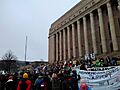
School Strike for Climate in front of the Parliament House, Helsinki, 15 March 2019
-

"Fridays for Future" 15 March Toronto
-
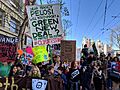
School strike in San Francisco on 15 March 2019
-
School strike in Cleveland on 15 March 2019
-
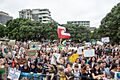
School strike for climate in Wellington on 15 March 2019


See also
 In Spanish: Fridays For Future para niños
- Climate justice
- Earth Strike
- Individual action on climate change
- List of school climate strikes
- Youth activism
