
Display (zoology) facts for kids
_RWD1.jpg)


Display is a special kind of animal behavior. It's how animals show off to others. This behavior helps them survive and keep their species going in many ways.
Contents
Why Do Animals Show Off?
Animal display is a way for animals to communicate without words. They use their bodies, sounds, or even smells to send messages. These messages are often about finding a mate, showing strength, or protecting their home.
Finding a Mate: Courtship Displays
Many animals perform special dances or show off their features to attract a partner. This is called a courtship display.
- Male birds often have bright feathers or sing loud songs.
- Some animals do fancy dances.
- These displays tell a potential mate that they are strong and healthy.
- The female chooses the best male based on his display.
Showing Strength: Armament Displays
Some animals have "weapons" like horns, antlers, or large teeth. They use these in displays to show how strong they are.
- Males might stand tall or make loud noises.
- They often face each other to show off their size.
- This helps them decide who is stronger without a real fight.
- The weaker animal usually backs down, avoiding injury.
Protecting Your Space: Territorial Displays
Animals need space for food, shelter, and raising their young. They use displays to tell other animals to stay away from their territory.
- A bird might sing loudly from a tree branch.
- A wolf might mark its area with scent.
- These displays warn intruders that the space is taken.
- It helps prevent fights over resources.
Examples of Display in Nature
Insects
Female praying mantises sometimes eat the males after mating. Because of this, male mantises are very careful when approaching a female. They move slowly and freeze if the female looks at them.
However, one type of mantis, Ephestiasula arnoena, has a special dance. Both males and females wave their front legs like boxers. This signal tells them both they are ready to mate.
Some flies, like those in the Megaselia group, have a unique twist. Here, the females are the ones who show off! They have bright orange colors and flutter their wings. This makes them look like they are "dancing" to attract a male. There is also evidence that the female may release special smells called pheromones. These smells are a chemical way to communicate and attract a male.
Fruit flies, such as A. suspensa, use sounds to find partners. Males flap their wings very fast. This creates "calling songs" and "pre-mating songs." These sounds help them communicate before they mate.
Bird Courtship
Birds commonly use displays for courtship and communication. Manakin birds in the Amazon are famous for their big shows. Male manakins perform amazing dances and displays to attract females. They don't offer food or help with nests. So, they must show how strong and healthy they are through their displays. Females watch these shows to pick the best mate. Their displays include special flights, showing off colorful feathers, and unique calls.
Mammal Displays
Along with invertebrates and birds, vertebrates like the harbour seal also show display behavior. Since the harbour seal lives in the water, its displays are a bit different from land animals. Male harbour seals make special sounds and perform diving actions. These displays signal to females that they are ready to mate.
Since seals live in many places, their displays can change slightly from one area to another. This helps them attract as many females as possible. Dive displays, head flicks, and various sounds all work together. This display behavior tells the females in a group that the males are ready to mate.
Images for kids
-

Many male birds have brightly colored plumage for display. This feather is from a male Indian peafowl Pavo cristatus.
-
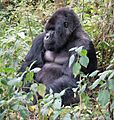
Male mountain gorilla
.jpg)

