
Findlay Farm facts for kids
Quick facts for kids |
|
|
Findlay Farm
|
|
 |
|

 Location in Pennsylvania

Location in the United States
|
|
| Location | 6801 Findlay Road near Lamasters, Peters Township, Pennsylvania |
|---|---|
| Area | 3.6 acres (1.5 ha) |
| Built | 1825-1830 |
| NRHP reference No. | 83002245 |
| Added to NRHP | April 21, 1983 |
Findlay Farm is a special old farm and home located in Peters Township, Pennsylvania. It's known for its history and unique buildings. The main house was built almost 200 years ago, between 1825 and 1830. This farm is important enough to be listed on the National Register of Historic Places, which means it's recognized as a significant historical site in the United States.
Contents
What is Findlay Farm?
Findlay Farm is a historic property that includes a large house and a barn. It covers about 3.6 acres of land. The farm gives us a peek into what life was like in Pennsylvania nearly two centuries ago. It's a great example of the architecture and farming practices from that time.
The Historic Farmhouse
The main house at Findlay Farm is quite impressive. It has two and a half stories and is made from rough limestone rocks. These rocks were likely found right on the property or nearby. The house has five sections on its front, which is called a "five-bay" design. It also has a pointed roof, known as a "gable roof."
In the early 1900s, a long porch was added to the front of the house. Imagine sitting on that porch, looking out at the fields, just like people did many years ago!
The Barn and Property
Besides the house, there's also a barn on the property. This barn was built in the 1800s and is made of wood. Barns were essential for farms, used to store crops, house animals, and keep tools safe. The barn at Findlay Farm shows us how important farming was to the area's history.
Who Was William Findlay?
Findlay Farm was once owned by a very important person named William Findlay. He lived from 1768 to 1856. William Findlay was a significant figure in Pennsylvania's history. He served as the Governor of Pennsylvania, which is like being the leader of the state. He also became a U.S. Senator, representing Pennsylvania in the national government in Washington, D.C. Even though he owned the farm, he sold it in 1823, a few years before the main house was built.
Why is Findlay Farm Historic?
Findlay Farm was officially added to the National Register of Historic Places on April 21, 1983. This listing means the property has special historical value. It helps protect the farm so future generations can learn about its past and the people who lived and worked there. It's a reminder of Pennsylvania's rich agricultural and political history.
-
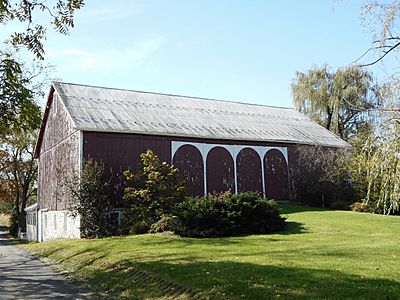
The historic barn at Findlay Farm.

