
National Register of Historic Places listings in Exeter, Rhode Island facts for kids
Exeter, Rhode Island, is a town with a rich history! Many of its old buildings, farms, and special places are listed on the National Register of Historic Places. This means they are important parts of American history and are protected so future generations can learn from them. These places help us understand what life was like long ago in Exeter.
Contents
Exploring Historic Places in Exeter, Rhode Island
Exeter has several fascinating places that are recognized for their historical importance. These sites include old farms, a historic church, and even ancient mill areas.
Austin Farm Road Agricultural Area

The Austin Farm Road Agricultural Area was added to the National Register of Historic Places on August 16, 1977. This area, located about 6 miles (10 km) west of Exeter, shows us what farming communities looked like in the past. It's a great example of how people lived and worked the land many years ago.
Baptist Church in Exeter

The Baptist Church in Exeter is a beautiful old church building. It was recognized as a historic place on November 21, 1978. You can find it north of Arcadia on Rhode Island Route 165. Churches like this often served as important centers for communities, not just for worship but also for social gatherings.
Lawton's Mill

Lawton's Mill, located on Ten Rod Road, became a Registered Historic Place on June 27, 1980. Mills were very important in the past because they helped process materials like grain or textiles. This mill tells us about the industrial history of Exeter and how goods were produced long ago.
Simon Lillibridge Farm

The Simon Lillibridge Farm, found on Summit Road, was added to the National Register on November 28, 1978. This farm gives us a glimpse into the agricultural life of early Exeter. Farms were the backbone of many communities, providing food and livelihoods for families.
Queen's Fort

Queen's Fort, located on Stony Lane, is a very old and special place. It was listed on the National Register on November 26, 1980. This site is believed to be an ancient Native American fort or settlement. It helps us understand the history of the indigenous people who lived in this area long before European settlers arrived. It's a reminder of the deep history of the land.
Historic Mill and Archeological Districts
Exeter is home to several "Historic and Archeological Districts" that tell the story of its early industries, especially mills. These areas often contain the remains of old buildings, foundations, and water systems that powered the mills. While their exact addresses are often restricted to protect the sites, they are important for understanding how Exeter grew.
- Fisherville Historic and Archeological District: Added on December 5, 1980, this district shows us where the Fisherville mill community once thrived.
- Hallville Historic and Archeological District: Also listed on December 5, 1980, this area preserves the history of the Hallville mill.
- Parris Brook Historic and Archeological District: Recognized on December 5, 1980, this district highlights another important mill site along Parris Brook.
- Sodom Mill Historic and Archeological District: This district, listed on November 24, 1980, is another example of Exeter's rich milling history.
These districts are like outdoor museums, showing us how people used water power to create goods and build communities many years ago. Archeologists study these sites to learn more about the past.
Images for kids
-
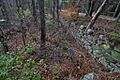
Remains of a mill foundation in the Fisherville Historic and Archeological District.
-
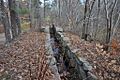
A head race, which directed water to power the mill, in the Hallville Historic and Archeological District.
-
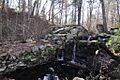
Remains of a mill structure in the Parris Brook Historic and Archeological District.


