
Bariaco facts for kids
Quick facts for kids Bariaco |
|
|---|---|
 |
|
 |
|
| Trichilia triacantha fruit | |
| Conservation status | |
Scientific classification  |
|
| Kingdom: | Plantae |
| Clade: | Tracheophytes |
| Clade: | Angiosperms |
| Clade: | Eudicots |
| Clade: | Rosids |
| Order: | Sapindales |
| Family: | Meliaceae |
| Genus: | Trichilia |
| Species: |
T. triacantha
|
| Binomial name | |
| Trichilia triacantha Urb.
|
|
| Script error: The function "autoWithCaption" does not exist. | |
Script error: No such module "Check for conflicting parameters".
The bariaco, also known as Trichilia triacantha, is a special plant found only in Puerto Rico. It's part of the Meliaceae family, which includes many trees and shrubs. Sadly, it's an endangered species in the United States, mainly because its home (habitat) is disappearing.
Contents
Meet the Bariaco Tree
The bariaco can be a large shrub or a small tree, growing up to 9 meters (about 30 feet) tall. Its leaves are tough and leathery, with spiny edges. Each leaf is made up of several smaller parts called leaflets. When it blooms, it has pretty white flowers. After the flowers, it grows a fruit that looks like a small capsule. Inside, the seeds are covered in a bright red, fleshy coating called an aril.
Where the Bariaco Lives
You can find the bariaco growing in dry forests, especially in areas with limestone rock. It often grows near streams that don't always have water, meaning they might dry up sometimes.
Why the Bariaco Needs Our Help
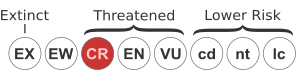
The bariaco is a critically endangered plant. This means it's at a very high risk of disappearing forever.
What Makes It Endangered?
One big reason the bariaco is in trouble is habitat loss. This happens when its natural home is destroyed, often because of human activities like building or farming. Another problem is that people have harvested too much of its wood. The wood is useful and looks nice, but this has led to fewer bariaco plants in the wild.
How Many Bariaco Are Left?
In 2007, scientists counted only 109 bariaco plants in total. These plants were spread across 10 different groups, or "populations." Out of these, only 47 plants were able to produce seeds and new plants. Six of these populations were found inside the Guánica National Forest. Sadly, two of these groups had only one plant each, located far from other bariaco. This makes it very hard for them to reproduce and make more plants.
