
Catapyrgus sororius facts for kids
Quick facts for kids Catapyrgus sororius |
|
|---|---|
| Conservation status | |
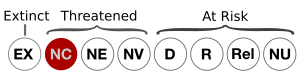 Nationally Critical (NZ TCS) |
|
Scientific classification  |
|
| Kingdom: | Animalia |
| Phylum: | Mollusca |
| Class: | Gastropoda |
| Subclass: | Caenogastropoda |
| Order: | Littorinimorpha |
| Family: | Tateidae |
| Genus: | Catapyrgus |
| Species: |
C. sororius
|
| Binomial name | |
| Catapyrgus sororius Martin Haase, 2008
|
|
| Script error: The function "autoWithCaption" does not exist. | |
| Synonyms | |
|
|
Script error: No such module "Check for conflicting parameters".
Catapyrgus sororius is a very special kind of freshwater snail. It lives only in New Zealand and nowhere else in the world! This makes it endemic to New Zealand. Sadly, it is also a critically endangered species. This means there are very few of these snails left, and they are at high risk of disappearing forever.
Contents
Where Does This Snail Live?
This tiny snail has only ever been found in one place on Earth. Its home is a stream inside the Ida Cave, located in the Oparara River Valley. This area is part of the amazing Kahurangi National Park in New Zealand.
A Protected Home
The area where Catapyrgus sororius lives is a protected forest reserve. It is looked after by the Department of Conservation. Even though the number of these snails seems to be staying the same for now, they still face big dangers.
Dangers to the Snail
The main threats to Catapyrgus sororius are:
- Pollution: Any pollution that gets into the stream where they live could harm them.
- Caving activities: People exploring the cave might accidentally disturb their home.
Why Is It Endangered?
In November 2018, the Department of Conservation officially listed Catapyrgus sororius as "Nationally Critical." This is the highest threat level under the New Zealand Threat Classification System.
What "Nationally Critical" Means
The snail was given this serious status because it lives in only one tiny spot. The total area where it can be found is smaller than one hectare (which is about the size of a sports field). Because it lives in such a small, single location, it is very vulnerable. If anything bad happens to that one stream, the entire species could be wiped out.
"Data Poor" Status
Scientists also consider this snail to be "Data Poor." This means they don't have a lot of information or studies about it. More research is needed to fully understand its life and how best to protect it.
