
David Brown (British artist) facts for kids

David Brown was a British painter who was active from about 1792 to 1797. He specialized in painting landscapes and scenes of everyday life, often featuring animals.
From House Painter to Artist
David Brown started his career as a house and sign painter. But he had a bigger dream: he wanted to become a famous artist. He especially admired the work of George Morland, another British artist. Morland was well-known for his paintings of animals and country life.
Brown decided to follow his dream. He sold his business and began to study painting with George Morland. Brown became one of many artists who learned from Morland and painted in a similar style.
His Painting Style
Even though Brown learned from Morland, his paintings had their own unique touch. He used a more energetic brushstroke, which means you could often see the movement of his brush. He also used a lot of "impasto." This is when paint is applied thickly, making the surface of the painting textured.
Because his style was so similar to Morland's, Brown's paintings were sometimes mistaken for those of his teacher.
Exhibitions and Other Work
David Brown showed ten of his paintings at the Royal Academy in London between 1792 and 1797. Some of his works were "pasticci," which means they were paintings done in the style of another artist, like Morland. He also painted scenes of London, which some art experts believe were his best works.
To earn extra money, Brown also sold paintings by George Morland. He had bought these paintings while he was studying in Morland's art studio. Later in his life, David Brown became a drawing teacher, sharing his artistic skills with others.
Gallery
-
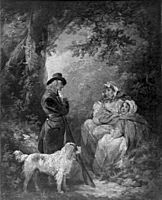
David Brown, A Sportsman with Peasant Women and Dog. This painting shows a sportsman with women and a dog.
-
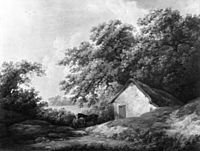
David Brown, A Woody Landscape, 1792. This painting shows a landscape with many trees.


