
National Register of Historic Places listings in San Saba County, Texas facts for kids

Welcome to San Saba County, Texas! This area is home to some really old and important places. These special spots are so historic that they've been added to a list called the National Register of Historic Places. This list helps protect and celebrate buildings, bridges, and other sites that are important to American history.
In San Saba County, there are three amazing places on this list. One of them is even more special because it's also a State Antiquities Landmark and a Recorded Texas Historic Landmark. This means it's recognized as super important by the state of Texas too!
Contents
Historic Places in San Saba County
Here are the cool historic places you can find in San Saba County:
Regency Suspension Bridge
The Regency Suspension Bridge is a really neat bridge located about 0.75 miles (1.2 km) south of a town called Regency. It stretches across the Colorado River, connecting San Saba County with Mills County.
This bridge is special because it's a "suspension bridge," which means its road hangs from strong cables. It was added to the National Register of Historic Places on December 12, 1976, showing how important it is to the area's history and transportation.
San Saba County Courthouse
The San Saba County Courthouse is a grand building located at 500 East Wallace Street in the city of San Saba. Courthouses are important buildings where local government and legal activities happen.
This courthouse was recognized for its historical value and added to the National Register of Historic Places on May 1, 2003. It stands as a symbol of the county's history and its community.
US 190 Bridge at the Colorado River
Another important bridge in San Saba County is the US 190 Bridge at the Colorado River. This bridge carries U.S. Route 190 over the Colorado River, right at the border with Lampasas County. It's near the town of Lometa.
Bridges like this are vital for travel and trade. This particular bridge was added to the National Register of Historic Places on October 10, 1996, highlighting its significance in the region's transportation history.
Images for kids
-
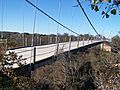
The historic Regency Suspension Bridge.
-
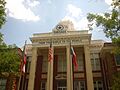
The San Saba County Courthouse.
-
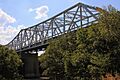
The US 190 Bridge crossing the Colorado River.


