
Orthodontist facts for kids
 |
|
| Occupation | |
|---|---|
| Names | Orthodontist |
| Specialty | |
|
Activity sectors
|
Dentistry |
| Description | |
|
Education required
|
Dental degree, Specialty training |
|
Fields of
employment |
Hospitals, private practices |

An orthodontist is a special kind of dentist who focuses on making sure your teeth and jaws are perfectly aligned. Think of them as architects for your smile. They diagnose, prevent, and correct teeth that are crooked, crowded, or don't fit together properly. They also help guide the growth of your jaws, which is sometimes called "dentofacial orthopedics." Their main goal is to give you a beautiful smile that's also healthy and works well for chewing and speaking.
Contents
Why Do We Need Orthodontists?
You might be wondering why teeth sometimes don't grow in perfectly straight. It's actually very common! About half the people in the world have some kind of "malocclusion," which is a fancy word for teeth or jaws that aren't perfectly aligned.
Here are some reasons why teeth might not be straight:
- Jaw Size: Sometimes, our jaws might be a bit smaller than they need to be to fit all our teeth comfortably. This can happen because of changes in our diets over many years. Eating softer foods, rather than lots of crunchy fruits and vegetables, might mean our jaws don't get as much "exercise" during childhood, leading to less room for teeth.
- Genetics: Just like you might inherit your eye color from your parents, you can also inherit the way your teeth and jaws are shaped.
- Habits: Things like thumb-sucking or using a pacifier for a long time can sometimes affect how teeth grow.
When teeth are crooked or jaws don't line up, it's not just about how your smile looks. It can also make it harder to chew food properly, speak clearly, and even clean your teeth, which can lead to cavities. Orthodontists help fix these issues, making your mouth healthier and your smile brighter!
How Orthodontics Works
Getting your teeth straightened is a journey, and it usually takes some time – anywhere from several months to a few years. During this time, your orthodontist will use special tools to gently move your teeth into their correct positions.
Here's what you can expect:
- Regular Visits: You'll visit your orthodontist every 4 to 10 weeks for adjustments.
- Starting Young: Orthodontic treatment often begins before a person becomes an adult. Why? Because when your bones are still growing, they are easier to guide and adjust. This means your orthodontist can do more to help shape your jaw and make *space for your teeth.
- Different Tools: The most famous tool is braces, but orthodontists have many other clever devices to help.
While the main goal is to improve your health and how your mouth works, many people also report feeling much happier and more confident with their smiles after orthodontic treatment!
The History of Orthodontics
Did you know that people have been trying to straighten teeth for thousands of years?
Ancient Greeks and Etruscans used very simple, early versions of orthodontic appliances. It shows that people have always wanted healthy, aligned smiles. In the 18th and 19th centuries dentists started describing and using more devices to "regulate" teeth. In mid-1800s orthodontics really started to become a science. Norman William Kingsley (1829–1913) was one of the first to write books about orthodontics and even helped people with cleft palates. He was a pioneer in using outside forces to correct teeth that stuck out. Edward Angle (1855–1930) is often called the "father of modern orthodontics." He came up with the first basic way to classify (or categorize) how teeth fit together, which dentists still use today. He believed that having a perfect "bite" (how your upper and lower teeth meet) was super important.
Before the 1970s, braces were often made by wrapping metal around each tooth. But then, new glues (adhesives) were invented, making it possible to bond small metal brackets directly to the teeth. This made braces much smaller and more comfortable!
In 1976, Dr. Larry Andrews created brackets that were designed to fit each tooth perfectly. This meant orthodontists didn't have to bend the wires as much, making treatment more efficient and precise.
So, from ancient attempts to modern high-tech solutions, orthodontics has come a long way, always aiming for better, healthier smiles!
Tools for a Terrific Smile: Types of Orthodontic Appliances
Orthodontists use many different tools, called "appliances," to help straighten teeth. These can be divided into two main types: fixed and removable.
Fixed Appliances
Fixed appliances are bonded (glued) to your teeth and stay there throughout your treatment. They are very effective because they work continuously.
Braces
These are probably what you think of first when you hear "orthodontics"!
Braces usually have small squares called "brackets" that are glued to the front of your teeth. These brackets can be made of stainless steel (the most common) or clear porcelain (which are less noticeable). Sometimes, braces can even be placed on the inside of your teeth, facing your tongue, and these are called "lingual braces."
How They Work
A thin wire, called an "archwire," runs through slots in the brackets. This wire is carefully shaped and applies gentle, continuous pressure to your teeth, slowly guiding them into their correct positions. Sometimes, small rubber bands are used to connect brackets on your upper and lower teeth. These help move your jaws into the right alignment. Tiny springs can be placed on the wire to push teeth apart or close gaps. These are tiny rubber bands or thin wires that hold the archwire into the bracket slots.
On average, braces stay on for one to three years. The exact time depends on how much your teeth need to move, how much space there is, and how well you follow your orthodontist's instructions (like keeping your teeth clean!).
Headgear
This appliance might look a bit unusual, but it's super helpful for certain situations! Headgear is a device that you wear on your head, usually at home or while sleeping. It connects to your braces or other appliances inside your mouth.
How It Works
It applies gentle force to help correct jaw alignment problems, like an "overbite" (where your upper teeth stick out too much) or an "underbite" (where your lower teeth stick out). It's especially effective for children and teenagers because their jaws are still growing and can be guided more easily.
While braces move teeth, headgear helps guide the growth of your jaws.
Palatal Expanders

This is a special appliance that fits in the roof of your mouth. How It Works
It gently widens your upper jaw over time. This creates more space for crowded teeth to come in straight and can even improve breathing! It's usually a fixed appliance, meaning it stays in your mouth.
Removable Appliances
Removable appliances can be taken out of your mouth for eating, brushing, and flossing.
Clear Aligners
These are clear, plastic trays that fit snugly over your teeth, almost like invisible braces! How They Work
You wear a series of aligners, each one slightly different, to gradually move your teeth. You switch to a new set of aligners every week or two. They are very discreet (hard to see!) and can be removed for eating and cleaning, which many people find convenient.
Retainers
These are super important for after your braces or aligners come off!
After all that hard work, your teeth have a natural tendency to want to shift back to their old positions. This is called "relapse." Retainers prevent this from happening. Most patients need to wear a retainer all the time for the first six months after treatment, and then usually only at night for many years – sometimes even for life! It's like wearing a seatbelt for your smile.
Types of Retainers:
- Removable Retainers
- Clear Plastic Retainers: These are custom-made clear plastic trays that fit perfectly over your teeth, holding them in place.
- Hawley Retainers: These have a plastic part that fits against the roof of your mouth or under your tongue, with a wire that goes across the front of your teeth.
- Fixed Retainers: These are thin wires that are permanently glued to the back (tongue-facing side) of your front teeth. They are invisible to others and are great for keeping those front teeth from shifting.
The Orthodontist's Journey: Becoming a Specialist
Becoming an orthodontist takes a lot of hard work and dedication! They are not just regular dentists; they are dentists who have gone to even more school to become specialists.
Here's the path they take:
- Dental School: First, they complete a regular dental degree, like a Doctor of Dental Surgery (DDS) or Doctor of Medical Dentistry (DMD). This usually takes about four years after college.
- Specialty Training: After dental school, they apply to a special orthodontic program. These programs are very competitive. Orthodontic specialty training usually lasts for another two to three years. During this time, they learn all about how teeth move, how jaws grow, and how to use all the different appliances we talked about. They study things like biology, physics, and engineering related to teeth and jaws.
- Certification: In many countries, after completing their specialty training, orthodontists take special exams to become certified. This shows they have a very high level of knowledge and skill in orthodontics. For example, in the United States, they might take the American Board of Orthodontics (ABO) exam.
- Continuous Learning: Even after becoming certified, orthodontists continue to learn and stay updated on the latest techniques and technologies to provide the best care.
Keeping Your Smile Healthy During Treatment
While you're wearing braces or aligners, it's super important to keep your teeth extra clean! Food can easily get stuck around braces, so brushing and flossing carefully are key to preventing cavities and keeping your gums healthy. Your orthodontist and their team will show you exactly how to do this.
Images for kids
-
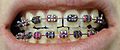
Dental braces.
-
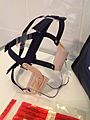
Full orthodontic headgear with headcap, fitting straps, facebow and elastics
-
Orthodontic headgear
-
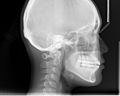
An X-ray taken for skull analysis
-
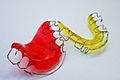
Top (left) and bottom retainers


See also
 In Spanish: Ortodoncia para niños
