
Pyrenaearia parva facts for kids
Quick facts for kids Pyrenaearia parva |
|
|---|---|
 |
|
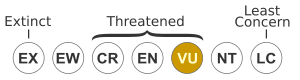
| Conservation status | |
| Scientific classification | |
| Kingdom: | |
| Phylum: | |
| Class: | |
| (unranked): |
clade Heterobranchia
clade Euthyneura clade Panpulmonata clade Eupulmonata clade Stylommatophora informal group Sigmurethra |
| Superfamily: |
Helicoidea
|
| Family: |
Hygromiidae
|
| Genus: |
Pyrenaearia
|
| Species: |
P. parva
|
| Binomial name | |
| Pyrenaearia parva Ortiz de Zarate, 1956
|
|
Pyrenaearia parva is a tiny land snail. It breathes air and lives on land. This snail is a type of mollusk, which is a group of animals with soft bodies. Snails belong to a class called gastropods.
Pyrenaearia parva is part of the Hygromiidae family. This family is also known as the "hairy snails and their allies." This specific snail species is endemic to Spain. This means it can only be found naturally in Spain and nowhere else in the world.
Contents
What is a Land Snail?
Land snails are mollusks that live on land. They are different from slugs because they have a shell. This shell protects their soft body. Snails move slowly on a muscular "foot." They leave a trail of slime behind them. This slime helps them glide and protects them from sharp objects.
Breathing Air
Pyrenaearia parva is a pulmonate snail. This means it has a lung-like organ. It uses this organ to breathe air, just like humans do. Most snails that live in water breathe with gills. Land snails, however, need to breathe air from the atmosphere.
Gastropods and Their Relatives
Gastropods are the largest group of mollusks. This group includes snails, slugs, and sea slugs. They are known for their unique way of moving. They also have a special feeding organ called a radula. The radula is like a tiny, toothed tongue. Snails use it to scrape food.
Where Does Pyrenaearia parva Live?
Since Pyrenaearia parva is endemic to Spain, it lives in specific areas there. Land snails usually prefer damp, cool places. They often hide under rocks, logs, or leaves. This helps them stay moist and safe from predators.
Habitat Needs
Snails need moisture to survive. Their soft bodies can dry out easily. They are often active at night or after rain. During dry periods, they might seal themselves inside their shells. This helps them save water.
What Do Land Snails Eat?
Most land snails are herbivores. This means they eat plants. They might feed on decaying leaves, fungi, or algae. Some snails can also eat fresh plant material.
Snail Diet
Pyrenaearia parva likely has a similar diet to other land snails. They play a role in their ecosystem. They help break down dead plant matter. This returns nutrients to the soil.
Life Cycle and Reproduction
Snails have an interesting life cycle. Most land snails are hermaphrodites. This means each snail has both male and female reproductive organs. However, they usually still need another snail to mate with.
Laying Eggs
After mating, both snails can lay eggs. They bury their eggs in moist soil. The eggs hatch into tiny snails. These young snails look like miniature versions of the adults. They grow by adding new material to their shells.
Conservation Status
Pyrenaearia parva is listed as Vulnerable (VU). This means its population is decreasing. It faces a high risk of becoming endangered in the wild.
Why Snails Become Vulnerable
Many things can threaten snail populations. These include:
- Habitat loss: When their natural homes are destroyed by human activities.
- Pollution: Chemicals and waste can harm them.
- Climate change: Changes in temperature and rainfall can affect their moist habitats.
- Invasive species: New species can compete for food or prey on snails.
Protecting vulnerable species like Pyrenaearia parva is important. It helps keep our planet's biodiversity healthy.
See also
- In Spanish: Pyrenaearia parva para niños
