
Reflexed pelea facts for kids
Quick facts for kids Reflexed pelea |
|
|---|---|
| Conservation status | |
Scientific classification  |
|
| Kingdom: | Plantae |
| Clade: | Tracheophytes |
| Clade: | Angiosperms |
| Clade: | Eudicots |
| Clade: | Rosids |
| Order: | Sapindales |
| Family: | Rutaceae |
| Genus: | Melicope |
| Species: |
M. reflexa
|
| Binomial name | |
| Melicope reflexa (H.St.John) T.G.Hartley & B.C.Stone
|
|
| Script error: The function "autoWithCaption" does not exist. | |
Script error: No such module "Check for conflicting parameters".
The Melicope reflexa, also known as the reflexed pelea or lava melicope, is a special kind of flowering plant. It belongs to the citrus family. In Hawaii, people often call this plant alani.
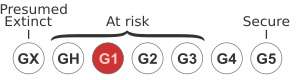
This plant is very rare because it only grows naturally in Hawaii. You can only find it on the island of Molokai. Because there are so few of these plants left, the United States government has officially listed it as an endangered species.
What is the Reflexed Pelea?
The reflexed pelea is a shrub, which means it's a type of bush. It usually grows to be about 1 to 3 meters (3 to 10 feet) tall. This makes it a medium-sized plant, not too big and not too small.
Where Does the Reflexed Pelea Live?
This unique plant lives in wet forest areas on the island of Molokai. These forests get a lot of rain, which the plant needs to grow. Sadly, the reflexed pelea is found in only four small areas on Molokai.
Scientists estimate that there are fewer than 1,000 of these plants left in the wild. This small number makes it very important to protect them.
Why is the Reflexed Pelea Endangered?
The main reason the reflexed pelea is in danger is because its home is being damaged. This damage comes from a few different things:
- Wild Animals: Animals like goats, deer, and pigs that roam freely in the forests can eat the plants or stomp on them. These animals are not native to Hawaii and can cause a lot of harm to the local plants.
- New Plants: Other plants that are not native to Hawaii have been brought to the island. These "introduced species" can grow very fast and take over the space and resources that the reflexed pelea needs to survive. They can also change the soil and light conditions, making it harder for the native plants to thrive.
These problems make it very difficult for the reflexed pelea to grow and reproduce naturally.
