
Flashlight facts for kids

A flashlight (in American English) or electric torch (in British English) is a portable hand-held light source. For many decades, flashlights used miniature incandescent bulbs. Today, almost all modern flashlights use powerful light-emitting diodes (LEDs).
A standard flashlight includes a light source, a curved reflector, a protective transparent lens, a battery, and an electric switch. All of these components sit securely inside an outer protective case.
Flashlights are essential everyday tools used during electrical blackouts, outdoor camping trips, and home repair jobs. Specialized versions exist for scuba divers, firefighters, search and rescue workers, and mechanics.
Contents
- How the Flashlight Got Its Name
- History and Invention of the Electric Torch
- Types of Light Sources in Flashlights
- How Flashlight Optics Focus Light
- How Flashlights Are Powered
- Electronic Switches and Controls
- Materials and Construction
- Specialized Designs and Formats
- Industry Performance Standards
- Brightness and Applications Guide
- Images for kids
- See also
How the Flashlight Got Its Name
Early portable electric lights ran on primitive zinc-carbon batteries. These early batteries could not produce a steady electric current for long periods. They needed frequent "rest" periods to recover energy.
Because early bulbs with carbon filaments also consumed large amounts of power, the light could only shine in quick bursts. Users turned the light on for just a brief flash at a time. This quick flashing action inspired the American name "flashlight." In many other English-speaking countries, people still call it an electric torch.
History and Invention of the Electric Torch


.jpg)
The Invention of the Dry Cell Battery
Before portable electric lights existed, people relied on candles, oil lanterns, and open flames. These old lighting methods produced smoke, bad odors, and dangerous fire hazards.
In 1887, inventors created the first dry cell battery. Older batteries contained hazardous liquid chemicals that could easily spill. The new dry cell used a thick paste electrolyte instead of liquid. Because the paste did not leak, dry cells could safely operate upside down or inside moving devices.
Mass production of dry cells began in 1896, paving the way for small, battery-powered portable lights.
Early Patents and Growth
On January 10, 1899, inventor David Misell obtained United States Patent No. 617,592 for an electric device. The patent was assigned to the American Electrical Novelty and Manufacturing Company (which later became Energizer).
Misell's design placed three "D" size batteries inside a paper tube. A small light bulb and a brass reflector sat at the front end. The company donated several models to the New York City Police Department, where officers found them very helpful on nighttime patrols.
Early flashlights remained expensive novelties because carbon-filament bulbs burned out quickly. In 1904, manufacturers introduced tungsten filaments, which produced three times more light per watt of power.
By 1922, over 10 million people in the United States owned flashlights. Global manufacturing grew rapidly, and by the late 1930s, dozens of factories produced affordable flashlights worldwide.
Types of Light Sources in Flashlights
Incandescent Bulbs

Traditional incandescent flashlights use miniature glass light bulbs. Inside the bulb, electricity flows through a thin tungsten metal wire called a filament. The wire gets white-hot and emits visible light.
To keep the filament from burning up instantly, the glass bulb contains a vacuum or inert gases such as argon, krypton, or xenon. High-intensity models often use halogen lamp bulbs containing traces of iodine or bromine.
Incandescent bulbs waste most of their electrical energy as heat rather than light. The bulbs are fragile, and their filaments can break if dropped. Most incandescent flashlights produce between 10 and 200 lumens of light.
Light Emitting Diodes (LEDs)


Modern flashlights rely primarily on LEDs. An LED is a solid-state semiconductor chip that produces light when an electric current passes through it.
In 1999, the Luxeon high-power white LED was introduced. The first commercial high-power LED flashlight, the Arc LS, appeared in 2001. Leading manufacturers like Maglite converted their main product lines to LEDs by 2006.
LEDs provide many important advantages over old glass bulbs:
- Energy Efficiency: White LEDs generate around 100 lumens per watt, compared to only 10 lumens per watt from small incandescent bulbs.
- Long Lifespan: An LED can operate for tens of thousands of hours without burning out.
- Durability: LEDs have no fragile glass envelopes or delicate wire filaments, making them impact resistant.
- Color Control: LEDs produce crisp white light or pure colors like red, green, blue, and ultraviolet without needing colored glass filters.
High-power LEDs generate significant heat at the base of the semiconductor chip. If an LED gets too hot, its efficiency drops and its lifespan shortens. Manufacturers build flashlight bodies out of heavy-duty aluminium with exterior cooling fins to dissipate heat into the surrounding air.
High-Intensity Discharge (HID) Lamps
HID lamps produce light by creating an electrical arc between two electrodes inside a gas-filled quartz tube. The gas contains metal halide salts and noble gases.
HID flashlights produce brilliant beams of light and resist mechanical shocks well. However, they require complex starter circuits called ballasts, need several seconds to warm up, and are quite expensive. LEDs have largely replaced HID systems in portable lights.
Laser Excited Phosphor (LEP)
Laser Excited Phosphor (LEP) is an advanced lighting technology introduced in portable lights in 2018. An LEP flashlight uses a small blue laser diode directed at a special phosphor coating.
When the laser strikes the phosphor, it converts the laser energy into a beam of white light. LEP lights produce an extremely tight, concentrated beam that can travel thousands of meters through the night sky.
How Flashlight Optics Focus Light

Flashlight optical systems gather scattered light from the bulb or LED and focus it into a useful beam.
Reflectors and Total Internal Reflection
Flashlights usually use curved, parabolic reflectors made from polished aluminum or shiny coated plastic:
- Smooth Reflectors: These create a very bright, concentrated center spot (known as the "throw") for seeing objects far away.
- Textured Reflectors: Often called "orange peel" reflectors, these have a bumpy surface that smooths out irregularities, creating a wide, even spread of light (known as "spill").
- Total Internal Reflection (TIR) Optics: Solid clear acrylic lenses use total internal reflection to guide and direct light forward without needing a traditional hollow reflector bowl.
Protective Lenses and Filters
A tough glass or polycarbonate plastic lens covers the front of the flashlight to keep out dust, dirt, and water. Some lights use adjustable sliding lenses (zoom lenses) or Fresnel lenses that allow users to change the beam from a wide floodlight to a focused spotlight.
How Flashlights Are Powered

Disposable Primary Batteries
Many household flashlights run on disposable primary cells:
- Alkaline Batteries: Common sizes include AA, AAA, C, and D cells. They provide reliable power for everyday gadgets.
- Lithium Primary Batteries: These lightweight cells work well in freezing temperatures and can sit in emergency storage kits for over ten years without leaking or losing charge.
- Button Cells: Miniature disc-shaped batteries power flat keychain lights.
Rechargeable Secondary Batteries
Flashlights used frequently often use rechargeable cells to save money and reduce waste:
- Lithium-Ion Batteries: Modern rechargeable flashlights frequently use high-capacity lithium-ion cells (such as the popular 18650 size). They pack large amounts of energy into a small space.
- Nickel-Metal Hydride (NiMH): Common rechargeable replacements for standard AA and AAA alkaline batteries.
- Built-In USB Charging: Many modern flashlights have built-in USB-C charging ports, allowing users to plug them directly into standard phone chargers or power banks.
Mechanical and Renewable Power Sources
Some emergency flashlights require no replacement batteries at all:
- Hand-Crank Dynamos: Turning a manual crank spins a small electric generator, converting mechanical motion into electricity to charge an internal capacitor or battery.
- Faraday Shake Lights: Shaking the light causes a strong permanent magnet to slide back and forth through a wire coil. Through electromagnetic induction, this movement generates an electric current.
- Solar Panels: Small built-in photovoltaic cells slowly recharge the flashlight when placed under direct sunlight.
Electronic Switches and Controls

Simple flashlights use mechanical slide switches, rocker switches, or rubber pushbuttons that physically connect two metal contacts to close an electrical circuit.
Advanced modern flashlights use microcontrollers (tiny computers) and electronic switches to give users many extra lighting features:
- Variable Brightness Modes: Users can switch between ultra-dim "moonlight" modes for reading maps and high-power "turbo" modes for maximum visibility.
- Strobe and SOS Modes: Rapid flashing modes help signal for emergency assistance or alert traffic.
- Thermal Regulation: The internal computer continuously monitors temperature and dims the light if the LED gets too hot.
- Battery Indicators: Small colored indicator lights tell the user how much charge remains in the battery.
Flashlights often control LED brightness using pulse-width modulation (PWM). PWM rapidly switches the LED on and off thousands of times per second. By changing the ratio of "on" time to "off" time, the flashlight adjusts apparent brightness while maximizing energy efficiency.
Materials and Construction
Flashlight bodies must be tough, lightweight, and capable of protecting delicate internal electronics from harsh weather:
- Anodized Aluminum: The most common material for quality flashlights. Anodized aluminum resists scratches, conducts heat away from the LED, and does not rust.
- Engineered Plastics: Tough polymers like polycarbonate and ABS resist heavy impacts, do not conduct electricity, and remain comfortable to hold in freezing weather.
- Specialty Metals: Heavy-duty and custom lights are sometimes made from stainless steel, titanium, or copper.
Specialized Designs and Formats


Flashlights come in many different shapes and styles adapted for specific activities:
Headlamps and Angle Lights
A headlamp mounts directly onto an elastic headband, baseball cap, or construction hard hat. Headlamps shine light wherever the wearer looks, leaving both hands free for hiking, climbing, setting up tents, or working on machinery. Angle-head flashlights feature a 90-degree bend at the top, allowing the light to clip onto a backpack strap or jacket pocket.
Penlights and Keychain Lights
Penlights are slim lights shaped like writing pens. They fit neatly into shirt pockets and are frequently used by doctors, nurses, and mechanics to inspect ears, throats, and engine bays. Keychain lights are miniature, lightweight lights designed to hang from keyrings for finding keyholes in the dark.
Diving Lights
Scuba diving lights are completely sealed with heavy-duty O-rings and thick lenses. They withstand deep underwater water pressure and provide crucial lighting during night dives or deep exploration.
Explosion-Proof Safety Lights
Workplaces such as coal mines, grain storage elevators, and oil refineries can have air filled with flammable gases or airborne dust. Standard flashlights could create a tiny internal electrical spark that might trigger a fire. Industrial safety flashlights are specially certified and sealed so that no internal spark or excess heat can ignite surrounding gases.
Smartphone Lights and Lanterns

Modern smartphones feature bright LED camera flashes that double as convenient everyday flashlights through built-in software controls. Camping lanterns use frosted diffusers to spread soft, omnidirectional 360-degree light over picnic tables and tent interiors.
Industry Performance Standards
To help consumers compare different models accurately, lighting organizations developed standard testing rules known as the ANSI/NEMA FL1 Standard. Manufacturers display standard icons on product packaging representing these tests:
- Light Output (Lumens): Measures the total amount of light energy leaving the front of the flashlight.
- Peak Beam Intensity (Candelas): Measures brightness at the very center of the beam.
- Beam Distance (Meters): The theoretical distance at which the flashlight beam illuminates an object with 0.25 lux of light (roughly the brightness of a full moon).
- Run Time (Hours): The amount of continuous operating time until light output drops down to 10% of its starting brightness.
- Impact Resistance (Meters): The height from which the light can be dropped onto solid concrete six times without breaking.
- Water Resistance (IP Code): Ratings such as IPX4 (splash resistant), IPX7 (temporary immersion in water up to 1 meter), and IPX8 (continuous underwater submersion).
Brightness and Applications Guide
The brightness of flashlights is measured in lumens. Different activities require different brightness levels:
| Lumen Range | Common Types | Typical Uses |
|---|---|---|
| 1–20 lumens | Keychain lights, penlights | Finding keyholes, reading maps without ruining night vision. |
| 30–100 lumens | Standard household flashlights | Power blackouts, walking the dog, routine home repairs. |
| 100–300 lumens | Outdoor headlamps, bike lights | Night hiking, trail running, evening bicycle rides. |
| 300–1000 lumens | Tactical and work lights | Professional trade work, security patrols, night camping. |
| 1000+ lumens | Search and rescue spotlights | Illuminating large fields, cave exploration, emergency searches. |
Images for kids
-

A miniature coin-cell LED light on a keychain.
-
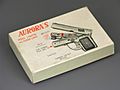
A vintage novelty flashlight designed in the shape of a toy pistol.


See also
 In Spanish: Linterna eléctrica para niños
- Bicycle lighting
- Carbide lamp
- Glow stick
- Kerosene lamp
- Lantern
- List of battery types
- Safety lamp
- Searchlight
