
Zipper facts for kids

A zipper is a handy tool that connects two edges of fabric or other flexible materials. You can find zippers on many everyday items. These include jackets, jeans, luggage, bags, tents, and sleeping bags. Zippers come in all sorts of sizes, shapes, and colors. An American inventor named Whitcomb L. Judson first patented a design for this device in 1892. The modern zipper we use today grew from his original idea.
The name "zipper" became popular in 1923. It came from a brand of rubber boots, also called galoshes, that used this new fastener. People could close these boots with a quick "zip" of the hand. Soon, everyone started calling these hookless fasteners "Zippers."
Contents
How Zippers Work
A zipper has a small part called a slider. This slider moves along two rows of teeth, which can be made of metal or plastic. These teeth are designed to fit together perfectly. When the slider moves in one direction, it locks the teeth together, closing the opening. When it moves the other way, it separates them, opening the zipper. The teeth are also called elements. The sound a zipper makes, a quick "zip," is how it got its name!

Many jackets have zippers that close completely when the slider is at the top. Some jackets even have two sliders. This lets you open the bottom part of the jacket for more comfort, like when you're sitting or riding a bike. If both sliders are moved to the bottom, the zipper can come apart completely.
Bags and suitcases often have two sliders too. When the sliders are together, the bag is fully closed. You can open the zipper by moving the sliders apart.
Zippers are used for many things:
- They can make an opening bigger or smaller, like on a pocket or the front of trousers.
- They can join or separate parts of clothing, such as the front of a jacket or the side of a dress.
- They can attach or remove parts, like turning trousers into shorts or connecting a hood to a coat.
- They can connect smaller pouches to a larger bag, like on some backpacks.
- Sometimes, zippers are just used to make an item look more stylish.
These different uses are possible because zippers can be sewn shut at one end, both ends, or designed to come apart completely.
Zippers are usually inexpensive. However, if a zipper breaks, the item might become unusable. Fixing or replacing a zipper can be tricky and sometimes costly. Often, the slider wears out and can't properly join the teeth. For zippers that separate, the pin might tear from the fabric tape.
The Story of Zippers
In 1851, Elias Howe received a patent for a "Fastening for Garments." He didn't try to sell it widely, so his invention wasn't well known. His device was more like a fancy drawstring than a modern zipper.
Many years later, in 1893, Whitcomb L. Judson patented his "Shoe-Fastening." Judson was an inventor who had created many mechanical devices. He wanted to find a new way to fasten shoes instead of laces. He called his invention a "clasp-locker." Judson and his business partner, Lewis Walker, even put the device on their own boots. It worked like a more complex hook-and-eye fastener. Judson showed his clasp-locker at the 1893 Chicago World's Fair, but it didn't become very popular.
The company Judson started later hired Gideon Sundbäck, a Swedish-American engineer, in 1906. Sundbäck worked hard to make the fastener better. In 1913, he created a much stronger design. He increased the number of fastening elements and improved how the teeth locked together. His patent for the "Separable Fastener" was issued in 1917. Sundbäck also invented the machine to make these new zippers.

The popular name "zipper" came from the B. F. Goodrich Company in 1923. They used Sundbäck's fastener on new rubber boots and called them "zippers." The name quickly caught on. Early zippers were mostly used for boots and tobacco pouches. By 1925, zippers started appearing on leather jackets.
In the 1930s, zippers became popular for children's clothing. They helped kids dress themselves, which was a big step for independence! In 1937, zippers even became fashionable for men's trousers. An advertisement called the zippered fly the "Newest Tailoring Idea for Men," noting it would prevent "accidental openings."
Later, zippers were invented that could open from both ends, like on many jackets today. Zippers have become the most common fastener for clothing, luggage, and many other items.
Different Kinds of Zippers

- Coil zippers are the most common type sold today. The teeth are made from a continuous coil, usually polyester. They are sometimes called polyester or nylon zippers.
- Invisible zippers have their teeth hidden behind the fabric tape. This makes the zipper almost impossible to see. They are often used in skirts and dresses.
- Reverse coil zippers are a type of coil zipper where the coil is on the back. The slider works on the flat front side. These are often used for water-resistant items.
- Metal zippers are the classic type, often found on jeans and pencil cases. Their teeth are individual pieces of metal, like brass or aluminum. They are very strong.
- Plastic-molded zippers are similar to metal zippers, but their teeth are made of plastic. They can be made in many colors and are popular for pencil cases and small bags.
- Open-ended zippers can separate completely at the bottom. They use a special "box and pin" system to connect the two sides. You often see them on jackets.
- Two-way open-ended zippers have two sliders and can open from both the top and bottom. This is useful for long coats, allowing more movement.
- Two-way closed-ended zippers are closed at both ends. They often have one or two sliders and are used on luggage.
- Magnetic zippers are designed for easy, one-handed closing. They are often used in sportswear.
Zippers That Keep Air and Water Out


Special airtight zippers were first created by NASA for space suits. These suits needed to hold air pressure in the vacuum of space.
Airtight zippers look like regular zippers but have a waterproof material wrapped around the teeth. When closed, this material presses together tightly, creating a double seal. This seal is great for keeping air or water in or out. These zippers are very stiff and can be hard to open and close.
You can find these special zippers on scuba diving dry suits, ocean survival suits, and hazmat suits.
Another type of water-resistant zipper has a plastic ridge seal, similar to a Ziploc bag. These are easier to open but not as strong against inside pressure.
Keeping Zippers Locked: Anti-Slide Features
Some zippers have special features to stop the slider from moving by itself. This prevents the zipper from opening unexpectedly. Here are two common ways this works:
One way is a small pin on the zipper handle. When you fold the handle flat against the zipper teeth, this pin goes into a hole on the slider, locking it in place. You might see this on some trousers.
Another way is a slider with a special hinge. This hinge has spring-loaded pins that fit between the zipper teeth. To move the zipper, you pull the handle outwards. This lifts the pins, allowing the slider to move. When you let go, the pins automatically lock back into the teeth. These are called "auto-lock sliders."
Parts of a Zipper
.jpg)

Here are the main parts of a zipper:
- Top Tape Extension: The fabric part above the teeth at the top.
- Top Stop: Small pieces that stop the slider from coming off the top.
- Slider: The part that moves up and down to open or close the zipper.
- Pull Tab or Puller: The piece you hold to move the slider.
- Tape Width: The width of the fabric on both sides of the zipper teeth.
- Chain or Zipper Teeth: The interlocking parts that form when the zipper is closed.
- Bottom Stop: A piece at the bottom that stops the slider from going too far.
- Bottom Tape Extension: The fabric part below the teeth at the bottom.
- Single Tape Width: The width of the fabric on one side of the zipper teeth.
- Insertion Pin: A part on separating zippers that helps join the two halves.
- Retainer Box or Pin Box: A part on separating zippers that holds the pin in place.
- Reinforcement Film: A plastic strip on the tape that allows the zipper to be "welded" to fabric without sewing.
Making Zippers Around the World
In the 1960s, companies like Talon Zipper (US) and Optilon (Germany) were big in the zipper market. However, by the 1980s, the Japanese company YKK became the largest zipper maker in the world. YKK developed special machines to make high-quality zippers at low prices.
Today, many companies around the globe make zippers. Tex Corp from India is also a major supplier. In Europe, the Cremalleras Rubi company in Spain has been making zippers since 1926. China also plays a huge role, producing a large percentage of the world's zippers.
How Zippers Lock and Unlock
A zipper works a bit like a lock and key system. The "locking members," or teeth, are designed to fit together perfectly. They have rounded parts that fit into the hollow parts of the teeth next to them. This creates a strong, stable connection.
The slider is the "key." It has a Y-shaped channel that guides the teeth. When you pull the slider, it gently pushes the teeth apart or pulls them together, one by one. The teeth are flexible enough to open slightly and then snap shut around each other. This "snug fit" keeps them locked until the slider moves them again.
Think of it like a bobby pin. Your hand slides hair into and out of the pin's flexible opening. The zipper slider does something similar, guiding the teeth to open and close.
Keeping Zippers Working: Durability and Repairs
Zippers are often the first part of an item to wear out. A common problem is when the slider gets old or bent. It can't press the teeth together strongly enough to make them interlock.
Sometimes, you can fix a worn slider. You can carefully use small pliers to gently squeeze the back part of the slider a tiny bit. This can help it grip the teeth better. Be very careful not to squeeze too hard, as sliders are often made of metal that can break easily. Increase the pressure slowly until the zipper works again.
If the protective coating on a metal slider wears off, it might start to rust. This rust can build up and make the slider stick. You can try soaking the slider in vinegar or another mild acid to dissolve the rust. If that doesn't work, the slider might need to be replaced.
Images for kids
-
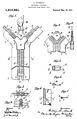
Gideon Sundbäck's 1917 patent drawing for the "Separable Fastener."
-
Another view from Sundbäck's 1917 patent.
-
Detailed drawing of the zipper teeth from Sundbäck's patent.
-
More details from the 1917 patent.
-
A final view from Sundbäck's important zipper patent.


See also
 In Spanish: Cremallera (indumentaria) para niños
- Talon Zipper
- Funicular
- Zipper storage bag
