
Artificial scarcity facts for kids
Artificial scarcity happens when something is made to seem rare, even though we have the ability to make plenty of it or share it widely. It's like having a lot of toys but only letting a few kids play with them. This often happens because one company controls the supply, or because certain rules limit how much can be made or shared. When this happens, it can lead to things costing more and fewer people getting what they need.
Contents
What is Artificial Scarcity?
Imagine a world where we could easily make or share many things, like digital music or helpful ideas. But sometimes, these things are kept scarce, meaning there isn't enough for everyone who wants them. This is called artificial scarcity. It's "artificial" because the shortage isn't due to a real lack of resources or technology. Instead, it's often created on purpose.
Companies often aim to make a profit. To do this, they might choose to produce fewer items than they could. By limiting the supply, they can often sell their products at a higher price. This way, they earn more money, even if it means not everyone gets the product.
Think about sharing an apple. If you give me your apple, you no longer have it. But if you share an idea with me, we both have the idea! Ideas and information can be shared almost endlessly without running out. However, sometimes rules are put in place to make ideas seem scarce, like when a song or a movie is protected. This allows the creators to earn money from their work.
Even though ideas can be shared easily, they are often treated as special inventions or creative works. Laws protect these ideas as "intellectual property". This helps the original creators make money from their hard work and encourages them to create more new things.
Why Does Artificial Scarcity Happen?
Artificial scarcity can happen for several reasons. Often, it's about how much control companies have over what they sell.
When Companies Control Supply
When many companies compete to sell the same product, prices usually stay fair. But if only one company, called a monopoly, sells a product, they can control how much is available. This allows them to set very high prices. If a few companies, an oligopoly, control a product, they might also limit supply to keep prices up.
Companies might work together in a cartel to limit how much they produce. This is often against the law because it stops fair competition. Sometimes, it's hard for new companies to start selling a product. This could be because it costs a lot to build a factory, or because existing companies make it difficult for newcomers. These are called "barriers to entry".
Rules for Ideas and Inventions
Laws like copyright and patents are designed to protect original ideas and inventions.
- Copyright protects creative works like books, music, and movies. It gives the creator the right to control who can copy or share their work. For example, a company might sell software that you can't easily copy or change. This makes the software artificially scarce. However, some software uses "copyleft" licenses, which actually guarantee people the right to copy, share, and change the code.
- Patents protect new inventions. They give the inventor exclusive rights to make, use, and sell their invention for a certain time. This means others can't copy the invention without permission, creating artificial scarcity for that new product.
Special or Limited Items
Some items are made to be rare on purpose. Think of a famous painting like the Mona Lisa. There's only one original, making it incredibly valuable. Even though you can buy many copies, the original is unique. Luxury cars are another example. Companies might make only a few of a certain model. This makes them very special and expensive, even if other companies could technically make similar cars.
Sometimes, a person or group might buy up a huge amount of a product. This is called hoarding. By controlling most of the supply, they can make the product scarce and sell it for a much higher price.
Government Actions and Support
Governments can also create artificial scarcity, often to help certain industries or groups of people.
- Helping Farmers: Governments might pay farmers not to grow too many crops. This keeps the supply lower and prices stable, helping farmers earn a living. For example, in the 1930s, the United States had a law to help farmers during tough economic times. Other examples included governments buying extra farm products or setting limits on how much can be produced.
- Controlling Imports: Countries sometimes limit how many goods can be brought in from other countries. These are called import quotas. This makes foreign products more scarce and encourages people to buy local goods.
- Labor Supply: Rules about how many people can move into a country to work can also affect the supply of workers. This can make certain types of labor more scarce.
Good or Bad? Different Views
People have different ideas about whether artificial scarcity is a good thing or a bad thing.
Why Some People Support It
Some people argue that artificial scarcity is sometimes necessary. They believe it encourages new inventions and creations. For example, developing new medicines is very expensive. If drug companies couldn't make a good profit from their new drugs for a while, they might not invest in research. Patents give them exclusive rights for a time, allowing them to earn back their investment and fund new research. After the patent ends, other companies can make cheaper versions, making the medicine more available.
Why Some People Oppose It
Other people argue that artificial scarcity is unfair to consumers. They believe that if something can be easily shared or produced, it should be. They think that laws like intellectual property rules can limit individual freedoms. For example, some argue that software should be freely shared and improved by everyone, leading to better tools for all. This idea is behind "open-source software".
Some also believe that focusing on making "status" goods, like very expensive cars, uses up resources that could be used to make more useful things for society. They suggest that if we shared more and focused less on making things artificially scarce, everyone would have more access to what they need.
More to Explore
- Artificial demand
- Disney Vault
- Planned obsolescence
- Rentier capitalism
Images for kids
-
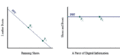
A production–possibility frontier showing trade-offs

