
Krabi mouth-brooding betta facts for kids
Quick facts for kids Krabi mouth-brooding betta |
|
|---|---|
 |
|
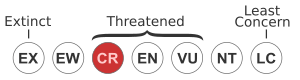
| Conservation status | |
Scientific classification  |
|
| Kingdom: | Animalia |
| Phylum: | Chordata |
| Class: | Actinopterygii |
| Order: | Anabantiformes |
| Family: | Osphronemidae |
| Genus: | Betta |
| Species: |
B. simplex
|
| Binomial name | |
| Betta simplex Kottelat, 1994
|
|
| Script error: The function "autoWithCaption" does not exist. | |
Script error: No such module "Check for conflicting parameters".
The Krabi mouth-brooding betta (Betta simplex) is a special type of fish. It only lives in Krabi Province, Thailand. It lives in clear water springs and wet areas, often hiding among plants near the water's edge. This fish can grow up to about 8 centimeters (3 inches) long.
People sometimes catch these fish from the wild to keep them as pets in aquariums. Sadly, the Krabi mouth-brooding betta is "critically endangered". This means it's in great danger of disappearing forever. This is because too many are caught, and their homes are being harmed by pollution and farming.
Contents
What the Krabi Mouth-Brooding Betta Looks Like
The Krabi mouth-brooding betta is a long, oval-shaped fish. It has rounded fins and grows to about 8 centimeters (3 inches) long. Its main color is yellowish-brown or greyish-brown. It has three faint stripes along its body.
The fish has a bluish-green spot on its gill cover. Its fins shimmer with a blue color. The fins on its belly are short, but the fin on its underside is long with a dark edge. Its tail fin is rounded and not split.
Where the Krabi Mouth-Brooding Betta Lives
This fish is found in only one place: Krabi Province, Thailand. The total area where it lives is very small, less than 10 square kilometers (about 4 square miles).
It lives in areas made of limestone. Here, water flows from underground water sources through the limestone. This creates clear, neutral to slightly alkaline pools and streams. The fish usually gather under plants that hang over the water in these streams and ditches.
How the Krabi Mouth-Brooding Betta Lives
Betta fish are known as anabantids. They have a special organ in their head that works like a lung. This organ lets them breathe oxygen directly from the air. Because of this, they can live in water with very little oxygen. They can even survive out of water for a short time, as long as they stay wet. These fish are also very good at jumping!
The Krabi mouth-brooding betta likely eats insects, small crabs, and other tiny water creatures.
Reproduction and Life Cycle
This fish is a "paternal mouth brooder." This means the male fish takes the fertilized eggs into his mouth. He keeps them safe there until they hatch into baby fish.
Why the Krabi Mouth-Brooding Betta is Endangered
The Krabi mouth-brooding betta lives in a very small area. This makes it vulnerable to its home being destroyed. Chemicals from nearby farms can wash into the water and pollute it. Tourism development can also harm its habitat.
This species is also threatened because too many fish are caught. People collect them for the aquarium trade. They are also used locally as bait when fishing for eels. Because of these reasons, the International Union for Conservation of Nature has said this fish is "critically endangered". This means it is at a very high risk of becoming extinct in the wild.
