
Twospike crabgrass facts for kids
Quick facts for kids Twospike crabgrass |
|
|---|---|
| Conservation status | |
| Scientific classification | |
| Genus: |
Digitaria
|
| Species: |
pauciflora
|
The Digitaria pauciflora is a special type of grass. It has many common names like twospike crabgrass and Florida pineland crabgrass. People also call it Everglades grass or few-flowered fingergrass. This plant is only found in one place: Florida in the United States. You can only find it growing in the Everglades.
Contents
What is This Grass Like?
This grass is a perennial, which means it lives for more than two years. It can grow quite tall, up to about one meter (around 3 feet). It grows in big clumps that can be as wide as one meter too.
Leaves and Flowers
The leaves of this grass are very hairy. They can be up to 12 centimeters (about 5 inches) long. The plant's flowers grow in a special cluster called an inflorescence. This cluster looks like a panicle with 2 or 3 branches. These branches can be up to 11 centimeters long.
The scientific name pauciflora comes from Latin. It means 'few flowered'. This name describes how the grass has only a few flowers on each branch.
Where Does This Grass Live?
Today, you can only find this special grass inside Everglades National Park. It grows in rocky areas called pinelands and open prairie lands.
Its Home in the Everglades
The places where this grass lives can get very wet. They often flood during the rainy season. These areas are also prone to wildfires. Many other plants grow nearby. These include the Pinus elliottii var. densa, Sabal palmetto, and Schizachyrium rhizomatum.
Why is This Grass Important?
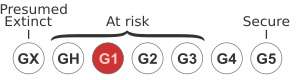
This grass is very rare. It only grows in an area of about 31 square miles. There is only one main group of these plants left.
Protecting the Grass
Most of these plants are safe inside Everglades National Park. However, the land around the park is changing fast. New buildings and towns are being built. This can affect the grass.
Inside the park, the grass can be harmed by changes in the local water flow, also known as hydrology. It can also be affected by changes in how often fires happen. Another big problem is non-native plants. These are plants that come from other places and can take over the habitat of the Digitaria pauciflora.
