
Fountain Gardens, Paisley facts for kids
Quick facts for kids Fountain Gardens |
|
|---|---|

Grand Central Fountain
|
|
| Location | Paisley |
| Nearest city | Glasgow |
| Operated by | Renfrewshire Council |
| Open | 26 May 1868 |
| Status | Open |
Fountain Gardens is a historic public park located in the town of Paisley, Scotland. It is the oldest public park in the whole town. People of all ages visit to play, walk their dogs, and enjoy the beautiful green spaces. At the middle of the park sits the impressive Grand Central Fountain. This water monument is so special that it is recognised as a Category A listed structure, which means it has national importance.
Contents
The Rich History of Fountain Gardens
Long before it was named Fountain Gardens, the area was known as Hope Temple Gardens. A local businessman named John Love established the site back in 1797. In those early days, the grounds included a small museum called Hope Temple Museum and a grass bowling green. Nearby Love Street in Paisley was later named after John Love to remember his contribution to the local community.
After running into financial trouble, Love had to sell the property. In 1866, an industrialist and threadmaker named Thomas Coats bought the land. Coats wanted to turn the land into a wonderful open area where working families could relax in nature. He hired a clever landscape designer named James Craig Niven to create a fresh plan for the entire park.
Niven designed a geometric layout with wide walkways, stone rockeries, flowerbeds, and neat lawns. Coats then generously gifted the completed gardens to the people of Paisley. The newly designed public space opened to great cheer on 26 May 1868. Today, the park is cared for by the local government, Renfrewshire Council.
Exploring the Grand Central Fountain
How the Fountain Was Made
The standout highlight of the whole park is the cast-iron Grand Central Fountain, placed right in the center. The metal structure was crafted by George Smith and Company at the Sun Foundry located in Glasgow. It is one of only three fountains in all of Scotland to hold a Category A listing.
The fountain features lively animal statues and decorative figures. If you look closely at the cast iron, you can spot carved herons, dolphins, playful cherubs, and even large walruses. A famous artist named Daniel Cottier was chosen to paint and add brilliant colors to the monument to make it stand out.
Repairing the Historic Landmark
Over many decades, weather and rust caused the cast iron to break down. To save this treasure, an extensive £650,000 restoration project was launched between 2013 and 2014. The money was provided by Renfrewshire Council, the historic environment group Historic Scotland, and the Heritage Lottery Fund. Experts carefully repaired the metal pipes, restored the detailed animal carvings, and painted the surfaces.
In September 2014, the local community held a grand gala day to celebrate the finished fountain. Provost Anne Hall joined local families to welcome the return of clean running water to the pool. Actors from the local youth group Pace put on entertaining performances for the visitors during the big celebration.
Statue of Robert Burns
Visitors who walk through the gardens can also see an impressive bronze statue of the Scottish poet Robert Burns. The monument was sculpted by Frederick William Pomeroy and set in place in 1896. Burns stands near the Grand Central Fountain, reminding visitors of famous Scottish poetry, songs, and storytelling.
Gallery
-
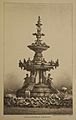
Grand Central Fountain pictured in 1868
-
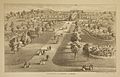
Contemporary lithograph of Fountain Gardens
-
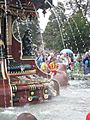
Paisley fountain restored, 2014


