
IRS tax forms facts for kids
The United States Internal Revenue Service (IRS) is like the government's accounting department. It collects money called taxes from people and businesses. These taxes help pay for important things like schools, roads, and parks. To do this, the IRS uses many different forms. These forms help people report their income, figure out how much tax they owe, and share other important financial information. There are hundreds of different forms for various tax situations. Besides federal forms, some states and local areas also have their own tax forms.
Contents
- Your Personal Tax Forms
- Forms for Organizations
- Forms for Businesses and Trusts
- Forms for Employers
- Taxes on Gifts and Estates
- Forms That Report Information
- Other Useful Tax Forms
- Keeping Tax Information Private
- Images for kids
- Learn More About Taxes
Your Personal Tax Forms
The IRS has forms for individuals, which means regular people like you and your family.
Form 1040: The Main Personal Tax Form
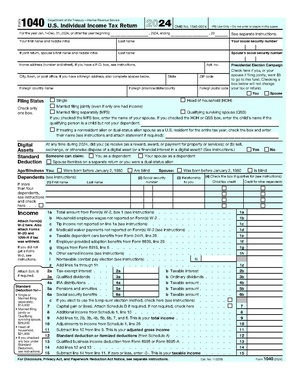
Form 1040 is the most common form for reporting your personal income tax to the IRS. It's used by almost everyone who earns money. The first Form 1040 was used over 100 years ago, back in 1913!
You usually need to file your Form 1040 by April 15th each year. If you need more time, you can ask for an extension until October 15th by filing Form 4868.
The Form 1040 helps you list your income, like money you earn from a job. It also helps you figure out any deductions (things that reduce your taxable income) or credits (money that directly reduces the tax you owe).
Important Schedules for Form 1040
Sometimes, you need to attach extra forms, called "schedules," to your Form 1040. These schedules provide more details about your income or deductions. Here are a few examples:
- Schedule A helps you list specific deductions if you have a lot of them. Otherwise, most people take a "standard deduction," which is a set amount.
- Schedule B is for reporting interest or dividend income, like money you earn from a savings account or investments.
- Schedule C is for people who are self-employed, like if you run a small business or do freelance work. It helps you report your business income and expenses.
- Schedule D is used to report capital gains and losses, which are profits or losses from selling things like stocks or property.
- Schedule E is for reporting income from renting out property or from certain types of businesses you invest in.
- Schedule 8812 helps you calculate the Child Tax Credit, which can help families with children.
In recent years, the IRS has simplified Form 1040. Many details that used to be on the main form are now on separate numbered schedules (like Schedule 1, 2, and 3).
Other Individual Forms
- The Form 1040X is used to make corrections to a Form 1040 you already filed.
- The Form 1040-ES is for people who don't have taxes taken out of their paychecks automatically. They use it to make estimated tax payments throughout the year.
Forms for Organizations
Some forms are used by organizations, not individuals.
Form 990: For Nonprofit Groups
Form 990 is used by nonprofit organizations, like charities or schools. These groups don't pay income tax, but they still need to show the IRS how they use their money. This form helps the public see how these organizations operate and ensures they are following the rules.
The IRS wants to make sure nonprofits are managed well. Form 990 asks questions about how the organization is run and who is on its board of directors. This helps keep things fair and honest.
Public Information About Nonprofits
The law says that nonprofit organizations must share their three most recent Forms 990 with anyone who asks. This means you can often look up these forms online to see how a charity spends its money. Websites like Guidestar and Charity Navigator use this information to help people choose good charities.
Form 5500: For Employee Benefit Plans
The Form 5500 is used for employee benefit plans, like retirement plans offered by companies. It helps make sure these plans are managed correctly and that employees' rights are protected.
Forms for Businesses and Trusts
Businesses and other groups also have their own tax forms.
Forms for Businesses (1120 Series)
- Form 1065 is used by partnerships, which are businesses owned by two or more people.
- Form 1120 is for larger businesses called C corporations. It helps them report their income and figure out their taxes.
- Form 1120S is for smaller businesses called S corporations, which have a special way of being taxed.
Form 1041: For Estates and Trusts
Form 1041 is used for estates and trusts. These are legal arrangements that manage money or property for someone, often after they have passed away.
Forms for Employers
Employers use special forms to report taxes related to their employees. These are often called "payroll taxes."
- Form 940 is for federal unemployment taxes, which help people who lose their jobs.
- Form 941 is used by most employers to report income tax and Social Security taxes withheld from employee paychecks.
- Schedule H (part of Form 1040) is used by individuals who employ household help, like a nanny.
Taxes on Gifts and Estates
- Form 706 is used to report estate taxes. This is a tax on the property and money left behind when someone passes away.
- Form 709 is used to report gift taxes. This is a tax on very large gifts given to others.
Forms That Report Information
These forms are usually prepared by a third party, like your employer or a bank. They report information to both the IRS and to you, so you can use it to fill out your own tax return.
Form 1095 Series: Health Insurance
The Form 1095 series reports information about your health insurance coverage.
- 1095-A is for health insurance bought through a special marketplace.
- 1095-B is for health insurance from other providers.
- 1095-C is for health insurance offered by your employer.
Form 1098 Series: Interest and Tuition
- The Form 1098 reports interest you paid on a mortgage (a loan to buy a house). This interest might help reduce your taxes.
- The Form 1098-E reports interest paid on student loans.
- The Form 1098-T reports tuition and other expenses paid for school. This information can help you claim tax credits for education.
Form 1099 Series: Other Income
The Form 1099 series reports different types of income that aren't regular wages. For example, if you do freelance work or get paid for a special project, you might receive a Form 1099. People who work as independent contractors are sometimes called "1099 workers."
There are many versions of Form 1099, depending on the type of income:
- 1099-DIV for dividends from investments.
- 1099-INT for interest income.
- 1099-MISC for various types of miscellaneous income.
- 1099-NEC for payments to non-employees (like freelancers).
- 1099-R for money received from pensions or retirement plans.
Form 5498 Series: Retirement Contributions
The Form 5498 series reports contributions made to retirement accounts, like IRAs.
W Series Forms: Wages and Withholding
Form W-2: Your Wage and Tax Statement
The Form W-2 is one of the most important forms you'll get if you have a job. Your employer sends it to you each year. It shows how much money you earned and how much tax was already taken out of your paychecks. You use this form to fill out your Form 1040.
Form W-4: Setting Your Withholding
When you start a new job, you fill out a Form W-4. This form tells your employer how much federal income tax to take out of each paycheck. You want to make sure the right amount is withheld so you don't owe a lot of tax at the end of the year or get too big of a refund.
Form W-7: For Taxpayer ID Numbers
The Form W-7 is used by people who need an ITIN (Individual Taxpayer Identification Number). This number is for people who need to file taxes but don't have a Social Security number.
Form W-9: Request for Your Taxpayer ID
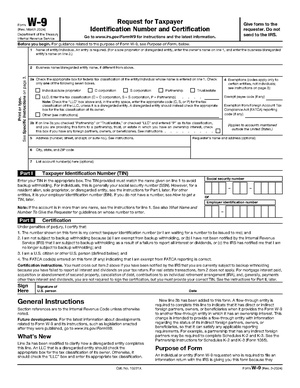
The Form W-9 is used when someone needs your Taxpayer Identification Number (like your Social Security number) to report payments they make to you. For example, if you do freelance work, the company paying you might ask for a W-9. This form is not sent to the IRS by you; the company keeps it and uses the information to send a Form 1099 to the IRS and to you.
Other Useful Tax Forms
- Form 8962 is used with healthcare subsidies for individuals and families who get health insurance through a healthcare exchange.
Keeping Tax Information Private
In the United States, most tax records are private. This means the government doesn't share your personal tax information with the public. However, for nonprofit organizations, some of their tax forms (like Form 990) are available for public viewing. This helps everyone see how these organizations are using their funds.
Images for kids
-
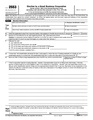
Form 2553, used by small businesses to choose a special tax status.
Learn More About Taxes
- IRS e-file (how to file taxes online)
- Taxation in the United States (general information about taxes in the U.S.)
