
List of the prehistoric life of Wisconsin facts for kids
Wisconsin is a state in the United States, and it has a long, fascinating history hidden in its rocks! This article is all about the amazing prehistoric creatures and plants whose fossils have been found right here in Wisconsin. Fossils are like clues from the past, showing us what life was like millions of years ago.
Contents
Ancient Life in Wisconsin
Precambrian Era: No Fossils Found Yet
The Precambrian Era was a super long time ago, before most complex life forms appeared. Scientists look for fossils from this time, but so far, no known Precambrian fossils have been found in Wisconsin. This means we haven't found any evidence of very early life forms from that period in the state.
Paleozoic Era: A Sea of Ancient Creatures
The Paleozoic Era was a time when Wisconsin was covered by warm, shallow seas. This was a perfect place for many different kinds of sea creatures to live and thrive. Because of this, many fossils from this era have been found here!
Amazing Animals of the Paleozoic Seas
Many of the fossils found in Wisconsin from the Paleozoic Era are from creatures that lived in the ocean. These include:
- Trilobites: These ancient sea bugs were like the cockroaches of the sea! They had hard shells and many segments. Some types found in Wisconsin include Acernaspis, Aglaspis, Bumastus, Calymene, Deiphon, Dikelocephalus, Isotelus, and Saukiella.


- Brachiopods: These creatures look a bit like clams, but they are different. They have two shells, but the top and bottom shells are different sizes. Many types of brachiopods, like Athyris, Atrypa, Lingula, and Strophomena, are found as fossils in Wisconsin.

- Corals: Just like today, ancient corals built reefs in the warm seas. Fossils of corals like Favosites and Halysites show us where these reefs once were.

- Crinoids: Often called "sea lilies," these animals looked like plants with a stalk and feathery arms. They were common in the Paleozoic seas. Periechocrinus is one example found in Wisconsin.

- Cephalopods: These are relatives of modern-day squids and octopuses, but many ancient ones had straight or coiled shells. Actinoceras and Michelinoceras are some of the cephalopod fossils found.
- Gastropods: These were ancient snails, like Holopea and Murchisonia.
- Other Arthropods: Besides trilobites, other ancient arthropods (creatures with jointed legs and exoskeletons) like Thylacares have been found. Thylacares is special because its first known fossils were found right here in Wisconsin!

What are "Type Localities"?
Sometimes, you'll see "type locality for genus" or "type locality for species" next to a fossil name. This means that the very first time scientists discovered and described that specific type of animal or plant, the fossil was found in Wisconsin! It's like Wisconsin was the "birthplace" of that scientific discovery.
Mesozoic Era: The Age of Dinosaurs (Not in Wisconsin!)
The Mesozoic Era is famous for dinosaurs! However, the Paleobiology Database shows that no Mesozoic fossils have been found in Wisconsin. This is because during much of the Mesozoic, Wisconsin was above sea level and experiencing erosion, not collecting new sediments where fossils could form.
Cenozoic Era: Ice Age Mammals and Insects
The Cenozoic Era is the most recent era, leading up to today. In Wisconsin, fossils from this time are mostly from the Ice Age, when huge glaciers covered much of the state.
Ice Age Giants: Woolly Mammoths
One of the most exciting finds from the Cenozoic Era in Wisconsin is the Mammuthus primigenius, also known as the Woolly Mammoth. These giant, hairy elephants roamed Wisconsin during the Ice Age. Their fossils, like bones and teeth, tell us about the cold environment they lived in.

Tiny Clues: Ice Age Insects
Besides mammoths, many fossils of small insects have been found from the Cenozoic Era. These include different kinds of beetles, like Agathidium (a round fungus beetle), Sitona (a weevil), and various types of ground beetles and rove beetles. Even tiny midges like Chironomus have left their fossil clues. These insect fossils help scientists understand what the climate and environment were like in Wisconsin during the Ice Age.


Images for kids
-
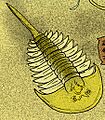
Restoration of the Cambrian arthropod Aglaspis
-
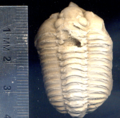
Fossil of the Silurian trilobite Calymene celebra
-
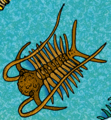
Life restoration of two species of the Silurian trilobite Deiphon
-
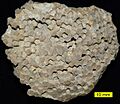
Fossil of the Late Ordovician-Permian tabulate coral Favosites
-

Illustration of a fossilized shell of the Cambrian-Late Ordovician brachiopod Lingulella
-
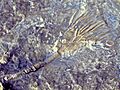
Fossil of the Silurian-Carboniferous crinoid ("sea lily") Periechocrinus
-
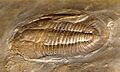
Fossil of the Cambrian-Ordovician trilobite Saukiella
-
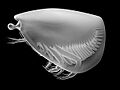
Life restoration of the Silurian arthropod Thylacares
-
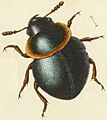
Illustration of a living Agathidium round fungus beetle
-
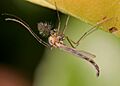
A living Chironomus midge
-

Restoration of a herd of Mammuthus primigenius, or woolly mammoths
-
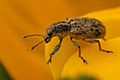
A living Sitona weevil
