
Woolly mammoth facts for kids
Quick facts for kids Woolly mammoth |
|
|---|---|
 |
|
| Largest European specimen, a male at Mammut-Museum Siegsdorf | |
Scientific classification  |
|
| Kingdom: | Animalia |
| Phylum: | Chordata |
| Class: | Mammalia |
| Order: | Proboscidea |
| Family: | Elephantidae |
| Genus: | †Mammuthus |
| Species: |
†M. primigenius
|
| Binomial name | |
| †Mammuthus primigenius (Blumenbach, 1799)
|
|
 |
|
| Dymaxion map showing the Late Pleistocene distribution of M. primigenius in blue (light blue was land at the time), inferred from fossil finds | |
| Script error: The function "autoWithCaption" does not exist. | |
| Synonyms | |
|
List:
Elephas primigenius Blumenbach, 1799
Elephas mammonteus Cuvier, 1799 Mammuthus boreus Brookes, 1828 Mammonteus primigenius Osborn, 1924 Elephas boreus Hay, 1924 |
|
Script error: No such module "Check for conflicting parameters".
The woolly mammoth (Mammuthus primigenius) is an extinct type of mammoth. It lived from the Middle Pleistocene until the Holocene epoch. This giant creature was closely related to the modern Asian elephant. It also lived alongside the large Columbian mammoth in North America. DNA studies show that these two species sometimes produced a hybrid.
In 1796, French scientist Georges Cuvier showed that mammoths were an extinct species. German naturalist Johann Friedrich Blumenbach gave it its scientific name in 1799. Many remains have stayed preserved in cold ground. Scientists learn about them through bones, teeth, and ancient cave paintings.
Contents
Woolly Mammoth Characteristics and Ice Age Adaptations
Adult woolly mammoths were roughly the size of modern African elephants. Male mammoths reached shoulder heights between 2.67 and 3.49 m (8 ft 9 in and 11 ft 5 in). They weighed between 3.9 and 8.2 t (3.8 and 8.1 long tons; 4.3 and 9.0 short tons). Females were smaller, reaching up to 2.6 m (8 ft 6 in) tall. A newborn calf weighed around 90 kg (200 lb).
Fur Coat and Cold Defenses
The mammoth thrived in chilly places during the last ice age. A thick coat protected it from severe cold. Long guard hairs covered a dense undercoat of fine wool. Special glands made natural oils that kept their hair waterproof. Small ears and a short tail helped stop painful frostbite. A thick layer of body fat added extra warmth beneath the skin.
Tusks and Teeth
Mammoths carried massive, curved tusks made of ivory. Male tusks grew over 4 m (13 ft) long. The animal used tusks and its flexible trunk to move objects and clear snow. Inside its mouth were four large molars. These molars had ridges of tough enamel for chewing tough plants. Over a lifetime, replacement molars grew six times.
Habitat and Diet
The woolly mammoth lived across a huge region called the mammoth steppe. This cold grassland stretched across northern Eurasia and North America. Other large animals shared this grassy world, including the woolly rhinoceros, wild horses, and heavy bison.
Mammoths were plant eaters that fed mainly on leafy forbs and herbs. They also ate tough grasses, sedges, mosses, and small shrubs. An adult mammoth ate up to 180 kg (400 lb) of food daily. They spent up to twenty hours every day looking for food.
Social Behavior, Reproduction, and Life Cycle
Woolly mammoths lived in social groups led by an older female. This setup is known as a matriarchal family group. Herds sometimes joined together during long migrations across open grasslands. Mothers cared for their young calves with help from the herd.
Like living elephants, woolly mammoths could live for about 60 years. Scientists count growth rings inside fossil tusks to discover an individual's age. Calves were born during the warmer spring and summer months. Young mammoths nursed on milk for up to three years before eating plants full-time.
Relationship with Humans and Extinction
Early humans lived alongside woolly mammoths during the Upper Palaeolithic era. People hunted them and used mammoth bones to build sturdy shelters. Artists carved mammoth ivory into Venus figurines and painted them inside caves. The famous Chauvet Cave and Rouffignac Cave contain many ancient paintings of these animals.
Most woolly mammoth herds vanished about 10,000 years ago during the Late Pleistocene extinctions. Rising temperatures altered the plants of the mammoth steppe. Hunting by humans also reduced their numbers. Small, isolated herds survived on St. Paul Island until 5,600 years ago. The very last group survived on Wrangel Island until roughly 4,000 years ago.
Famous Frozen Discoveries
Well-preserved bodies have been discovered frozen in icy permafrost across Siberia and Alaska. In 1977, miners found an intact young calf nicknamed "Dima". Another very famous baby mammoth called Lyuba was discovered in 2007 with intact skin. In 2010, researchers found a young female named Yuka. These frozen discoveries let scientists study authentic soft tissues and prehistoric DNA.
Images for kids
-
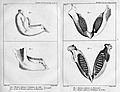
Mandible comparison by Georges Cuvier
-
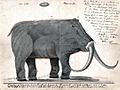
Early drawing of a mammoth carcass
-
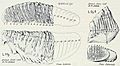
Illustration of fossil molars
-
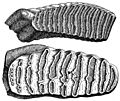
Comparison of mammoth molars
-
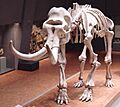
Skeleton showing intermediate traits
-
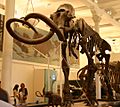
Hybrid mammoth skeleton mount
-

Diagram of mammoth family relationships
-

Size comparison to humans and modern elephants
-

Mammoth skeleton size diagram
-

Skeletal outline of European and Siberian specimens
-

Life-sized museum model
-

Preserved mammoth fur sample
-
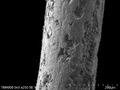
Microscope view of mammoth hair
-
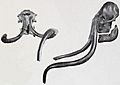
Mammoth skull with twisted tusks
-

Fossil molar tooth
-

Diagram of tooth ridges
-
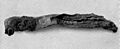
Preserved mammoth trunk tip
-
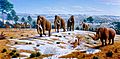
Ice age scene with grazing wildlife
-
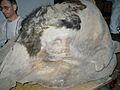
Close view of preserved eye
-
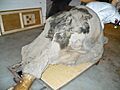
Preserved head of the Yukagir mammoth
-
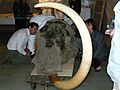
Yukagir mammoth remains
-
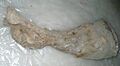
Preserved mammoth leg with foot pad
-
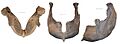
Fossil lower jaw
-
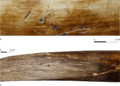
Tusk showing surface wear
-
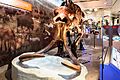
Mounted skeleton in walking pose
-

Tusk rings used to determine age
-
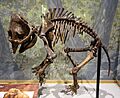
Fossil skeleton of a young calf
-
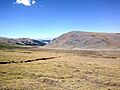
Modern landscape similar to mammoth steppe
-

Mountain steppe landscape
-

Painting of a mammoth herd
-
Prehistoric mammoth ivory engraving
-
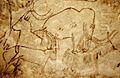
Cave drawing of a mammoth
-
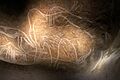
Prehistoric cave art
-
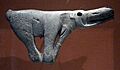
Carved prehistoric spear thrower
-
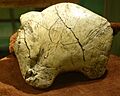
Ancient carving of a mammoth
-

Model of a prehistoric bone hut
-
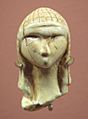
Ancient face carved in ivory
-
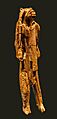
Lion-man carving made from mammoth ivory
-
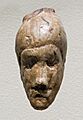
Ivory carving of a face
-

Reindeer carving in ivory
-
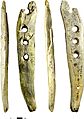
Ancient mammoth ivory tool
-
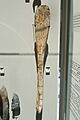
Carved prehistoric ivory spoon
-
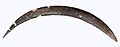
Ivory hunting tool
-
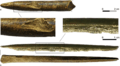
Ivory spear tips made by early humans
-
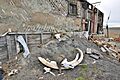
Mammoth bones on Wrangel Island
-
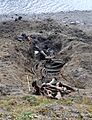
Excavating a skeleton on the Taymyr Peninsula
-

Map showing ice age habitat changes
-
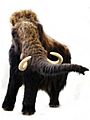
Restoration model of an adult mammoth
-
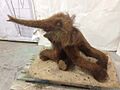
Model of the baby mammoth Dima
-
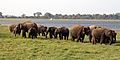
Herd of wild Asian elephants
-
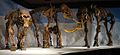
Mounted skeleton herd on display
-
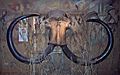
Fossil skull found in the North Sea
-
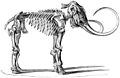
Illustration of Adams mammoth skeleton
-
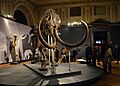
Adams mammoth mounted in a museum
-
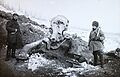
Discovery of the Berezovka mammoth
-
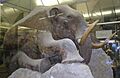
Museum mount of the Berezovka specimen
-
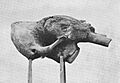
Mammoth skull with skin attached
-
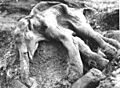
Remains found in northern regions
-
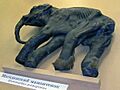
Mummified calf Dima on display
-
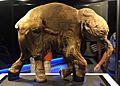
Preserved baby mammoth Lyuba
-
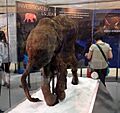
Lyuba on public exhibition
-
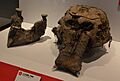
Skull and jaw of Yuka
-
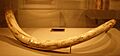
Carved tusk art
-
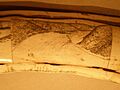
Detail of carved ivory tusk
-
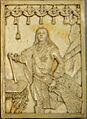
Carving of Peter III on mammoth ivory
-
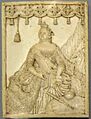
Carving of Empress Elizabeth on mammoth ivory
-
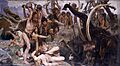
Art depicting early human hunters
-
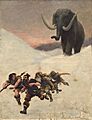
Painting of early humans facing a mammoth
-
Mammoth symbol on coat of arms
-
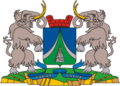
Coat of arms featuring a mammoth
-

Coat of arms showing a woolly mammoth


.JPG)


.jpg)


_-_Skull_and_Lower_Jaw_A.JPG)


.jpg)
.jpg)


.png)

.png)
See also
 In Spanish: Mamut lanudo para niños
