
Mango Avenue, Eimeo facts for kids
Quick facts for kids Mango Avenue, Eimeo |
|
|---|---|

Mango Avenue, Eimeo
|
|
| Location | Mango Avenue (between Whittles Lane and Heidke Street), Eimeo, Mackay Region, Queensland, Australia |
| Official name: Mango Avenue | |
| Type | state heritage (landscape) |
| Designated | 31 July 2008 |
| Reference no. | 602553 |
| Significant period | c.1880s - present |
| Lua error in Module:Location_map at line 420: attempt to index field 'wikibase' (a nil value). | |
Mango Avenue is a special street in Eimeo, Australia. It is famous for its beautiful row of old mango trees. These trees line the road between Whittles Lane and Heidke Street. This unique avenue is so important that it was added to the Queensland Heritage Register on July 31, 2008.
Contents
History of Mango Avenue
Early Days of Eimeo

The story of Mango Avenue begins in the 1880s. A man named Jeremiah Downs Armitage owned land near the beach in Eimeo. He wanted to create a path to his hotel and boarding house. So, he decided to plant a long row of mango trees along this path.
The area around the Pioneer River started to grow in the 1860s. The town of Mackay was established in 1863. It quickly became an important port and business center. Sugar farms also started to develop along the river. By the 1880s, many people were moving to Queensland. The sugar industry in Mackay was doing very well.
Jeremiah Armitage and His Vision
Jeremiah Armitage arrived in Mackay in the early 1870s. He bought a large piece of land, about 105 acres, right by the ocean. He named this place Eimeo. This name came from an island near Tahiti where his father had been a missionary.
Armitage first worked as a timber merchant. But by the 1880s, he focused on growing fruit. To earn more money, he turned Eimeo into one of Mackay's first tourist spots.
The Eimeo Hotel and Gardens
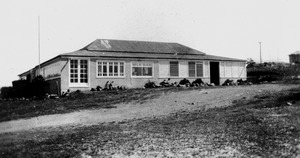
In April 1880, Armitage opened a new boarding house. It was on a hill overlooking the sea. This place later became known as the Eimeo Hotel. The house had a large 9-acre garden filled with fruit trees. Visitors could enjoy swimming, boating, fishing, and even hunting.
Armitage is believed to have planted two rows of trees. One was made of coconut palms. The other was the famous row of mango trees. These trees lined the path to his boarding house. Mango trees are originally from India and Southeast Asia. They produce tasty fruit and offer great shade. Early settlers in North Queensland often planted them.
Eimeo Becomes a Popular Spot

Over the years, the Eimeo property changed owners several times. In 1920, the large 105-acre property was divided into smaller blocks. The path leading to the Eimeo Hotel was officially made a public road. This road became known as Mango Avenue.
As more people started using cars in the 1920s, Eimeo beach and the Eimeo Hotel became very popular. They were easy to reach from Mackay. A government guide from 1929 described Eimeo as a beautiful place. It mentioned the coconut palms and the "avenues of mango trees." This shows that the mango trees were already well-known by then. People loved driving through the shady avenue.
Changes Over Time

In 1932, Mrs. Lavinia Walters bought the hotel site. She built a new Eimeo Hotel in 1934. She even added an outdoor dance floor and a skating rink. She also helped get a paved road built between Eimeo and Mackay in 1938.
During World War II, American soldiers stayed at the Eimeo Hotel for rest. The hotel that stands there today, the Pacific Hotel, was built in 1954.
Sadly, the coconut palms were removed in the 1990s. But the mango trees along Mango Avenue are still there. They continue to be a beautiful sight and a popular attraction.
What Mango Avenue Looks Like
Mango Avenue is easy to spot because of its many old mango trees. These trees are very tall, about 15 to 20 meters high. There are 16 trees on one side of the road and 18 on the other. Their branches meet overhead, creating a cool, shady tunnel. This tunnel effect is very dramatic as you drive through.
The road itself is a narrow strip of pavement. There are no curbs, and the entrances to nearby houses are simple gaps between the tree trunks. A concrete path runs along the western side of the road.
Why Mango Avenue is Important
Mango Avenue was added to the Queensland Heritage Register because it is very special.
A Glimpse into History
The mango trees from the 1880s show us how tourism started in North Queensland. They are a rare reminder of the early Eimeo boarding house and hotel. This was a time when the region was growing fast. The trees also show how mangoes were used for shade and to make streets beautiful in tropical Queensland.
A Great Example of an Avenue
This avenue of mango trees is over 120 years old. It is an excellent example of a grand entrance lined with trees, especially in a coastal area.
Beautiful and Memorable
People have always loved Mango Avenue for its beauty. Driving through the shady tunnel of trees is a unique experience. Visitors have enjoyed this special feeling since at least the 1920s, and probably even earlier. It is a memorable part of Mackay's recreational history.
