
Memory disorder facts for kids
Memory disorders happen when parts of the brain that help us remember things get damaged. This damage makes it hard to store new memories, keep old ones, or recall them when we need to. Some memory disorders, like Alzheimer's disease, get worse over time. Others, like those from a head injury, can happen suddenly.
Contents
Types of Memory Disorders
Agnosia
Agnosia means you can't recognize certain objects, people, or sounds. It usually happens because of brain damage, often in areas that process what you see or touch. It can also be caused by a brain disorder. Treatments depend on where the damage is and what caused it. People can sometimes recover, depending on how serious the damage is. There are many types of agnosia, like not recognizing faces (prosopagnosia) or not recognizing objects by touch (astereognosis).
Alzheimer's Disease
Alzheimer's disease (AD) is a serious brain disease that slowly gets worse. It causes brain cells to lose their connections. Alzheimer's is the most common type of dementia. About 1 to 5 out of every 100 people around the world have Alzheimer's. Women are more often affected by Alzheimer's disease. Studies show that women with AD might have more severe memory problems and a faster decline than men of the same age.
-
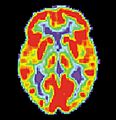
A PET scan of a healthy brain
-
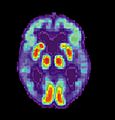
A PET scan of a brain with Alzheimer's disease


Amnesia
Amnesia is a brain condition where memory and learning are affected much more than other brain functions. There are two main types of amnesia: Anterograde amnesia and retrograde amnesia. These types often involve damage to parts of the brain called the hippocampal or medial temporal lobe.
People with anterograde amnesia find it hard to learn and remember new information after their brain was damaged. For example, they might not remember what they had for breakfast. People with retrograde amnesia usually have trouble remembering things that happened before their brain damage. However, they often still remember personal experiences or general facts.
Brain Injury

A Traumatic brain injury (TBI) happens when an outside force damages the brain. This can lead to amnesia, depending on how serious the injury is. A head injury can cause memory loss that lasts for a short time or for a long time. Sometimes, people have post-traumatic amnesia (PTA), where they forget events right after the injury. This can happen even if they don't forget things from before the injury.
Studies show that during PTA, people with head injuries forget new information very quickly. However, after PTA ends, their forgetting rates usually return to normal. Brain injuries can also happen from a stroke. A stroke cuts off oxygen to part of the brain, causing damage. Strokes can lead to problems with short-term memory and make it hard to learn and remember new things.
Dementia
Dementia is a group of disorders where thinking ability and memory slowly get worse as the brain becomes damaged. Some types of dementia can be reversed, like those caused by thyroid disease. Other types, like Alzheimer's disease, cannot be reversed. More than 35 million people worldwide have dementia.
While some changes, like gray hair, are normal parts of aging, forgetting how to do everyday tasks is not. It's important to know the difference between normal aging and signs of dementia. Mild memory problems can be part of aging, but more serious changes need attention.
One type of dementia is called Vascular dementia. This type is not a slow decline. Instead, it causes sudden changes due to a heart attack or stroke, which reduces blood flow to the brain. Research shows that high blood pressure can damage the blood-brain barrier (BBB). The BBB acts like a "gatekeeper" for the brain, keeping out harmful substances. As people age, the BBB can start to break down. This breakdown can affect memory and learning.
High cholesterol and Type 2 diabetes are also linked to vascular dementia. These factors can also increase the risk of stroke and Alzheimer's disease. The number of people with dementia is expected to greatly increase in the coming years.
Hyperthymestic Syndrome
Hyperthymestic syndrome is a very rare condition where a person has an incredibly detailed autobiographical memory. This means they can remember almost every day of their life in great detail. They can recall events from when they were about five years old onwards, except for days where nothing special happened. Only a few cases of this condition have been confirmed.
Huntington's Disease
Huntington's disease (HD) is a brain disorder that people inherit from their parents. It slowly gets worse over time. HD causes uncontrolled movements, mood changes, and a loss of thinking abilities. If a parent has Huntington's, each child has a 50% chance of inheriting it.
The first signs of Huntington's Disease are often small, like small twitches or mood swings. People might also become clumsy, depressed, or irritable. As the disease gets worse, speech can become slurred, and it becomes hard to communicate. Eventually, people might need a wheelchair or be confined to a bed.
Parkinson's Disease
Parkinson's disease (PD) is a brain disease that affects movement. It shares some features with normal aging. Movement is usually controlled by a chemical called dopamine. In Parkinson's, the brain cells that make dopamine start to die. This causes symptoms like tremors (shaking), slowness, stiffness, and balance problems. As the disease progresses, other symptoms like depression or memory changes can also appear.
Memory problems are common in PD. These problems can be similar to those seen in normal aging, but there isn't a clear link between normal aging and Parkinson's memory issues. Studies show that people with Parkinson's often have more trouble with attention, memory, and thinking skills compared to healthy people. They might find it harder to remember things without clues than with them.
Stress
Aging can affect how the brain works, including learning and memory. Stress can also negatively impact learning, especially in a brain area called the hippocampus. Long-term stress can cause age-related problems in the hippocampus. When the hippocampus is damaged, the brain might not be able to form new memories properly, which affects memory retention. It's important to understand how anxiety and stress can affect memory, especially in the aging brain, which already has challenges with remembering things.
Wernicke–Korsakoff Syndrome
Wernicke–Korsakoff syndrome (WKS) is a serious brain disorder caused by not having enough thiamine (vitamin B1). It causes problems with eye movement, balance, and mental state. People with Korsakoff's syndrome also have severe amnesia, get confused easily, and often make up information to fill in memory gaps (called confabulation).
Other symptoms of WKS include confusion and impaired short-term memory. It also makes it hard for a person to learn new things. People with WKS might seem uninterested or easily agitated.
Real-Life Examples
- A.J.
A.J. had a rare memory disorder called hyperthymestic syndrome. She couldn't forget things. Her autobiographical memory was so good that she remembered every day of her life in great detail, with only a few exceptions. She couldn't control what she remembered or forgot.
Clive Wearing developed anterograde amnesia after a rare virus attacked his brain. The virus damaged his hippocampus, leading to his amnesia. He could not form new memories.
- Henry Molaison (known as H.M.)
Molaison had severe seizures. Doctors removed parts of his brain to help stop the seizures. After the surgery, he had anterograde amnesia, meaning he couldn't form new memories. He also had some retrograde amnesia, forgetting some things from before the surgery. However, he could still learn new skills, like riding a bike, even if he didn't remember learning them.
- KC (patient)
K.C. had significant damage to his brain, especially in areas important for memory. This damage caused him to have severe problems with learning and remembering new information. He also had trouble remembering his own past experiences, but he could still remember places and how to get around.
Aging and Memory
Normal aging can cause some decline in memory and thinking skills, but it doesn't usually cause memory disorders on its own. Factors like genetics and brain cell damage can play a role in memory disorders. Scientists are looking for ways to spot diseases like Alzheimer's and dementia early. One sign they look for is a protein called beta-amyloid, which builds up in the brain as we age. While some healthy older adults have these deposits, they are much higher in people with Alzheimer's and dementia.
_presenile_onset.jpg)
Also, traumatic brain injury (TBI) is increasingly linked to getting Alzheimer's disease earlier in life. Studies show that memory scores decline as people get older. For example, people aged 60-69 generally remember more words than those aged 80 and older.
The difference between normal aging and a memory disorder often comes down to the amount of certain protein deposits or tangles in the brain. If there's a lot of these, memory connections get blocked, and memory functions decrease much more than what is normal for that age. This is when a memory disorder is diagnosed.
Cultural Views
Mental health issues are becoming more common around the world. As the population gets older, there will be a greater need for mental health care, including for memory disorders.
In Western cultures, mental illness is often judged by how dangerous someone is, how capable they are, and how responsible they are for their actions. This can lead to people with mental illnesses facing unfair treatment, like being denied jobs or housing. It's important to increase support services for people with memory problems, despite the negative ideas some people have about mental illness.
Because of these negative ideas, it can be very hard for people who care for individuals with memory disorders. These caregivers, often family members, have a big responsibility to help with daily life and emotional support. Even though there are services available, many caregivers don't use them.
In some Asian cultures, there's a focus on how people interact in society. Each person has a role, and it's important to keep that role. Mental illness might be seen as an imbalance in the body, mind, and spirit. This can lead to different ideas about how to treat memory disorders, focusing more on relationships and fitting in with others' expectations, rather than just medical treatments. Sometimes, having an imbalance might even be seen as a way to receive care and sympathy from others.
See also
- Central nervous system
- Neuroimaging
