
Orange streamcruiser facts for kids
Quick facts for kids Orange streamcruiser |
|
|---|---|
Scientific classification  |
|
| Kingdom: | Animalia |
| Phylum: | Arthropoda |
| Class: | Insecta |
| Order: | Odonata |
| Infraorder: | Anisoptera |
| Family: | Austrocorduliidae |
| Genus: | Hesperocordulia Tillyard, 1911 |
| Species: |
H. berthoudi
|
| Binomial name | |
| Hesperocordulia berthoudi Tillyard, 1911
|
|
 |
|
| Script error: The function "autoWithCaption" does not exist. | |
Script error: No such module "Check for conflicting parameters".
The orange streamcruiser (scientific name: Hesperocordulia berthoudi) is a type of dragonfly. It's a special insect because it's found only in one place: south-western Australia. This means it is endemic to that area.
This amazing dragonfly is known for its bright orange, red, and black colors. It has clear wings and very long legs. You can often spot orange streamcruisers flying near streams, rivers, and pools.
Contents
Meet the Orange Streamcruiser
The orange streamcruiser is the only species in its group, called a genus. This means it's a monotypic genus, having just one kind of dragonfly in it. Its scientific name is Hesperocordulia berthoudi.
What Does it Look Like?
The orange streamcruiser is a medium-sized dragonfly. It has a striking mix of orange, red, and black colors on its body. Its wings are clear, allowing you to see through them. One of its most noticeable features is its very long legs, which help it catch prey while flying.
Where Does it Live?
This unique dragonfly lives in watery places. You can find it around streams, rivers, and pools in south-western Australia. These habitats provide the perfect environment for them to hunt and lay their eggs.
Gallery
-
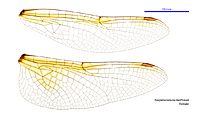
Female Hesperocordulia berthoudi wings
-
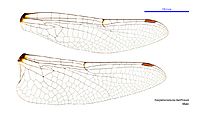
Male Hesperocordulia berthoudi wings
.jpg)
.jpg)
Dragonfly Families: A Scientific Puzzle
Scientists group living things into families based on their shared features. For the orange streamcruiser, there are different ideas about which family it belongs to. This is normal in science, as new information can change how things are classified.
- Some experts, like those at the Australian Faunal Directory, place it in the Austrocorduliidae family.
- Others, like the World Odonata List, suggest it belongs to the Synthemistidae family.
- Even Wikispecies lists it under the Corduliidae family.
- In 2006, a field guide about Australian dragonflies placed it in the Oxygastridae family.
These different views show how scientists continue to study and learn about the natural world.
