
Pheidole symbiotica facts for kids
Quick facts for kids Pheidole symbiotica |
|
|---|---|
| Conservation status | |
Scientific classification  |
|
| Kingdom: | Animalia |
| Phylum: | Arthropoda |
| Class: | Insecta |
| Order: | Hymenoptera |
| Family: | Formicidae |
| Subfamily: | Myrmicinae |
| Genus: | Pheidole |
| Species: |
P. symbiotica
|
| Binomial name | |
| Pheidole symbiotica Wasmann, 1909
|
|
| Script error: The function "autoWithCaption" does not exist. | |
Script error: No such module "Check for conflicting parameters".
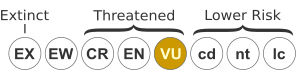
Pheidole symbiotica is a tiny ant species. It belongs to a large group of ants called Pheidole. These special ants are found only in one country: Argentina in South America. Scientists have listed them as a "Vulnerable" species. This means they need our help to protect their homes and make sure they don't disappear.
Contents
What is Pheidole symbiotica?
Pheidole symbiotica is a type of ant. Ants are amazing insects that live in large groups called colonies. They are known for working together. This specific ant was first described by a scientist named Wasmann in 1909. The name "symbiotica" suggests it might have a special relationship with other living things.
Where Do These Ants Live?
These ants are endemic to Argentina. This means you can only find them naturally in Argentina. They live in different habitats there. Ants play an important role in their ecosystems. They help with things like turning over soil and spreading seeds.
Why Are They Vulnerable?
Pheidole symbiotica is listed as a "Vulnerable" species. This status comes from the International Union for Conservation of Nature (IUCN). Being vulnerable means that the species faces a high risk of becoming endangered in the wild. This can happen because their homes are destroyed. It can also happen if their food sources disappear. Protecting their natural habitats is very important.
What Are Pheidole Ants Like?
Pheidole is one of the largest groups of ants in the world. There are over 1,000 different species! Many Pheidole ants are known as "big-headed ants." This is because some of their workers have very large heads. These ants often have two main types of workers.
- Minor workers are smaller. They do most of the daily tasks. This includes finding food and caring for the young.
- Major workers are larger. They have big heads and strong jaws. They often act as "soldiers" to defend the colony. They can also help to crush seeds.
Ant Colonies and Life Cycle
Ants live in organized colonies. A colony usually has one or more queens. The queen's main job is to lay eggs. Most of the ants you see are female workers. They do all the work for the colony. Male ants, called drones, are usually only born to mate with new queens.
The ant life cycle has four stages:
- Egg: The queen lays tiny eggs.
- Larva: The eggs hatch into larvae. These look like small, white grubs. Workers feed them.
- Pupa: The larva changes into a pupa. This stage is like a cocoon.
- Adult: The adult ant emerges from the pupa. It is ready to join the colony's work.
What Do Ants Eat?
The diet of Pheidole ants can vary. Many species are omnivores. This means they eat both plants and animals. They might eat seeds, dead insects, or sweet liquids. Some Pheidole ants are important seed-harvesters. They collect seeds and store them in their nests. This helps to spread plant seeds in their environment.
See also
 In Spanish: Pheidole symbiotica para niños
