
Spruce pine facts for kids
Quick facts for kids Spruce pine |
|
|---|---|
.jpg) |
|
| Conservation status | |
Scientific classification  |
|
| Kingdom: | Plantae |
| Clade: | Tracheophytes |
| Division: | Pinophyta |
| Class: | Pinopsida |
| Order: | Pinales |
| Family: | Pinaceae |
| Genus: | Pinus |
| Subgenus: | Pinus subg. Pinus |
| Section: | P. sect. Trifoliae |
| Subsection: | P. subsect. Australes |
| Species: |
P. glabra
|
| Binomial name | |
| Pinus glabra Walter
|
|
 |
|
| Natural range of Pinus glabra | |
| Script error: The function "autoWithCaption" does not exist. | |

Script error: No such module "Check for conflicting parameters".
The spruce pine (Pinus glabra) is a special type of tree. You can find it growing in the warm, coastal areas of the Southern United States. Its natural home stretches from southern South Carolina down to northern Florida. It also grows west into southern Louisiana.
This pine tree is known for growing straight and tall. It can reach heights of 20 to 40 meters. That's as tall as a 10-story building!
About the Spruce Pine
The spruce pine is different from many other pine trees. Most pines grow together in big, pure pine forests. But the spruce pine prefers to be a bit of a loner.
Where it Grows
You will usually find spruce pines scattered among other trees. They like moist, mixed hardwood forests. This means they grow alongside trees like oaks and maples.
Shade Tolerance
To survive in these mixed forests, the spruce pine has a cool trick. It can handle more shade than most other pine trees. This ability to grow well even when it doesn't get full sunlight is called "shade tolerance." It helps the spruce pine compete with the bigger hardwood trees around it.
What it Looks Like
The leaves of the spruce pine are like thin needles. They grow in bundles of two. Each needle is about 5 to 8 centimeters long. They are very slender, only about 1 millimeter thick. The needles are a shiny, dark green color.
The cones of the spruce pine are small and slender. They are usually 4 to 6 centimeters long. The scales on the cones have weak prickles. These tiny prickles fall off easily as the cone gets older.
Images for kids
-
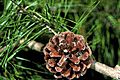
Pinus glabra foliage and cone
-
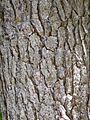
Bark of mature Pinus glabra
-
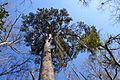
Crown of mature Pinus glabra


