
St. Louis–San Francisco 4003 facts for kids
Quick facts for kids St. Louis–San Francisco 4003 |
|||||||||||||||||||||||||||||||||||||||||||||||||||||||||||||||||||||||||
|---|---|---|---|---|---|---|---|---|---|---|---|---|---|---|---|---|---|---|---|---|---|---|---|---|---|---|---|---|---|---|---|---|---|---|---|---|---|---|---|---|---|---|---|---|---|---|---|---|---|---|---|---|---|---|---|---|---|---|---|---|---|---|---|---|---|---|---|---|---|---|---|---|---|

Frisco 4003 in 2008.
|
|||||||||||||||||||||||||||||||||||||||||||||||||||||||||||||||||||||||||
|
|||||||||||||||||||||||||||||||||||||||||||||||||||||||||||||||||||||||||
|
|||||||||||||||||||||||||||||||||||||||||||||||||||||||||||||||||||||||||
|
|||||||||||||||||||||||||||||||||||||||||||||||||||||||||||||||||||||||||
|
|||||||||||||||||||||||||||||||||||||||||||||||||||||||||||||||||||||||||


The St. Louis–San Francisco 4003 is a special kind of steam train. It's known as a "Mikado" type, which means it has a specific wheel arrangement: two small wheels at the front, eight large driving wheels in the middle, and two small wheels at the back (2-8-2). This powerful engine was built in 1919 by the American Locomotive Company (ALCO).
It was originally meant for the Pennsylvania Railroad. However, that railroad decided not to take many of the trains. So, the United States Railroad Administration (USRA) gave 23 of these locomotives, including the 4003, to the St. Louis–San Francisco Railway. This railway was often called the "Frisco." Today, you can see the St. Louis–San Francisco 4003 on display at the Fort Smith Trolley Museum in Fort Smith, Arkansas.
Contents
How USRA Locomotives Were Built
During World War I, from 1917 to 1920, the United States government took control of all the railroads. This was done to make sure trains could move supplies and soldiers efficiently. As part of this plan, new trains built during this time had to follow special "USRA standard designs."
The Light Mikado was one of these standard designs. The 4003 was one of 625 Light Mikados built by the USRA. Many more were built later, making it one of the most common train designs ever. After the Frisco railway got these Mikado trains, they made some changes. They added "boosters" to the back wheels to give them more power. They also raised the cab roofs so the engineers had more room.
The Story of Locomotive 4003
Locomotive 4003 was one of three Mikado trains built by ALCO in 1919. It was made at their Schenectady Locomotive Works factory. This large train cost about $53,619 to build back then.
The Frisco railway used the 4003 to pull heavy freight trains. It traveled between Fort Smith, Arkansas and Monett, Missouri. This route included a challenging part through the Boston Mountains, which had steep hills. The train helped move important goods like berries and zinc. In 1941 alone, a million quarts of berries were shipped by train!
In the late 1940s, many railroads, including the Frisco, started using diesel trains. Diesel trains were newer and more efficient than steam trains. Because of this, the 4003 was retired from service in early 1952. This happened just before the very last steam train ran on the Frisco railway.
4003's Retirement and Display
The Frisco railway kept the 4003 until 1954. Then, they gave it to the City of Fort Smith. The city put the train on display at Kay Rodgers Park. It stayed there for nearly 50 years, a big piece of history for everyone to see.
Later, the city moved the locomotive to the Fort Smith Trolley Museum. The museum agreed to pay for the cost of moving the huge train. Today, the 4003 is still on display outside the museum. It's a great example of the powerful steam engines that once moved goods across the country.
While it might be possible to make the 4003 run again, it would be very expensive. Also, the museum doesn't have a long enough track for it to run on. In 2004, the locomotive was added to the National Register of Historic Places. This means it's recognized as an important historical item.
Images for kids
-
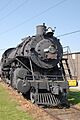
Frisco 4003 in 2008.
