
Taipei Metro facts for kids
Quick facts for kids Taipei Metro |
|
|---|---|
.svg) TRTC381 in Beitou Station.JPG |
|
| Info | |
| Owner | Taipei City Government |
| Locale | Taipei metropolitan area, Taiwan |
| Transit type | Rapid transit Rubber-tyred metro (Wenhu line) |
| Number of lines | 5 |
| Number of stations | 118 |
| Operation | |
| Began operation | March 28, 1996 |
| Operator(s) | Taipei Rapid Transit Corporation |
| Technical | |
| System length | 138.3 km (85.9 mi) |
| Track gauge | 1,435 mm (4 ft 8 1⁄2 in) standard gauge |
| Top speed | 80 kilometres per hour (50 mph) |
Taipei Metro is a fast and modern rapid transit train system in Taiwan. People also call it the MRT, which stands for Mass Rapid Transit. It connects the capital city of Taipei with New Taipei City. The metro helps millions of riders travel across the busy Taipei metropolitan area every day. It is famous for being clean, safe, and right on time.
The network includes underground tracks, ground tracks, and tracks built up in the air. Over two million passenger trips happen every single day. Passengers love the system because it reduces traffic congestion on crowded city streets.
Contents
History of the Taipei Metro System
Planning and Building the First Lines

During the 1970s, Taiwan experienced great economic growth. More cars filled the roads, which caused bad traffic jams. In February 1977, the Institute of Transportation within the Ministry of Transportation and Communications shared a plan for five train lines. Government leaders in the Executive Yuan approved the network plan in May 1986.
Workers started building the tracks on 15 December 1988. Construction closed many main roads, so local drivers called this time the "dark age of Taipei traffic." Engineers solved many design challenges before the network finally opened to riders.
Opening Day and System Growth

The metro began running on 28 March 1996 with the elevated Wenhu line. This line used driverless, medium-capacity trains between Zhongshan Junior High School and Taipei Zoo. Exactly one year later, the Tamsui–Xinyi line opened from Tamsui to Zhongshan. It later reached Taipei Main Station.
In December 1999, the Bannan line opened. It connected the eastern and western parts of the capital. New lines and extensions opened over the years, including the Zhonghe–Xinlu line and Songshan–Xindian line. On 4 July 2007, the Maokong Gondola cable-car system began carrying visitors to scenic mountain spots.
How the Train Lines and Stations Work
Daily Train Routes

Trains run every day from six in the morning until midnight. During busy rush hours, a train arrives every few minutes. The trains use a hub layout, meaning most lines run outward from central Taipei.
To keep stations tidy, nobody may eat, drink water, or chew gum inside the paid ticket areas. Announcements tell riders which stop comes next. These voice messages play in Mandarin, English, Taiwanese, and Hakka. Major tourist stations also include spoken messages in Japanese and Korean.
Friendly Station Features

Every station offers easy access for people with disabilities, following the goals of the disability rights movement. Stations have ramps, elevators, wide gates, and tactile paths on the floor.
Trains stop at either an island platform with tracks on both sides, or a side platform beside a single track. Busy hubs like Guting, Ximen, and Chiang Kai-shek Memorial Hall have a cross-platform interchange. This design lets passengers walk straight across the platform to change lines without climbing stairs. Automatic platform screen doors keep riders safe from the tracks. Bright LED displays and screens show when the next train will arrive.
Public Art and Shopping Centers
Stations double as exciting community spaces filled with art. Riders can spot painted tiles, sculptures, and murals at places like Shuanglian and Jiantan. Beimen station even displays old archaeological objects found deep underground during digging.
Large underground malls sit beneath the busy streets. The Zhongshan Metro Mall, Taipei City Mall, and East Metro Mall let commuters shop, eat snacks, and stay dry on rainy days.
Fares, Smart Cards, and Train Technology
Paying for Trips

Travelers can buy a blue plastic RFID token for a single trip. Most regular riders tap rechargeable smart cards, such as an EasyCard or iPASS. The system also lets riders pay at speed gates with contactless cards and mobile wallet apps on their phones.
Modern Trains and Maintenance

All metro trains are electric multiple unit sets that collect electricity from a third rail. The Wenhu line uses rubber tires on concrete tracks. Larger lines use steel wheels on a standard steel rail.
A computer system called automatic train operation helps run the trains smoothly. On larger lines, a human driver watches the controls and operates the train doors. Maintenance crews use special machines like a tamping machine and a railgrinder at night to keep tracks smooth and safe. The trains sleep and get cleaned at large rail yards, including Beitou Depot.
Images for kids
-
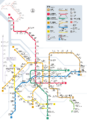
Official metro map
-
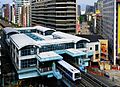
Nanjing Fuxing station
-
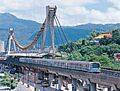
Dragon boat roof at Jiantan station
-
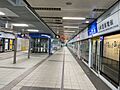
Nangang Exhibition Center platform
-
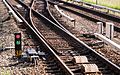
Track switch and signal light
-
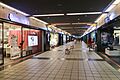
Entrance to the East Metro Mall
-
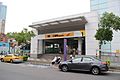
Sanchong transfer station
-
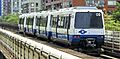
VAL256 medium-capacity train
-
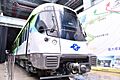
Alstom train for new metro line
-
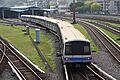
C301 train resting at the depot
-
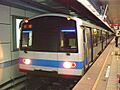
C321 train on the Bannan line
-
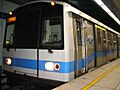
C341 train arriving at Ximen
-
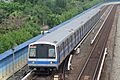
C371 train on the Tamsui line
-
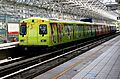
Colorful train on the Xinbeitou branch
-
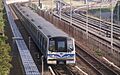
C381 high-capacity train
-
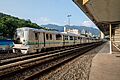
CR381A train car at Beitou Depot
-
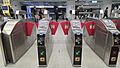
Modern ticket speed gates
-
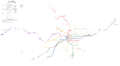
Map of train routes across the city
-
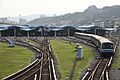
Tracks at Beitou Depot
-
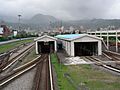
Train wash at Beitou Depot
-
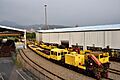
Maintenance train at Beitou Depot
-
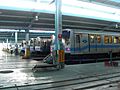
Inside the workshop at Beitou
-
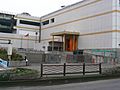
Building at Xindian Depot
-
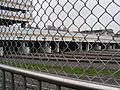
Rails at Xindian Depot
-
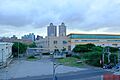
Gate at Luzhou Depot
-
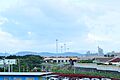
Luzhou Depot yard
-
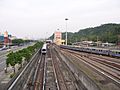
Stabling tracks at Nangang Depot
-
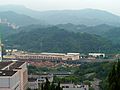
Overview of Muzha Depot
-
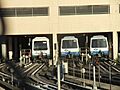
Muzha Depot trains
-
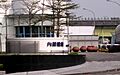
Gate at Neihu Depot


.jpg)


.jpg)


See Also
 In Spanish: Metro de Taipéi para niños
- Maokong Gondola
- Rail transport in Taiwan
- List of metro systems
