
Blue corn facts for kids

_and_roasted_and_ground_(R).jpg)

Blue corn is an unusual type of maize known for its deep blue or purple kernels. It belongs to a group called flint corn, which has hard outer shells. Native American farmers developed this plant hundreds of years ago. Today, people grow it across Mexico, the Southwestern United States, and the Southeastern United States. It has a sweet, nutty flavor that makes it popular in many foods.
The plant plays an important role in Hopi culture and New Mexican cuisine. Farmers grind dried kernels into cornmeal to make foods like tortillas and chips. It is also famous for making a thin bread called piki bread. Blue corn gets its deep color from natural plant pigments called anthocyanins. These same pigments make blueberries blue and blackberries dark purple.
Contents
What Is Blue Corn?
.jpg)
Blue corn is a variety of grain that belongs to the grass family, known scientifically as Poaceae. People often call it Hopi maize, Yoeme Blue, or Rio Grande Blue. Unlike sweet yellow corn eaten off a cob, blue corn is a flint corn. This means its outer layer is thick, glassy, and hard as stone.
Because the kernels are so hard, people rarely eat them fresh off the plant. Instead, farmers harvest the ears after they dry out in the sun. Then, cooks grind the hard grains into flour or cornmeal. This meal forms the dough for flatbreads, porridge, and bread.
The rich indigo hue comes from natural chemical compounds called anthocyanins. These compounds are powerful antioxidants found inside plant cells. Anthocyanins help protect the growing plant from strong sunlight and environmental stress. When cooked, foods made with this grain often turn a striking blue, purple, or slate-gray color.
History and Cultural Importance
Indigenous farming communities have grown blue corn in North America for many centuries. Archaeologists have discovered ancient corn remnants in dry caves and cliff dwellings across the American Southwest. These finds show that desert farmers bred and perfected these crops over generations.
Hopi Traditions and Sacred Meanings
The Hopi people live on high desert mesas in northeastern Arizona. For the Hopi, corn is not just food; it is a sacred part of life. Hopi oral traditions state that corn sustained their ancestors through severe droughts.
Hopi farmers honor several sacred colors of corn, linking each one to a cardinal direction. Yellow corn represents the Northwest, while blue corn represents the Southwest. Red corn stands for the Southeast, and white corn belongs to the Northeast. Black corn represents the sky above, while speckled corn stands for the earth below.
Hopi mothers often give a perfect ear of white or blue corn to newborn babies. This ear serves as a protective symbolic mother during the baby's first weeks of life. People also use finely ground blue cornmeal in wedding rituals, blessings, and prayer ceremonies.
Southwestern Pueblo Communities
Other Pueblo nations living along the Rio Grande in New Mexico also revere blue corn. Communities like Taos Pueblo, Acoma Pueblo, and Zuni Pueblo have grown their own strains for centuries. These Pueblo farmers developed special irrigation techniques to carry river water to their desert fields.
Pueblo cooks make a warm, roasted cornmeal drink called atole. They roast the kernels before grinding them, creating a rich, smoky taste. This beverage provides quick energy to travelers, hunters, and farm workers on cold mornings.
Southeastern Native American Tribes
Blue corn also holds a historic place among tribes in the Southeastern United States. The Cherokee nation grew an heirloom variety called Cherokee White Eagle corn. This corn has kernels colored blue, purple, and white, with patterns resembling flying eagles.
Cherokee farmers shared seeds with neighbors to protect these plant varieties for future generations. Today, the Cherokee Nation Seed Bank preserves these rare seeds. The bank mails them to tribal citizens to keep ancient agricultural traditions alive.
Botanical Characteristics and Growth Habit
Blue corn plants have special physical traits that help them survive harsh environments. Desert varieties must withstand strong winds, hot summers, and scarce rainfall.
Plant Height and Root Systems
Traditional Hopi blue corn plants are unusually short compared to modern corn hybrids. They usually grow between 4 and 5 feet (1.2 to 1.5 meters) tall. Their short height prevents fierce desert winds from blowing the stalks over.
Even though the stalks stay small, their root systems grow extraordinarily deep. A single plant can send a taproot several feet down into the ground. These long roots search for underground moisture stored deep inside sandy soil layers.
Rio Grande varieties grow in river valleys where water is more abundant. Because they receive more water, these plants grow taller, reaching 5 to 7 feet (1.5 to 2.1 meters) high. They produce larger ears of corn and yield bigger harvests than desert strains.
Pollination and Ears
Like all maize, blue corn relies on the wind for pollination. The top part of the plant produces a feathered branch called a tassel. The tassel releases millions of tiny yellow pollen grains into the air.
Lower down the stalk, ears grow wrapped in protective green leaf layers called husks. Long, silky threads called corn silk extend from the top of each ear. Each silk thread connects directly to an unfertilized egg inside an individual kernel space.
When a pollen grain lands on a sticky silk, it grows a tube down into the cob. This tube delivers genetic material to fertilize the seed. Once fertilized, the kernel swells and begins producing starch and colorful pigments.
Unique Varieties of Blue Corn
Scientists and farmers divide blue corn into several distinct cultivars. Each variety adapted to different climates, elevations, and soil types across the continent.
Hopi Cultivars
In the 1950s, botanists studied five primary Hopi blue corn varieties. They discovered big differences in plant size, kernel shape, and cob thickness. They documented three main color classes based on traditional Hopi names:
- Sakwaqa'o, the standard deep-blue corn used for daily cooking.
- Huruskwapu, a very hard flint variety that resists insect damage during storage.
- Maasiqa'o, a softer variety with a lighter, gray-blue color.
Yoeme Blue Corn
The Yoeme variety comes from the Yaqui people and grows in southern Arizona. Today, farmers grow it on the Salt River Pima–Maricopa Indian Community reservation. Yoeme blue corn plants are short, bushy, and grow only 3 to 4 feet (0.9 to 1.2 meters) tall.
This variety handles extreme desert heat better than almost any other corn. It thrives even when summer temperatures climb past 100 degrees Fahrenheit (38 degrees Celsius). Its smaller ears mature quickly before summer water supplies run dry.
Tarahumara Maiz Azul
The Tarahumara people cultivate this variety in northern Mexico. They live in the rugged canyons and high plateaus of the Sierra Madre Occidental. Their native variety, called Tarahumara Maiz Azul, thrives in thin, rocky soils at high elevations.
Tarahumara runners are famous for their ability to run hundreds of miles without stopping. They rely on corn foods to fuel their long journeys across mountain trails. They grind their blue corn into pinole, a portable toasted meal mixed with water and spices.
The Science of Blue Coloration
The deep color of blue corn comes from complex natural chemistry inside the seed. Understanding this chemistry helps explain why blue corn looks and cooks differently than yellow corn.
Anthocyanin Pigments
Anthocyanins are natural pigments that create red, purple, and blue colors in plants. In corn, these pigments concentrate in the aleurone, which is a thin layer of cells beneath the kernel's hull.
Scientists have identified three major anthocyanins in blue corn:
- Cyanidin 3-glucoside: This is the most common pigment in blue corn. It creates a rich, dark indigo color.
- Pelargonidin: This compound usually provides red and orange tones in flowers and berries.
- Peonidin 3-glucoside: This molecule provides deep purplish shades under neutral conditions.
Color Shifts and pH Chemistry
Anthocyanins are natural pH indicators that change color when exposed to acids or bases. If you mix blue cornmeal with acidic ingredients like lemon juice, it turns bright pink or red.
When cooks add alkaline ingredients like wood ash or baking soda, the dough turns deep blue or teal. Native American cooks discovered this chemical reaction long before modern chemistry existed. They deliberately added minerals to their cooking water to control the color and texture of their food.
Nutritional Value and Health Benefits
Blue corn offers several nutritional advantages over standard white and yellow commercial corn varieties.
Protein and Amino Acids
Blue corn contains more protein than typical yellow corn. In laboratory tests, 100 grams of blue corn tortilla contained 7.8% protein. In contrast, 100 grams of yellow corn tortilla contained only 5.7% protein.
It also supplies essential amino acids that the human body cannot make on its own. These building blocks help children build strong muscles, healthy skin, and repair body tissues.
Dietary Fiber and Digestion
The hard outer hull of the kernel provides large amounts of dietary fiber. Fiber keeps the human digestive system healthy and helps control blood sugar levels.
Blue corn starch also digests more slowly than white corn starch. Because it breaks down slowly, it releases glucose into the bloodstream at a steady pace. This steady release prevents sudden energy crashes after eating.
Essential Minerals and Vitamins
Blue corn kernels store important minerals absorbed from the soil:
- Iron helps red blood cells carry oxygen throughout the body.
- Zinc supports the human immune system in fighting off illnesses.
- Magnesium keeps bones strong and helps nerves function properly.
- Phosphorus works alongside calcium to build strong teeth.
Traditional and Modern Foods
People make dozens of delicious, healthy dishes using blue corn as the main ingredient.
Nixtamalization: An Ancient Cooking Secret
To make corn digestible, Indigenous cooks invented a process called nixtamalization. They soak dry kernels in warm water mixed with an alkaline substance, such as slaked lime or clean wood ash.
This bath softens the tough outer hull and frees trapped nutrients. It unlocks vitamin B3, also known as niacin, which prevents nutritional deficiencies. It also allows the dough, called masa, to stick together when pressed into tortillas.
Piki Bread
Piki bread is a famous Hopi food made from finely ground blue cornmeal. Hopi women mix the meal with water and ash from burned juniper bushes. The ash provides minerals and turns the batter a smoky blue-gray color.
Cooks spread a paper-thin layer of batter across a heated, polished stone griddle. The batter cooks in just a few seconds. The cook gently peels the delicate sheet off the stone and rolls it into tight scrolls. Piki bread stays fresh for months in dry desert air.
Tortillas, Tamales, and Tlacoyos
Throughout Mexico, cooks use blue corn masa to make fresh tortillas for tacos. Street food vendors also make tlacoyos, which are thick, football-shaped corn patties. Cooks stuff tlacoyos with mashed beans, cheese, or fava beans before grilling them over hot coals.
Cooks also make blue corn tamales by wrapping seasoned dough inside dried corn husks. They steam the packages until the dough becomes light, fluffy, and fragrant.
Modern Snacks and Breakfast Foods
In recent decades, blue corn has gained worldwide popularity on grocery store shelves. Food companies turn blue corn into crunchy tortilla chips sold in bags. These chips are popular served with salsa or guacamole.
Bakers also use blue cornmeal to make blue pancakes, muffins, waffles, and cornbread. These baked goods have a sweet, earthy flavor and a bright purple-blue color.
How Blue Corn Is Grown
Growing blue corn requires patience and careful farm management. Many home gardeners and traditional farmers follow ancient planting techniques.
Soil and Sunlight Requirements
Blue corn plants love bright sunlight and need at least six to eight hours of direct light every day. They grow best in warm, sandy soils that drain water quickly. If soil stays soggy, the corn's root system can rot.
Farmers wait until spring frosts finish and the soil warms before planting seeds. Cold, damp soil can cause delicate seeds to decay before they sprout.
Deep Planting in the Desert
In places with little rain, traditional farmers plant seeds much deeper than regular garden seeds. Standard sweet corn is planted about 1 to 2 inches (2.5 to 5 centimeters) deep. Hopi farmers often bury blue corn seeds 6 to 12 inches (15 to 30 centimeters) deep.
The young sprouts push upward through the sandy dirt toward the surface. Planting deep ensures the seeds rest in moist soil layers protected from the baking sun.
The Three Sisters Garden Method
Many Native American nations plant corn using a method called the Three Sisters. Farmers plant corn, beans, and squash seeds together in the same mound of earth:
- The tall cornstalks act as natural poles for climbing bean vines.
- The beans absorb nitrogen from the air and feed it into the soil.
- The broad, prickly leaves of squash vines shade the ground, keeping weeds away and locking in soil moisture.
Gallery
-

Blue corn atole porridge
-
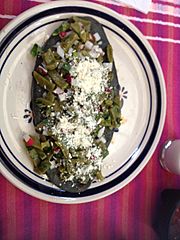
Tlacoyo, Mexican appetizer made of blue corn
-
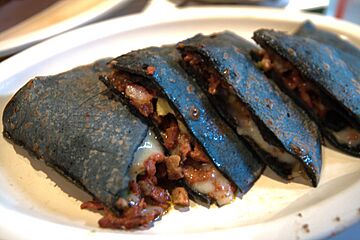
Blue corn quesadillas


See also
 In Spanish: Maíz azul para niños
