
Croco House facts for kids
Quick facts for kids |
|
|
Croco House
|
|

Croco House, Holmes County, Ohio
|
|

 Location in Ohio

Location in the United States
|
|
| Nearest city | Holmesville, Ohio |
|---|---|
| Area | 4.2 acres (1.7 ha) |
| Built | 1873 |
| Architectural style | Italianate |
| NRHP reference No. | 85001343 |
| Added to NRHP | June 20, 1985 |
The Croco House, located in Holmes County, Ohio, is more than just an old building. It played a secret and important role in American history. This historic home was once a safe place for people seeking freedom during a difficult time. It was a stop on the Underground Railroad, a hidden network that helped many people find their way to a better life before the American Civil War.
Contents
The Croco House: A Secret Stop on the Underground Railroad
The Keifer Croco farm, where the Croco House stands, was a key location on the Underground Railroad. This secret path ran parallel to another route through Wooster and Shreve. The Croco House and the nearby John Croco farm worked together. They were known as "waystations," which were like safe houses. Here, people traveling north could hide and rest.
What Was the Underground Railroad?
The Underground Railroad was not a real railroad with trains. Instead, it was a secret network of safe houses, routes, and people who helped enslaved individuals escape to free states or Canada. These brave helpers were called "conductors," and the safe houses were "stations." This network operated mostly before the American Civil War (1861-1865). It was a dangerous but vital way for people to gain their freedom.
How the Croco House Helped
The Croco House offered a hidden place for those seeking freedom. From here, travelers would be moved to another safe location, like Thomas Smith's farm. Smith would then help them reach Isaac Daniel, sometimes through Daniel Clark in Apple Creek. Each step was carefully planned to keep everyone safe.
Secret Hiding Spots
The Croco House had special features designed to keep its secret visitors safe. The attic, for example, was built to hide people. A hidden trap door in the ceiling allowed access to this secret space. Just half a mile away, the John Croco barn also had a cellar. This cellar provided another safe place for people to shelter. These hidden spots were crucial for protecting those on their journey to freedom.
Restoring a Piece of History
In 2001, Bill and Rosanna Painter bought the Croco House. They worked hard to restore it, bringing it back to its original condition. Their efforts helped preserve this important piece of history. Thanks to them, the Croco House continues to stand as a reminder of the courage of those who sought freedom and the kindness of those who helped them.
Images for kids
-
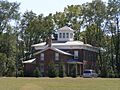
Croco House, Holmes County, Ohio
