
Flagstaff Hill incident facts for kids
Quick facts for kids Flagstaff Hill incident |
|||||||
|---|---|---|---|---|---|---|---|
| Part of the Troubles and Operation Banner | |||||||
 Flagstaff road along Cornamucklagh, where the SAS team was stopped by the Gardaí and the Irish Army |
|||||||
|
|||||||
| Belligerents | |||||||
|
|||||||
| Commanders and leaders | |||||||
| Pat McLoughlin | Malcolm Rees | ||||||
| Strength | |||||||
| 1 Garda unit 1 Irish Army unit |
2 SAS teams | ||||||
| Casualties and losses | |||||||
| None | 8 soldiers arrested | ||||||


The Flagstaff Hill incident was an event that happened between the Republic of Ireland and the United Kingdom. It took place on the night of May 5th and 6th, 1976. This incident happened near Cornamucklagh, a small area in County Louth, Republic of Ireland. During this time, the Irish Army and the Garda Síochána (Irish police) arrested eight British soldiers. These soldiers, from the Special Air Service (SAS), had crossed the Irish border without permission.
| Top - 0-9 A B C D E F G H I J K L M N O P Q R S T U V W X Y Z |
Why the Incident Happened
The area around the border was experiencing problems. The British government decided to send the Special Air Service (SAS) to help. This was because regular army methods had not worked well.
In 1971, there was another incident at a border bridge. British soldiers tried to destroy a bridge. They believed it was used by the Provisional IRA to move supplies. Irish police and soldiers stopped them. After a long standoff, the British soldiers left.
In 1976, the SAS carried out some cross-border actions. One time, they took an IRA member from his home in Ireland. He was then arrested in Northern Ireland. Another time, the SAS was involved in an incident near the border. These events made the Irish police more watchful. The Irish government was also concerned about other groups operating in the area.
The Incident Unfolds
After a civilian went missing and was found to have died near Dundalk, the Irish security forces increased their presence along the border. They set up a checkpoint on Flagstaff Road in Cornamucklagh. This spot was about 700 meters inside County Louth in the Republic of Ireland.
At 10:40 PM, the Gardaí stopped a car coming from the north. Two men were inside. They did not give clear answers about where they were going. A Garda noticed what looked like a gun hidden under a map. The men were asked to leave the car. They only did so when Irish Army soldiers pointed rifles at them.
The two men were Ilisoni Ligari and John Lawson, both SAS soldiers. They were not in uniform. Police searched the car and found a submachine-gun and a pistol. The Gardaí arrested them with the Army's help. They were taken to the Omeath Garda station. Lawson first said they were off-duty soldiers test-driving the car. Ligari refused to talk about their "mission."
It was later found that Lawson and Ligari were supposed to meet other SAS soldiers. These were Staff Sergeant Malcolm Rees and Corporal Ronald Nicholson. They were watching from a hidden spot on Flagstaff Hill, just inside Northern Ireland. However, author Peter Taylor stated that Rees and Nicholson were actually on the Irish side of the border.
When the two soldiers at the observation post did not meet Ligari and Lawson, they radioed their base. Four more SAS soldiers were sent to look for their missing friends. They picked up Rees and Nicholson. This second group had more weapons, including a shotgun.
The first car from this group arrived at the Garda checkpoint at 2:05 AM. Rees and Nicholson were still wearing their British Army uniforms. The second car was stopped shortly after. Sergeant Rees tried to explain the situation to the Gardaí. He said, "Let us go back. If the roles were reversed we would let you go back. We are all doing the one bloody job." But he told his men to give up their weapons. This happened after Irish Army soldiers surrounded their cars with rifles.
The Garda unit, led by Sergeant Pat McLoughlin, asked his superiors for instructions. The shotgun found was a concern for the Gardaí. The Omeath Garda station was told to keep the soldiers in custody. A decision would be made by the Irish government. Before dawn, the SAS team was moved to the Dundalk Garda station.
Diplomatic Discussions
The arrest of eight British soldiers created a problem for the Irish leader, Taoiseach Liam Cosgrave. If he let them go, it might encourage more British military crossings. But if they were put on trial and found guilty, it could harm relations with Britain.
A report later showed the soldiers were questioned about some serious incidents in the area. Their weapons were also checked. Many people, including protesters and media, gathered outside the Dundalk station. There were worries the station might be attacked.
The soldiers were then moved to Dublin. They were charged with having firearms to endanger life and carrying firearms without a permit. These charges could lead to a long prison sentence. The eight soldiers were released on bail after the British embassy paid £40,000. A helicopter then flew them out of Ireland.
The British Army Minister, Bob Brown, apologized to the Irish Government. He said the border crossing was a mistake. The British Government wanted the soldiers released quickly. The British ambassador to Ireland, Sir Arthur Galsworthy, was concerned about the shotgun and a dagger found. He also noted that most soldiers were in plain clothes. The two groups of soldiers had given different reasons for being in Ireland.
When it became clear a trial could not be avoided, the British Government's position became tougher. Some suggested economic actions against Ireland. They even thought about creating a "no-man's land" along the border. A secret memo also asked for pressure on the Irish government to release the soldiers. This was because their safety in an Irish prison could not be guaranteed.
What Happened Next
The Director of Public Prosecutions, Eamonn Barnes, was pressured to drop the charges. However, the eight SAS men went to trial in March 1977. They were all found guilty. Each soldier was fined £100 for having weapons and ammunition without a license.
The weapons were given back to the British Government. This happened after Irish police confirmed they had not been used in any crimes being investigated in Ireland. A British military source later said the soldiers used the wrong type of map. This led them to cross the border without knowing it.
In 1976, British forces crossed into Ireland 54 more times. On October 28, 1986, another incident happened. A British soldier was arrested by the Gardaí. This was after an attack on a British Army watchtower in County Armagh. A car was chased across the border. A British soldier accidentally crossed into Ireland and was arrested by a Garda patrol. He was released six hours later after discussions between senior police officers.
Images for kids
-
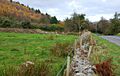
Flagstaff road along Cornamucklagh, where the SAS team was stopped by the Gardaí and the Irish Army
 | James B. Knighten |
 | Azellia White |
 | Willa Brown |
