
Graphania pagaia facts for kids
Quick facts for kids Graphania pagaia |
|
|---|---|
 |
|
| Female | |
 |
|
| Male | |
| Scientific classification | |
| Kingdom: | |
| Phylum: | |
| Class: | |
| Order: | |
| Family: | |
| Genus: | |
| Species: |
G. pagaia
|
| Binomial name | |
| Graphania pagaia (Hudson, 1909)
|
|
| Synonyms | |
|
|
Graphania pagaia is a type of moth that belongs to the family Noctuidae. These moths are often called "owlet moths" because many of them are active at night. This specific moth was first described by a scientist named George Hudson in 1909. He found it from a specimen collected by Dr. Benham on the Snares Islands. This happened during a big trip called the 1907 Sub-Antarctic Islands Scientific Expedition. You can find this moth in New Zealand.
In 2019, another scientist, Robert J. B. Hoare, looked closely at many New Zealand moths. After studying the original specimen of Graphania pagaia, he decided it actually belonged to a different group, or genus, called Ichneutica. So, its scientific name is now Ichneutica pagaia.
Contents
What is a Moth?
Moths are fascinating insects, just like butterflies. They both belong to a group called Lepidoptera. Moths usually have feathery antennae and often fly at night. They play an important role in nature, helping to pollinate plants.
Where Does This Moth Live?
Graphania pagaia lives in New Zealand. It was first found on the Snares Islands, which are small islands south of New Zealand. These islands are known for their unique wildlife.
Discovery and Changing Names
The moth was discovered during a scientific trip in 1907. Scientists like George Hudson traveled to different places to find and study new species. When they find a new animal or plant, they give it a scientific name.
Sometimes, as scientists learn more, they realize that an animal's name or group needs to change. This happened with Graphania pagaia. Robert J. B. Hoare's work in 2019 helped scientists understand the relationships between different moths better. This is why its name changed to Ichneutica pagaia.
Life Cycle and Food
Like all moths, Ichneutica pagaia goes through a life cycle with different stages: egg, larva (caterpillar), pupa, and adult moth. The larvae of this moth like to eat a specific type of plant called Poa astonii. This plant is important for the caterpillars to grow and get ready to become adult moths.
Images for kids
-
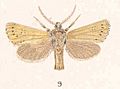
Ichneutica pagaia illustrated by Hudson
-
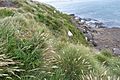
Poa astonii host plant of the larvae of I. pagaia
.jpeg)

