
Ivy City, Washington, D.C. facts for kids
Quick facts for kids
Ivy City
|
|
|---|---|
|
Neighborhood
|
|

Ivy City Roundhouse. Washington, D. C. 1977
|
|

Ivy City within the District of Columbia
|
|
| Country | United States |
| Territory | Washington, D.C. |
| Constructed | 1873 |
Ivy City is a small neighborhood in Northeast Washington, D.C.. It's mostly an industrial area, meaning it has many warehouses. A big part of Ivy City is the Ivy City Yard. This is a large train yard and repair center for Amtrak trains.
Even though some parts of Ivy City have been improved, it is still one of the less wealthy areas in the city.
Where is Ivy City?
Ivy City is located in Washington, D.C.. It has clear borders: New York Avenue is to its northwest. West Virginia Avenue is to the east. Mt. Olivet Road is to the south.
The neighborhood is surrounded by important places. Gallaudet University is across Mt. Olivet Road. Mt. Olivet Cemetery is across West Virginia Avenue. Amtrak's Ivy City yard is across New York Avenue. Ivy City is part of Ward 5 in the city's political map.
A Look at Ivy City's History

Ivy City was built outside the original plans for Washington, D.C. These plans were made by Pierre Charles L'Enfant.
In 1831, the Baltimore and Ohio Railroad (B&O) got permission to build a new train line. This line would connect Baltimore and Washington. Train service started in 1835. As part of this project, the railroad built its last roundhouse (which is now the Amtrak yard) about a mile outside the city limits.
Ivy City officially became part of Washington, D.C., in 1878. This happened when a law called the Organic Act of 1878 was passed. This law made the city's boundaries include all of the District of Columbia.
Over the years, railroads were one of the few places that offered jobs to African Americans. Because of this, Ivy City became a neighborhood with many black residents. In 1911, the first school for black students in the area opened there. It was called the Alexander Crummell Elementary School. This school quickly became a source of pride for the community. It was also a very important place for people to gather.

The success of Ivy City's economy often depended on how well the railroads were doing. After World War II, fewer people traveled by train. This was because more people started flying and using the Interstate Highway System to drive.
In 1963, the B&O railroad company was bought by the Chesapeake and Ohio Railroad. These two companies joined to form the Chessie System in 1973. Three years later, the Ivy City yard was taken over by Amtrak. Amtrak then rented out the yard to other train services.
Amtrak helped bring some stability to the neighborhood's industrial feel. However, Ivy City had already faced many challenges from the railroad industry's decline. Even after Amtrak took over, Washington, D.C., went through a tough time. This included poor city management and economic problems. These issues were especially hard on neighborhoods with lower incomes.
Many people who could afford to move away from Ivy City did. The number of people living there dropped by one-third in the 1990s. Ivy City is still home to many of the city's less wealthy residents. It has many old warehouses, empty homes, and large parking lots.
By mid-2005, the city started to see some improvements in certain areas. This process, called gentrification, slowly began to reach parts of Ivy City. Only about 20 percent of the people living in Ivy City own their homes. In 2011, Habitat for Humanity helped by building or fixing up 23 houses in the neighborhood.
Government and Services
Amtrak has some of its offices located in Ivy City.
Images for kids
-
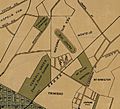
Map showing the growing Ivy City in 1887.
-
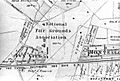
Ivy City in 1887, showing Patterson Avenue and Gallaudet Street.
-
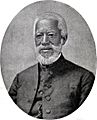
Alexander Crummell.
-
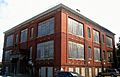
The Alexander Crummell School in 2008.
-
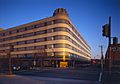
The Hecht's Warehouse in the 1990s.
-
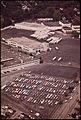
Bus parking lots off New York Avenue NE in Ivy City in the 1970s.


