
List of Sites of Special Scientific Interest in Herefordshire facts for kids


This article is about the Sites of Special Scientific Interest (SSSIs) in Herefordshire, England. SSSIs are special places chosen by an organization called Natural England. They pick these sites because they have amazing animals, plants, interesting rocks, or unique land features. Think of them as nature's VIP areas!
As of 2012, there were 83 SSSIs in Herefordshire. Out of these, 21 sites are special because of their geology, and 62 are important for their biological life (plants and animals). Four of these sites are super special because they have both interesting geology and important wildlife.
Natural England took over the job of looking after SSSIs from English Nature in October 2006. This happened when English Nature joined up with parts of the Countryside Agency and the Rural Development Service.
Contents
What are Sites of Special Scientific Interest (SSSIs)?
SSSIs are like protected zones for nature. They are the best examples of Britain's natural heritage. This means they are important for their wildlife, plants, or geology. These sites are protected by law to make sure they stay healthy and special for future generations.
Why are these sites important?
SSSIs are vital for many reasons:
- Protecting rare species: They provide safe homes for rare animals and plants that might not survive elsewhere.
- Studying nature: Scientists use SSSIs to learn more about how nature works, from ancient rocks to tiny insects.
- Understanding our past: Geological SSSIs can show us what the Earth was like millions of years ago.
- Enjoying nature: Many SSSIs are places where people can visit and enjoy the beauty of nature, like walking or birdwatching.
Protecting Nature in Herefordshire
Herefordshire is a county in England with many beautiful and important natural areas. The SSSIs here protect a wide range of habitats, from ancient woodlands and peaceful meadows to winding rivers and rocky hills.
Examples of Special Sites in Herefordshire
Let's look at a few examples of SSSIs in Herefordshire:
The Malvern Hills
The Malvern Hills are a famous range of hills that stretch across parts of Herefordshire and Worcestershire. They are an SSSI because of their unique geology and diverse wildlife. Imagine walking along these hills and seeing ancient rocks that are hundreds of millions of years old! They are also part of an AONB, which means they are recognized for their stunning landscapes.
The River Wye
The River Wye is one of the longest rivers in the UK and a very important SSSI. It's special for its clean water, which supports many types of fish, insects, and plants. The river and its banks are home to otters, kingfishers, and rare aquatic plants. The section known as the Upper Wye Gorge is particularly important, offering amazing views and protecting unique habitats. It's also a SAC, meaning it's protected across Europe.
Downton Gorge
Downton Gorge is another fascinating SSSI. It's special for both its biology and its geology. This gorge is a deep valley with steep sides, carved out by a river. It's a great place to see ancient trees and learn about how rivers shape the landscape over time. It's also a National Nature Reserve, which is the highest level of protection for wildlife sites in England.
Black Mountains
Part of the famous Black Mountains extends into Herefordshire and is designated as an SSSI. These mountains are important for their upland habitats, which support special plants and animals that thrive in cooler, higher places.
Moccas Park
Moccas Park is a very old parkland with ancient trees, some of which are hundreds of years old. These old trees are incredibly important for wildlife, providing homes for rare insects, bats, and birds. It's also a National Nature Reserve, highlighting its importance for conservation.
Who looks after SSSIs?
Natural England is the main organization responsible for SSSIs. They work with landowners, farmers, and other groups to make sure these sites are managed properly. This often means finding a balance between human activities and protecting nature. For example, they might advise on how to graze animals in a way that helps certain plants grow, or how to manage woodlands to support specific bird species.
It's a big job, but by working together, we can ensure that these special places continue to thrive and provide homes for amazing wildlife for many years to come!
Images for kids
-
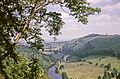
Upper Wye Gorge and River Wye SSSIs at Symonds Yat Rock, Herefordshire.
-
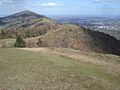
The Malvern Hills, an SSSI on the boundary of Worcestershire and Herefordshire
