
Magic Alex facts for kids
Quick facts for kids
Magic Alex
|
|
|---|---|

Mardas in the Apple Electronics laboratory with some of the equipment he used
|
|
| Born |
Yannis Alexis Mardas
2 May 1942 Athens, Greece
|
| Died | 13 January 2017 (aged 74) Athens, Greece
|
| Other names | John Alexis Mardas |
| Occupation | Electronics engineer, security consultant |
| Board member of | Apple Electronics |
| Spouse(s) | Eufrosyne Doxiades |
Yannis Alexis Mardas (2 May 1942 – 13 January 2017), widely remembered as Magic Alex, was a Greek electronics enthusiast. He became famous during the 1960s for his friendship with the British rock band the Beatles. Musician John Lennon gave him his famous nickname because of his unusual gadget ideas. For a short time, Mardas served as the head of the band's company division named Apple Electronics. He amazed people with futuristic thoughts, but his unusual inventions often did not perform as planned.
Contents
Life in London and Meeting the Beatles

Mardas was born in Athens, Greece, and moved to England on a student visa in 1965. In London, he repaired television sets and created artistic displays of electric lights. He shared an apartment with an art gallery director named John Dunbar. Soon, Mardas displayed his light machines at the Indica Gallery. Dunbar introduced him to musicians, including Brian Jones of the Rolling Stones. Mardas tried designing a special concert light box for the Rolling Stones on their 1967 European tour.
Dunbar also introduced Mardas to John Lennon. Mardas showed Lennon an electronic gadget called the "Nothing Box". It was a small plastic case that featured randomly blinking lights. Lennon loved staring at the blinking lights and was fascinated by Mardas. Lennon called Mardas his "new guru" and gave him the nickname "Magic Alex". The musicians thought he was a brilliant electronic wizard who could build anything.
Magic Alex pitched many science-fiction gadgets to the Beatles. He talked about building a telephone that answered to its owner's voice. He claimed he could invent an invisible sonic force field to protect houses. He spoke of paint that could make objects completely invisible. Another idea was a car that changed colors when the driver flipped a switch. He even described wallpaper that acted as an audio speaker. Lennon and George Harrison listened carefully when he asked for car engines to construct a flying saucer. Mardas later denied making some of these wild promises in formal statements.
Inventions at Apple Electronics
The Beatles started their own multi-media company called Apple Corps in 1967. They quickly created a research branch called Apple Electronics specifically for Mardas. He was paid a generous salary and was promised a share of profits from future sales. The band provided him with a laboratory on Boston Place in Westminster, London. A patent attorney came from the United States to help protect his electronic concepts.
Mardas had plenty of confidence when showing off his workshop. A promotional film showed him wearing a laboratory coat surrounded by audio meters and an oscilloscope. He worked on early 2-track sound recorders and small light boxes. Fellow Beatle Paul McCartney was very interested in new recording technology. Mardas even helped write a song with Lennon titled "What's the New Mary Jane" for the White Album. However, an unexpected workshop fire delayed many of his public product demonstrations.
Mardas shared many big dreams that never quite succeeded. He tried creating an "artificial sun" to light up the night sky above the Apple Boutique on Baker Street. When the lights failed to glow at the shop opening, he explained that the city lacked enough power. Later, Ringo Starr supported Mardas's idea to block unauthorized radio recording using special signal decoders. The band tried to sell the concept to record labels like EMI and Capitol Records, but the companies turned it down.
Adventures in Greece and India
Looking for a Greek Island
The Beatles spent significant time exploring creative projects outside of England. In July 1967, Lennon decided the band should buy a private island where they could live together. Mardas claimed that his family connections in Greece could speed up the official government paperwork. Several band members flew to Athens and stayed with his family before boarding a chartered boat.
The group sailed through Greek waters and stopped at an island near Euboea. They admired the quiet fishing villages, sandy beaches, and sunny olive groves. They traded money for foreign currency to buy the property. In the end, the band members changed their minds and canceled the island deal. They sold the currency back for a profit after international exchange rates climbed.
The Journey to Rishikesh

In the spring of 1968, the Beatles traveled to an ashram in Dehra Dun, India. They went there to study meditation under teacher Maharishi Mahesh Yogi. Mardas joined the group along with Apple executive Neil Aspinall. Mardas felt protective of Lennon and did not trust the spiritual leader. The teacher had offered Mardas funding to construct a high-power radio system for India, but tensions grew.
Mardas told Lennon and Harrison that the teacher was not acting properly. He argued that the spiritual retreat was not genuine and urged the band members to pack their bags immediately. The Beatles questioned the teacher, felt disappointed by the situation, and departed for Delhi. Some people close to the band believed Mardas invented arguments because he wanted full attention from Lennon. Years later, Mardas wrote to The New York Times stating that he never spread untrue rumors about the visit.
Building the Apple Recording Studio
The Basement Project
Abbey Road Studios was the famous recording studio used by the Beatles. Mardas repeatedly claimed that the technical facilities there were totally out of date. Longtime Beatles music producer George Martin found Mardas very annoying to work with. Martin felt Mardas was inspecting professional audio setups without fully understanding how sound recording worked. Mardas convinced the band that he could build a superior recording space. He promised an advanced 72-track tape recorder in the basement of the Apple offices on Savile Row.
The band wanted to use this new studio in January 1969 to record songs for Let It Be. When the musicians arrived in the basement, the studio was completely unready. The walls had no proper soundproofing to block street traffic noises. There was no internal intercom system for the producer to speak with the musicians. The 16 speakers were wired carelessly without a proper patch bay connection.
The custom mixing console constructed by Mardas was completely unusable. Studio technicians described it as scrap wood fastened around a basic meter. The band had to halt their work until producer Martin borrowed mobile sound equipment from EMI. Experienced sound engineer Geoff Emerick quickly rebuilt the room so the musicians could finally play music together. The band had spent thousands of pounds on equipment that simply failed to operate.
Leaving the Beatles
During the recording sessions, Mardas also built a prototype musical instrument. It was a custom guitar with a spinning neck combining rhythm guitar and bass strings. In documentary footage, Lennon pointed out that the strings pressed against his fingers, making the instrument impossible to play or tune. The band realized that Magic Alex could not deliver on his bold technical promises.
In 1969, an American business manager named Allen Klein took control of Apple Corps. Klein immediately shut down Apple Electronics to prevent the band from losing more money. Mardas left the group, having cost the company over £300,000 in failed ideas. Beatles historian Peter Doggett noted that commentators look back on Mardas as a controversial figure in the band's career.
Security Work and Later Life

During the 1970s, wealthy leaders became very interested in security technology. Mardas started private companies offering armored cars, communication tools, and protection gadgets. He partnered with the former king Constantine II of Greece to meet royalty throughout Europe and the Middle East. He received business interest from leaders including the Shah of Iran.
Mardas built bullet-resistant cars for royalty, but safety tests revealed huge problems. The ruler of Oman, Sultan Qaboos, ordered six customized Mercedes-Benz 450 vehicles. During protection trials by former SAS officers, one vehicle caught fire when struck by test ammunition. The Sultan immediately sent the remaining vehicles back and asked for a complete refund. King Hussein of Jordan similarly discovered that armor plates failed tests, and ordered his cars restored to factory condition. Despite these setbacks, Mardas continued running security businesses in London and Greece.
In his later years, Mardas took several news companies to court over false accusations. He successfully won retractions when papers claimed he was a dishonest businessman. In 2004, he auctioned off historic rock memorabilia through Christie's, including drawings by Lennon and a custom electric guitar made by Vox. Mardas lived quietly in Greece during his retirement. He died of pneumonia in Athens on 13 January 2017 at the age of 74.
Images for kids
-
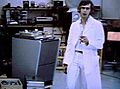
Mardas inside Apple Electronics
-

Apple headquarters in Savile Row, London
-

Maharishi Mahesh Yogi
-

Mercedes-Benz vehicle similar to models customized by Mardas
