
News facts for kids

News is information about things happening right now. It helps us understand the world around us. You can find news in many ways, like by word of mouth, in newspapers, on radio, television, or the internet. Sometimes, news is called "hard news" to show it's about important facts, not just light stories.
News stories cover many different topics. These can include government decisions, politics, education, health, the economy, business, fashion, sport, entertainment, and the environment. News also shares stories about unusual or interesting events. Long ago, governments shared news about royal events, laws, taxes, and public health. As technology grew, news could spread much faster and reach more people.
For a long time, people shared new information by talking to each other. Newspapers started in China many centuries ago and became popular in Europe later. In the 1900s, radio and television became big ways to get news. Now, in the 21st century, the internet is a huge source of news for everyone.
Contents
What News Means
Where the Word "News" Comes From
The English word "news" started being used in the 1300s. It came from the idea of "new things." In old English, it was "newes," similar to the French word "nouvelles." Many other languages have similar words that mean "new" for their word for news.
A teacher named Jessica Garretson Finch is known for using the phrase "current events" in the 1890s. This phrase helps describe what news is all about: things happening now.
Why News Is Always New
As its name suggests, news usually tells us about new information. This "newness" makes news different from history or school subjects. History looks at how events are connected over time. News often focuses on single events happening now or very recently.
Even if a big story has been going on for a while, it needs a "hook" or a recent event to make it into the news. News also often covers things that are unusual or out of the ordinary. A famous saying is: "Dog bites man" isn't news, but "Man bites dog" is! This means unusual events are more likely to be reported.
News as a Product
Some people think of news as something that the news industry sells. Journalism is the job of gathering and sharing news. From a business point of view, news is like an ingredient. It's used with paper or a website to create a final product for people to read or watch. News agencies collect stories and sell them to publishers, who then share them with you.
How News Is Presented
Most news providers try to be fair, neutral, and objective. This means they try to report facts without showing a personal or political side. However, being completely unbiased can be hard. Over time, how people see fairness in news has changed. Sometimes, news can focus on exciting or emotional stories, which is called sensationalism. This kind of news can be a bit like gossip, where people share information about others.
What Makes a Story Newsworthy
Newsworthiness means a topic is important enough for the public or a specific group to hear about it. News values are similar across different cultures. People are usually interested in news that:
- Has a big impact on many people.
- Involves conflicts or disagreements.
- Happens close to where they live.
- Features well-known people.
- Is unusual or different from everyday life.
For example, a major natural disaster or an important election is often big news.
The History of News
Sharing Stories by Word of Mouth
For thousands of years, people have shared important new information by talking. In many cultures, travelers were often asked for news first. Important stories would be repeated quickly and spread far by word of mouth. Even after printing started in Europe, many people still heard news from monks, travelers, or town criers.
Public places were also important for sharing news. In ancient Greece, people gathered in the forum. In ancient Rome, they met at the baths. Later, in England, coffeehouses became popular spots to hear the latest news. In Muslim countries, mosques and other social places were used for sharing information.
Government Announcements

Before newspapers, governments sometimes shared official announcements. Ancient Egypt had courier services to spread decrees. Julius Caesar in Rome published government news called Acta Diurna, carved in stone and posted publicly. In medieval England, parliamentary news was read aloud in markets.
Special messengers were used in many cultures, like the Zulu Kingdom and some Native American tribes. These official news spreaders often worked closely with powerful leaders. Town criers were common in cities. They would announce political news, public meetings, and other important information. They even announced things like missing items or local rules.
How news spread has always depended on the communication networks available. Governments, religious groups, and businesses often controlled these networks. Postal services, for example, were very important for maintaining political power over large areas.
Ancient empires like the Assyrians and Romans had vast road networks for messengers. These roads helped news travel quickly. People also used visible signals over long distances, like smoke signals or advanced systems with flags and telescopes. These "optical telegraphs" were used in countries like Japan, Britain, and France in the late 1700s and early 1800s.
News in Asia

Some of the first written news might have come from China around 800 BCE. Officials gathered reports that became the Spring and Autumn Annals. These covered common news topics. Later, during the Han dynasty, government news sheets called tipao circulated among officials. From 713 to 734, the Kaiyuan Za Bao in China published government news, written on silk for officials.
Japan also had good communication networks. During the Kamakura period (1183-1333), runners called hikyaku and relay stations helped news travel fast. News could go between Kyoto and Kamakura in 5-7 days.
News in Europe
In Europe during the Middle Ages, important people used runners to send news over long distances. As trade and travel increased in the early modern period, there was a greater need for quick information. This led to handwritten news sheets.
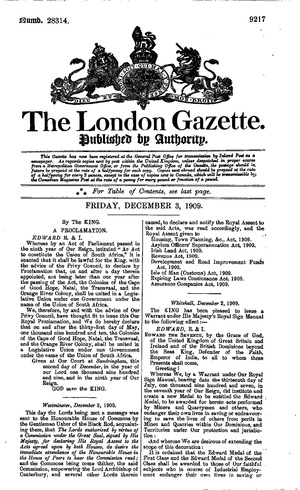
In 1556, the government of Venice published a monthly news sheet called Notizie scritte. These were handwritten newsletters that shared political, military, and economic news. They were sold by subscription to important people like clerics and diplomats.

Postal services helped merchants and rulers stay informed. In 1490, Emperor Maximillian I in the Holy Roman Empire created a network of courier stations. Riders could travel 180 kilometers in a day. This system grew into the Reichspost, run by the Tasso family. Similar postal services started in France and England around the same time.
These networks helped news spread widely. Handwritten letters often shared important events and could be passed around as news reports. Business people used these letters to learn about prices, shipping, and political events that might affect their trade.
The Rise of Newspapers
The invention of paper and the printing press in China, and later in Europe, changed how news was shared. With more printing presses in the 1500s, news became more emotional and less focused only on facts. The first newspapers appeared in Germany in the early 1600s. Relation aller Fürnemmen und gedenckwürdigen Historien from 1605 is often called the world's first formal newspaper.
At first, governments tightly controlled news for the public. England had a system to license presses and banned opinions against the government. In France, censorship was even stricter. This led many Europeans to read newspapers from other countries, especially the Dutch Republic, where publishers had more freedom.
The United States saw a big increase in newspapers after its revolution. This was helped by government support for mailing newspapers. American newspapers often copied stories from each other, creating a fast-growing news network. Newspapers also grew quickly as the country expanded westward, supported by many people who could read and loved newspapers.
Newspapers also became important for business. They published new data like economic statistics, helping people make smart investment choices. These papers became available to more people, not just the wealthy.
Newspapers came to Africa through colonization. The first English newspaper there was The Royal Gazette and Sierra Leone Advertiser in 1801. Many early African newspapers supported colonial governments. However, newspapers published by native Africans, like Muigwithania in Kenya, strongly pushed for African independence. News was often censored during and after colonial times.
In the Arab world, newspapers spread more slowly due to a strong tradition of oral communication. Egypt saw some of the first written news under Muhammad Ali in the 1800s. Later, private newspapers began to grow in Lebanon.
News by Wire: The Telegraph Era
The electrical telegraph allowed news to travel much faster and farther. Telegraph lines often ran alongside railroads. This new technology led to news being centralized by wire services in big cities. Charles-Louis Havas founded Bureau Havas (now Agence France-Presse) in Paris in 1832. He first used optical telegraphs and then pigeons for communication. When the electric telegraph became available, he started using that.
One of Havas's students, Paul Reuter, started collecting news in Germany and France. In 1851, he moved to London and started the Reuters news agency. Reuters became a major global news source. In the United States, the Associated Press became very powerful.
The telegraph brought a new global communication system. For example, in 1866, an undersea telegraph cable connected Ireland to Newfoundland. This cut the time to send messages across the Atlantic Ocean from days to hours. This allowed fast sharing of information about stock markets and trade.

By 1900, Reuters, Havas, and Wolffs Telegraphisches Bureau formed a news group. They divided the global market, with each having rights to distribute news in certain areas. This made it hard for new agencies to compete. These agencies created a "minute globules of news" style. This meant short summaries of 20-30 words that gave the main points of new events. They also used the "inverted pyramid" style, where the most important facts are at the beginning of a story.
Radio and Television News
The British Broadcasting Company (BBC) started broadcasting radio news from London in 1922. In the US, RCA's Radio Group created NBC in 1926, and CBS was founded soon after. These networks became very important for news. Radio news became especially vital during the 1926 general strike in Britain, when newspapers were closed.
The war in the 1940s helped radio news grow even more. The BBC reported on major events like the Normandy landings. The US also set up its United States Office of War Information to send programs around the world. By the end of the war, Britain had the largest radio network, broadcasting in many languages.
In Britain and the United States, television news became very popular in the 1950s and 1960s. It soon replaced radio as the main source of news for many people. Ted Turner started Cable News Network (CNN) in 1980. This began a new era of 24-hour news broadcasting using satellites. In 1991, CNN's continuous coverage of the Gulf War showed how powerful this new way of sharing news could be.
In 1996, Al Jazeera, a broadcaster from Qatar, became a strong alternative to Western media. It used Arabsat satellites to broadcast news.
The Internet and News
The early internet, called ARPANET, was mostly used by academics. It became available to more people with the Netscape browser in 1994. At first, news websites were mainly online versions of print newspapers. A 1994 earthquake in California was one of the first big stories reported online in real time.
The internet has greatly increased the amount of news available to everyone. News now flows to individuals at an incredible speed. This huge amount of news can sometimes make people feel overwhelmed. The internet has also made it harder to control news. It's easier to shut down a newspaper than to stop news from spreading on mobile phones. This has led to the rise of citizen journalists, who share their own perspectives on events.
News Media Today
News can travel through many different ways. In the past, reporters would call or bring stories to a newsroom. There, the news was typed and prepared for printing or broadcast. Today, "breaking news" is common. News services use satellites to bring live events into homes as they happen. Events that once took hours or days to become known are now shared instantly through radio, television, mobile phones, and the internet.
The speed of news depends on where and how you live.
Newspapers Today

Many large cities used to have morning and afternoon newspapers. With new media, afternoon papers have mostly disappeared, and morning papers have fewer readers. More and more cities now have only one newspaper. This trend has grown since the 1980s, as media companies have merged.
About one-third of newspaper money comes from sales. Most of it comes from advertising. Newspapers have struggled as fewer people buy them and information flows freely online. Some now use "paywalls" for their websites, meaning you pay to read articles. Many newspapers now track social media to see which stories are popular.
Television News Today
Globally, popular news channels include BBC News, CNN, Fox News, and Sky News. Televisions are very common in the United States, with most households having one. The average American watches several hours of TV programs each day. In some parts of the world, like rural Kenya, televisions are still rare.
The biggest provider of international video news is Reuters TV. It has many subscribers in different countries and reaches a huge audience daily. Another major service is Associated Press Television News. These agencies share video news with big networks like ABC, NBC, CBS, and Eurovision. CNN International is especially known for its coverage during major global events.
Internet News Today
Online journalism is news reported on the internet. News can be delivered faster and accessed more easily this way. The internet has changed how we understand news. Because online communication can be instant and two-way, it has blurred the lines of who can create news.
A common type of internet journalism is blogging. This is where one or more people write articles and upload them regularly. Millions of people blog, and some blogs are read by millions each month. Social media sites like Twitter and Facebook are also important for breaking news and sharing links to news websites. Cell phone cameras have made citizen photojournalism common.
Experts say that everything we thought we knew about journalism needs to be rethought in the Digital Age. Journalism can now be done from anywhere with just a reporter and a laptop. This means that the authority of news might be more about the individual reporter than the news organization.
The internet has also changed how far news stories can reach. A local story can now be read by a global audience. Social media networks help journalists gather news quickly. Many newsrooms now use social media to find trending stories. Studies show that many Americans read news on digital and mobile devices.
Because the internet doesn't have the space limits of print, online news stories can include extra materials. The World Wide Web also allows hyperlinking, so readers can easily jump to other related pages.
News Agencies

News agencies are services that collect news and share it in large amounts. They send information to many different clients, who then use it to create news for the public. Because they serve so many clients, news agencies usually use very neutral language in their reports. Even though they are very important, most people don't know much about news agencies. Their reporters usually don't get their names printed on stories.
The oldest news agency still working is the Agence France-Presse (AFP), founded in 1835. By the end of the 1900s, Reuters was one of the largest companies in Europe. In 2011, Thomson Reuters had over 55,000 employees in 100 countries.
United Press International was a major world news agency in the mid-1900s. Bloomberg News, founded by Michael Bloomberg in 1981, grew quickly by providing real-time computerized stock market reports.
After China's economy opened up, Xinhua, the official news agency of the People's Republic of China, also adopted some commercial practices. It provides news, photos, economic information, and audio/video news. Xinhua has many subscribers and operates many foreign offices.
Other important agencies include Deutsche Presse-Agentur (Germany), Kyodo News (Japan), and EFE (Spain). On the internet, news aggregators like Yahoo! News and Google News act similarly to news agencies. They collect stories from many sources, often from the main news agencies.
How News Spreads Globally
In the 1900s, global news was mostly controlled by a few big news agencies: Reuters, Associated Press, Agence France Press, and United Press International. These agencies mainly represented Western countries. There were also agencies from Communist countries like TASS from the Soviet Union and Xinhua from China.
Television news agencies include Associated Press Television News and Reuters Television. Bloomberg News also became a big player in international news in the 1990s. The Associated Press also has a radio network that provides international news to many small stations worldwide.
Some people believe that the way news systems are connected globally has made human history move faster.
Different Voices in Global News
The global news system has often been led by agencies from Europe and the United States. This means their interests and priorities sometimes shaped the news. Since the 1960s, some news from developing countries has focused on "development journalism." This type of journalism highlights long-term projects, social change, and nation-building.
The United Nations Educational, Scientific and Cultural Organization (UNESCO) has worked to create a more balanced international news system. They encouraged new countries to set up their own news agencies. This would help them create local news and share it with international partners. The Inter Press Service, founded in 1964, helps news agencies from developing countries. It focuses on topics like equality, economic growth, and sustainable development.
In the 1960s, organizations like the United States Agency for International Development and UNESCO started using satellite television for international broadcasting. For example, in India, they used an experimental satellite TV system in 1975-1976 to provide educational programs.
By the 1980s, many developing countries faced economic challenges. The World Bank became involved in their policies, including communication. This led to the privatization of national telecommunications, allowing large international companies to buy networks.
Today, in countries with less communication infrastructure, young people often get their news from mobile phones. Older people tend to listen more to the radio. China is a big investor in telecommunications in developing countries, especially in Africa.
What Makes News Valuable
News values are the rules that journalists follow. Good news stories usually include the "Five Ws": who, what, when, where, why, and also how an event happened. Newspapers often put the most important news on the first pages. This helps busy readers get the main information quickly. TV news also focuses on the most important parts due to time limits.
Journalists are often expected to be objective. This means they try to cover all sides of a story without showing personal bias. Commentators or analysts, on the other hand, share their opinions. In the United Kingdom, the government agency Ofcom requires news broadcasters to be impartial. Some governments, like Russia, run their own news organizations.
Even though journalists aim for truth and objectivity, it can be hard to achieve. Individual journalists might have their own biases. They might also face pressure from businesses or political groups. News organizations owned by large companies might report news in a way that helps their company's financial interests.
Sometimes, news can focus too much on exciting or emotional stories. This is called sensationalism. Another common idea about news is that "Dog Bites Man" is not news, but "Man Bites Dog" is. This means unusual events are more likely to be reported.
How News Is Made
News Organizations
News for many people is made in organizations with different levels of responsibility. Reporters, who are often at the bottom, have a lot of freedom to research and prepare stories. However, they follow assignments and sometimes get guidance from higher-ups. The owners at the top of the news organization also influence the news, but usually in indirect ways.
Journalists learn the rules of their job over time. They learn how to cover certain topics without needing written rules. They follow these rules for reasons like keeping their jobs. Their education, including journalism school, also shapes how they work.
News production often follows routines. Stories use familiar formats. Journalists often follow "rituals of objectivity," like including quotes from different sides of an issue. Many news stories come from regular press conferences or planned events. Journalists are also often assigned to a "beat," which is a specific area like government or business, where certain events happen regularly.
A common way to understand news production is to look at "gatekeepers." These are the people who decide which stories go from news producers to news consumers. Journalists, news agency staff, and newspaper editors are all gatekeepers. Their decisions are influenced by things like their own ideas, personal preferences, and the length of a story.
In the internet age, new factors have appeared in newsrooms. One is "click-thinking," where editors choose stories that will get the most website clicks and advertising money. Unlike newspapers, news websites have detailed information about which stories are popular. The need for fast online posts has also changed how fact-checking is done. Sometimes, verification happens after a story is published.
Journalists sometimes use information from other news sources without saying where it came from. This can make news feeds seem very similar. The digital age can also speed up "circular reporting." This is when the same mistake spreads through many sources, making it seem more reliable.
Historically, news organizations were mostly run by men. While more women are journalists now, men still hold most of the decision-making roles. Studies show that women journalists are often assigned to "softer" topics, while men cover "harder" topics like politics or crime.
Relationship with Other Groups
News media often have a close relationship with the government and sometimes religious groups. This happens because the press can develop strong connections with other powerful parts of society. For example, in the United States, the Associated Press worked closely with the Western Union telegraph company.
News agencies that became powerful in the mid-1800s often had government support. In return, they sometimes served the government's political interests. A lot of daily news production involves reporters talking to government officials. This means news often reflects the interests of the powerful groups in society.
Today, international non-governmental organizations (NGOs) also have a big influence on news content, sometimes even more than governments.
Government Influence on News
Governments use international news to promote their country's interests. This is sometimes called public diplomacy. International radio broadcasting became popular for world powers to spread their culture. The British government used BBC radio for this, setting up services in Arabic, Spanish, and Portuguese in 1937. American broadcasters like Voice of America and Radio Free Europe/Radio Liberty were created during the Cold War and still operate today.
Governments have also worked with private news organizations. For example, the British government arranged to put news into the Reuters feed during and after World War Two. In the past, it was revealed that the U.S. military and intelligence agencies sometimes created news stories and secretly shared them in foreign and domestic media. The Russian KGB also used strategies to spread false information that ended up in news outlets worldwide.
Today, Al Jazeera, owned by the government of Qatar, is a major news source. Many people see it as an alternative to Western media. China's China Central Television operates many channels and reaches over a billion viewers. Iran's Press TV and Russia's Russia Today (RT) also have large audiences.
Public Relations and News
If important things of life to-day consist of trans-atlantic radiophone talks arranged by commercial telephone companies; if they consist of inventions that will be commercially advantageous to the men who market them; if they consist of Henry Fords with epoch-making cars—then all this is news.
Public relations (PR) is different from advertising. PR involves techniques to influence news to create a certain impression on the public. A common PR tactic is creating groups that seem independent. These groups can then give objective-sounding statements to news organizations without revealing their connections to a company. PR agencies can also create full news packages, like Video News Releases. These might be broadcast as news without anyone knowing their true origin.
PR releases offer valuable information to busy journalists who are on deadline. Journalists rely on appearing independent, but PR agents try to hide their client's influence on the news. So, public relations often works behind the scenes.
PR can also work with government goals. For example, during the Nigerian Civil War, both sides hired PR firms. These firms competed to influence public opinion in other countries and shaped the news reports about the war.
Overall, the public relations industry has grown stronger, while news producers sometimes have less power. PR agents help shape the news about many parts of society.
How People Consume News
Over many centuries, people have always been very interested in news. Important people in society might use news as one source of information. For most people, news is a way to understand how society works.
People who live in societies with news media often spend a lot of time reading or watching news reports. Newspapers became a big part of national culture. For example, James Joyce's novel Ulysses shows how important newspapers were to life in Dublin.
A study in 1945 found that during a newspaper strike, people in New York felt "lost," "nervous," and "isolated" without their news. Television news has become even more a part of daily life. Children often find news boring or too serious. They start watching TV news in their teenage years because it makes them feel more grown-up.
People also have different levels of trust in the news. Some readers of tabloid newspapers enjoy spotting obviously fake stories. They get their "real news" from television.
News and Community Connection
An important part of news is the feeling that when you read or watch it, you are part of a larger public. News helps connect people under a shared culture or society. It also connects people within specific groups who like certain kinds of news. Because of this, news plays a role in nation-building and creating a national identity.
Images from news can become famous and hold a special place in culture. Examples include Alfred Eisenstaedt's photo V-J Day in Times Square and Nick Ut's photo of children running from a napalm blast in Vietnam.
With global media, experiencing news with an audience worldwide strengthens this feeling of connection on a larger scale. However, this global media culture might also make national cultures less unique.
News and Public Discussion
This shared experience of news can create a public sphere, which is a space for public discussion. In this view, the news media act as a "fourth estate." This means they help keep the government in check.
This idea has become important again in the age of global communication. Today, there are many opportunities for public discussion of world events. The "CNN effect" suggests that instant global news can bring people together to encourage political action. For example, in 1989, local and global media quickly shared news and discussions about the Chinese government's actions in Tiananmen Square.
Major News Events
As technology for sharing news grew, millions of people could experience major news events at the same time. These events can have a deep impact on many people. Through shared experiences, news events can shape a society's collective memory.
One type of news event is a "media event." This is a planned show organized for a live broadcast to many people. Media events include sports like the Olympics, awards ceremonies, and political events like elections. These events usually follow a common format that makes it easy to share news about them. They often make everyone involved, including broadcasters and the audience, feel more united.
The feeling that a crisis is happening makes live news even more important. People rely on news during crises to get information and feel more secure. Crises can also make people in a country "rally" behind their leaders. The growth of global news systems goes hand-in-hand with major incidents that capture a large audience. For example, the Iran hostage crisis in 1979 dominated news for months and influenced a presidential election.
South Africans often remember the end of Apartheid as their country's most important news. In the United States, memorable news events include the deaths of important figures in the 1960s, the 1969 Moon landing, the 1986 Space Shuttle Challenger explosion, and the 2001 September 11 attacks. In Jordan, people remember events like the death of King Hussein and the Israel–Jordan peace treaty.
News coverage can also shape how we remember past events. A study of Israeli news before the nation's 60th birthday found that news about events like the Holocaust and past wars made citizens feel these events were more important.
How News Stories Are Chosen
"News making" is the act of creating news or doing something newsworthy. There are different ways to think about how news is made:
- Professional Model: Skilled people put together events for a specific audience. The audience's reaction helps decide how much impact the news has.
- Mirror Model: News should reflect reality accurately. It focuses on specific events and tries to be very precise.
- Organizational Model: This model looks at how different news organizations are influenced by pressures from government or other groups.
- Political Model: News shows the ideas and political pressures of the people and environment. It tries to influence public opinion.
- Civic Journalism Model: The press finds out what people care about and writes stories based on those concerns. This lets the audience play an active role.
These models help define news and its influence. News stories are often chosen if they:
- Have a strong impact that readers can easily understand.
- Are unusual or involve interesting events.
- Are familiar and local to the reader.
- Are timely and happening now.
This process of choosing stories, along with the models of news making, shows how media can be effective and impactful in society.
How News Affects Our Minds
Being exposed to constant news about difficult events can cause stress and worry. For example, television coverage of the Collapse of the World Trade Center in 2001, which showed the same footage repeatedly, led to feelings of psychological trauma across the United States. Studies show that children can also be affected by frightening events shown on TV, like the Space Shuttle Challenger disaster. Journalists themselves can also experience trauma.
Research also suggests that seeing a lot of violence in the news can make people think it happens more often in real life. This can increase their fear in everyday situations.
The Power of News
The content and style of news definitely affect the public. It's hard to measure these effects exactly. In Western societies, watching television has been so common that its overall effect on our minds and culture is huge.
News is the main way people around the world learn about global events. According to a theory called "agenda-setting," the public will see issues highlighted in the news as their top priorities. Research supports this idea, showing that what people care about often changes with news coverage, not just with the actual issue itself. The less an issue directly affects people's lives, the more the media can influence their opinion on it.
How Sponsorship Influences News
It's known that sponsorship has historically influenced news stories. This became widely discussed after the 2013 film Anchorman 2. A recent example is how Facebook has invested in news sources. They have also bought time on local news outlets. A journalist from TechCrunch even said in February 2018 that Facebook "stole the news business" and used sponsorship to make many news publishers its "ghostwriters." In January 2019, Facebook's founder Mark Zuckerberg announced he would spend $300 million on local news over three years.
See also
 In Spanish: Noticia para niños
- Toronto school of communication theory
