
Nigeria–São Tomé and Príncipe Joint Development Authority facts for kids

The Nigeria – São Tomé and Príncipe Joint Development Authority (NSTPJDA) is an organization created in 2001. It was set up by a special agreement, called a treaty, between the countries of Nigeria and São Tomé and Príncipe. Its main job is to manage a shared area in the Bight of Bonny, which is part of the Ocean. This area is located along the sea border between the two nations.
Contents
Why Was the Authority Created?
The Joint Development Zone is an area in the ocean that people believed had a lot of oil and gas. Both Nigeria and São Tomé and Príncipe wanted to explore these resources. However, it was hard for either country to do this alone without crossing into the other's sea territory.
To solve this, the two countries agreed to work together. They signed a treaty to create the Joint Development Authority. This way, both countries could share in the benefits from any oil and gas found in the zone. The main goal was to make sure both nations could gain from the economic potential of this shared area.
How the Authority Works
The agreement to create the Joint Development Authority was signed in Abuja, Nigeria, on February 21, 2001. The official name of the agreement was the Treaty between the Federal Republic of Nigeria and the Democratic Republic of São Tomé and Príncipe on the Joint Development of Petroleum and other Resources. The main office for the Joint Development Authority is located in Abuja, Nigeria.
The Authority helps to manage the exploration and production of oil and gas. It also makes sure that the rules are followed and that both countries benefit fairly from the resources in the zone.
Challenges and Updates
Over the years, the Joint Development Authority has faced some challenges. For example, in 2015, Nigeria considered leaving the partnership. This was because they felt they had paid most of the costs for several years, but the expected income from the zone was not happening. At that time, São Tomé and Príncipe also started looking more into fishing in the area, as the oil prospects seemed less promising.
By 2018, the Authority was having funding problems. It sometimes struggled to pay its staff. This was despite having received a lot of money from companies wanting to explore the natural resources in the zone when it first started.
In 2019, an international group called the Extractive Industries Transparency Initiative asked the Authority for more clear information about its finances. They wanted to see how much money was being made and how it was being used. This shows the ongoing effort to ensure everything is managed openly and correctly.
Images for kids
-
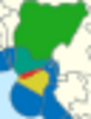
This map shows the Joint Development Zone (in red) between Nigeria and São Tomé and Príncipe.
