
Old St Runius, Marown facts for kids
Quick facts for kids St Runius Church |
|
|---|---|

St Runius, Marown, Isle of Man
|
|

 St Runius Church
Location in Isle of Man
|
|
| 54°10′35″N 4°34′23″W / 54.17629°N 4.57317°W | |
| Location | Marown, Isle of Man. |
| Country | Isle of Man |
| Denomination | Church of England |
| Tradition | Church of England / Roman Catholic |
| History | |
| Status | Occasional usage |
| Founded | 12th century |
| Dedication | Ma Rooney (St Runius) |
| Consecrated | 12th century |
| Architecture | |
| Functional status | Inactive |
| Style | Manx Chapel |
| Groundbreaking | 12th century |
| Administration | |
| Parish | Marown |
| Diocese | Diocese of Sodor and Man |
St Runius Church, also known as "Old Marown Church," is a very old building. It was built around the 1100s. For a long time, it was the main church for the area called Marown. This changed in 1853. Now, the church is mostly used for special events.
Contents
History of St Runius Church
The church is named after Ma Rooney, also known as St Runius. It was first built around the year 1200. Over time, parts of it were changed. For example, in 1754, some updates were made.
You can still see parts of the first, smaller church in the eastern side of the building. The very first door was on the south wall. You can still spot it from outside today! It's interesting that the north wall had no windows. This was a common way to build churches back in the 1100s.
How the Church Changed Over Time
Between 1750 and 1755, the church was made bigger. It was extended towards the west by about 5 meters. Some of the special carved stones used in the church came from another old church. These stones were taken from St Trinian's Church, which is also in the same area.
The church also had a special area for musicians. This was a gallery located in the western part of the church. Musicians would play instruments like violins and flutes there. Stone steps outside the building led up to this gallery.
A New Church and Old St Runius
In 1853, a new church was opened in Marown. This new church was built on the main road between Douglas and Peel. It was also named after St Runius. Because of this, Old St Runius Church was no longer the main parish church.
After this, Old St Runius was used as a chapel for funerals. During this time, a part of the east end of the church was taken down. A new door was also built there.
Restoration and Present Day Use
Even though the church was still used for special services, it started to fall apart. It was in bad shape for many years. Luckily, volunteers worked hard to fix it up. Thanks to their efforts, the church was able to reopen on August 9, 1959.
Today, regular services are not held at St Runius Church. However, it remains open for visitors. Special services and events are still held there from time to time. The church is also listed as a registered building, which means it's an important historical site.
What You Can See Inside
The church holds several very old Christian crosses. Some of these crosses date back as far as the 7th century. One of the best-preserved crosses was found by accident. It was discovered when a doorway was made taller. The cross had been used as a stone beam above the door!
Important People Connected to the Church
Many interesting people have connections to St Runius Church:
- Captain John Quilliam was baptized here.
- Thomas Christian served as the vicar (church leader) here.
- It is thought that Bishop Lonnan might be buried here.
- Bishop Connaghan might also be buried here.
- Bishop Runius, who the church is named after, might also be buried here.
Images for kids
-
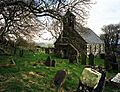
The old church building
-
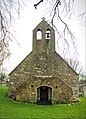
The entrance to St Runius Church
-
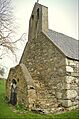
A view of St Runius Church
-
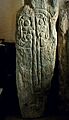
An ancient Norse-era carved cross
-
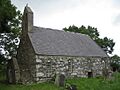
Another view of the church
-
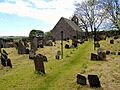
St Runius Church in Marown
-
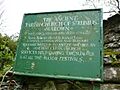
A sign at St Runius Church

.jpg)


