
Paramo toad facts for kids
Quick facts for kids Paramo toad |
|
|---|---|
| Conservation status | |
Scientific classification  |
|
| Kingdom: | Animalia |
| Phylum: | Chordata |
| Class: | Amphibia |
| Order: | Anura |
| Family: | Bufonidae |
| Genus: | Nannophryne |
| Species: |
N. cophotis
|
| Binomial name | |
| Nannophryne cophotis Boulenger, 1900
|
|
| Script error: The function "autoWithCaption" does not exist. | |
| Synonyms | |
|
|
Script error: No such module "Check for conflicting parameters".
The Nannophryne cophotis, also known as the Paramo toad, is a special kind of toad that belongs to the family Bufonidae. This toad is endemic to northern Peru, which means it is found only in that specific area and nowhere else in the world.
Contents
About the Paramo Toad
The Paramo toad lives in unique places in Peru. Its natural habitats include high-altitude grasslands called puna grassland, flat areas known as plateaus, and dry scrubland. You might also find it in farm areas, like fields where potatoes and maize (corn) are grown.
Where Paramo Toads Live
These toads are found at very high altitudes, ranging from 2,000 to 4,100 meters (about 6,500 to 13,500 feet) above sea level. Imagine living that high up! They need water to reproduce, so they breed in small ponds that appear after rain, or in shallow, permanent streams.
Why the Paramo Toad is Rare
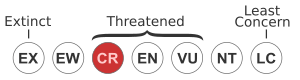
Sadly, the Paramo toad is a very rare animal. Scientists have not seen any individuals since 2005. Before that, its population was already shrinking very quickly. It was last seen in a few specific places:
- Granja Porcón & El Empalme (between 1999 and 2000)
- La Libertad (in 2003)
- Ancash (in 2004)
- Cajamarca (in 2005)
Scientists believe that if any Paramo toads are still alive today, there might be fewer than 50 of them left. This makes them extremely rare and in danger of disappearing forever.
Threats to the Paramo Toad
The main reasons why the Paramo toad is in such trouble are:
- Loss of habitat: The places where they live are being destroyed or changed.
- Pollution: Harmful substances are getting into their environment.
- Farming: Land is being turned into farms, taking away the toad's natural home.
- Mining: Both small and large mining operations can harm their habitats.
- Waterway changes: Rivers and streams, which are vital for their breeding, are being changed.
All these problems make it very hard for the Paramo toad to survive and thrive in its natural environment.
See also
 In Spanish: Nannophryne cophotis para niños
