
Pastel tree lizard facts for kids
Quick facts for kids Pastel tree lizard |
|
|---|---|
 |
|
| Conservation status | |
Scientific classification  |
|
| Kingdom: | Animalia |
| Phylum: | Chordata |
| Class: | Reptilia |
| Order: | Squamata |
| Suborder: | Iguania |
| Family: | Phrynosomatidae |
| Genus: | Sceloporus |
| Species: |
S. melanorhinus
|
| Binomial name | |
| Sceloporus melanorhinus Bocourt, 1876
|
|
| Script error: The function "autoWithCaption" does not exist. | |

Script error: No such module "Check for conflicting parameters".
The pastel tree lizard, also known as the black-nosed lizard or southern black-nosed lizard, is a cool reptile. Its scientific name is Sceloporus melanorhinus. This lizard is part of the Phrynosomatidae family, which includes many types of spiny lizards. You can find these lizards living in parts of Mexico and Guatemala.
Contents
What Does It Look Like?
The pastel tree lizard gets its name from its pretty colors. It often has a mix of greens, browns, and grays, which helps it blend in with trees. Some lizards might even have a hint of blue or yellow. They are called "black-nosed" because of a dark spot near their snout.
These lizards are usually medium-sized. They have rough, spiny scales that help protect them. Their long tails help them balance as they climb. Like many lizards, they can move very quickly, especially when they need to catch food or escape danger.
Where Do They Live?
Pastel tree lizards love warm places. They live in tropical and subtropical forests in Mexico and Guatemala. This means they like areas with lots of trees and plants. You can often spot them on tree trunks, branches, or even on rocks. They are very good at climbing and spend a lot of their time high up.
Their habitat often includes areas near water, but they are not usually found in the water itself. They prefer sunny spots where they can warm up. This is important for cold-blooded animals like lizards.
What Do They Eat?
These lizards are insectivores, which means they mainly eat insects. They are skilled hunters and will patiently wait for their prey. Then, they quickly snatch it up! Their diet includes a variety of small creatures.
Some of their favorite foods are:
- Ants
- Beetles
- Spiders
- Crickets
- Other small invertebrates
By eating insects, these lizards help keep the insect population in check. This is an important role in their ecosystem.
How Do They Behave?
Pastel tree lizards are active during the day. This means they are diurnal. They spend their days hunting for food and basking in the sun. Basking helps them control their body temperature. They often find a sunny spot on a tree branch or rock to soak up the warmth.
When they feel threatened, they are very good at hiding. Their camouflage helps them disappear into their surroundings. If they need to, they can also run very fast to escape predators. They are generally shy creatures and prefer to avoid humans.
Reproduction and Life Cycle
Like many lizards, pastel tree lizards reproduce by laying eggs. The female lizard will find a safe spot to lay her eggs, often in soft soil or under rocks. She will lay a clutch of several eggs.
After a period of time, the baby lizards hatch from the eggs. They are tiny versions of their parents and must quickly learn to find food and protect themselves. They grow by shedding their skin, a process called molting. As they grow, they will shed their old skin many times. This allows them to get bigger and stronger.
Conservation Status
The pastel tree lizard is currently listed as "Least Concern" by the International Union for Conservation of Nature (IUCN). This means that their population is stable and they are not currently at high risk of extinction. However, like all wildlife, they can be affected by changes to their habitat. Protecting their forest homes is important for their future.
Images for kids
-
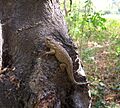
A pastel tree lizard on a branch.
See also
 In Spanish: Lagartija-escamosa hocico negro para niños
