
Shaw Farm, Windsor facts for kids

.jpg)
Shaw Farm is a special farm located on the royal estate near Windsor Castle in England. It started as a "home farm," which means it grew food and raised animals specifically to supply the castle. Over time, it became owned by different members of the royal family, including Princess Augusta Sophia. Later, it was bought by the Crown Estate, which manages land owned by the King or Queen.
In 1851, Prince Albert, who was Queen Victoria's husband, took over running the farm. He turned it into a "model farm," using the best and newest farming methods. He built many new buildings and raised different kinds of animals, including prize-winning Clydesdale horses. After Albert passed away, the farm was used to keep interesting and unusual animals that were given as gifts to Queen Victoria.
Contents
How Shaw Farm Began
Shaw Farm started as a farm that provided fresh food for Windsor Castle, which was nearby. In the early 1800s, a royal princess named Princess Augusta Sophia owned the farm. It was rented out to a family called the Voules.
The farm grew bigger in 1817 when some land around Windsor was divided up and added to it. More land was added later, including an area where old workers' homes used to be. In September 1840, after Princess Augusta Sophia died, the Crown Estate bought the farm.
The Crown Estate then rented the land to a farmer named Mr. Watkins, and later to his son-in-law, Charles Cantrell. More land was added to the farm in 1843, making it even larger.
Prince Albert's Modern Farm
Prince Albert, Queen Victoria's husband, was very interested in farming. He had already been managing another farm nearby since 1841 and wanted to make Shaw Farm a "model farm." A model farm uses the best and most modern ways of farming to show others how it's done.
In 1851, the farmer Charles Cantrell was told that his rental agreement would end so Prince Albert could take over. Cantrell tried to get money as a result, but he wasn't successful. Also, a new road called Albert Road was being built around this time, which cut through the farm's land. This might have made it harder for a regular farmer to make money from the farm. Prince Albert paid about £250 a year to rent the farm from the Crown Estate.
Prince Albert built many new structures on the farm before he died in 1861. He paid for half of the costs, and the Crown Estate paid for the other half. Prince Albert cared about his workers. He built an eight-room house with a tower for them to live in. Two cottages for workers were also built on Albert Road starting in 1852. A new farmhouse was built between 1853 and 1854.
The farm was very well-equipped for its time. It had stables for horses, special boxes and stalls for cattle, a house for chickens, pens for pigs, a covered shed for sheep, and a tank for manure.
Prince Albert had people help him run the farm, including Lieutenant-General William Wemyss and later his stewards, Mr. Wilson and Mr. Tait. Prince Albert brought in a herd of short-horned dairy cows in 1853. He also raised Clydesdale horses, which won prizes from the Royal Agricultural Society of England. He also bred Berkshire pigs and Cheviot sheep.
Shaw Farm in Victorian Times
By 1862, the year after Prince Albert died, Shaw Farm was about 308 acres in size. About 102 acres were used for growing crops, and the rest was for grazing animals. The farm used six pairs of plough horses and had thirty full-time workers, with more workers hired during busy seasons. There is a painting of the farm from this time that is kept by the Royal Collection Trust.
The farm became a home for many unusual animals that were given as gifts to Queen Victoria. These included Zebu cattle from the Maharajah of Mysore in 1862, and Zulu cattle from Garnet Wolseley, 1st Viscount Wolseley, in 1880. Wild boars sent by Edward, Prince of Wales (who later became King Edward VII) from his Sandringham estate, and even a kangaroo, also lived there. The farmhouse had special rooms for Queen Victoria, from which she could go directly into the poultry (chicken and bird) area.
Shaw Farm Today
Shaw Farm is still an active farm today. On September 19, 2022, during the state funeral of Elizabeth II, the procession carrying the Queen's coffin to Windsor Castle started from the Shaw Farm gate on Albert Road. This is where the hearse carrying the coffin from London joined the procession.
Images for kids
-
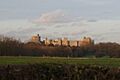
Fields of Shaw Farm, looking towards Windsor Castle
-
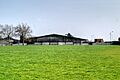
Farm buildings
 | Shirley Ann Jackson |
 | Garett Morgan |
 | J. Ernest Wilkins Jr. |
 | Elijah McCoy |
