
Sirin facts for kids

The Sirin is an amazing mythical creature from ancient Russian folklore. She is pictured with the head and chest of a beautiful woman and the body of a magical bird, often like an owl. In old tales, this wonder bird came from enchanted lands such as Iriy, an ancient Slavic heavenly realm, or from distant gardens near the Euphrates River.
Even though her name sounds like the famous sirens from Greek mythology, the Sirin has her own unique place in Slavic stories. She is closely tied to another magical creature called the Alkonost, who represents ultimate happiness. While the Alkonost brings pure celebration, the Sirin represents both deep sorrow and peaceful heavenly beauty.
Contents
Origins and History of the Bird of Wonder
Where did this fantastic winged wonder come from? Historians believe the earliest ideas about the creature might have started far away in ancient Persian art and tales. Over many centuries, traders and travelers brought these magical stories north into Slavic lands.
Ancient Art and Sacred Stories
Centuries ago, northern Russian people called the Pomors loved to draw the Sirin. They often painted her on wooden art and in hand-made books such as the Book of Genesis. Pomor artists showed her sitting peacefully among the branches of paradise trees, singing sacred tunes of wonder.
How the Myth Changed Over Time
During the 17th and 18th centuries, the meaning of the creature shifted in Russian culture. Instead of bringing only sadness, she began to stand for world harmony and cosmic peace. Because she lived right beside paradise, people believed she showed human happiness.
Old stories said that only truly joyful people could hear her sweet melodies. Catching a glimpse of her was nearly impossible because she could fly as swiftly as fleeting good luck. To these villagers, she stood for endless joy, perfect beauty, and heavenly delight.
Tales and Legends of the Sirin
In classic Greek mythology, ancient sirens used their voices to trick sailors at sea. In contrast, the Sirin in Slavic legends was sent to sing for good and holy people.
The Enchanting Voice and Loud Bells
In popular artwork, the creature wore a bright crown or had a shining holy nimbus around her head. She loved to sing lovely melodies to honored saints, telling them about peaceful futures waiting in the sky.
However, her song was also intensely powerful. Normal people who heard her voice became completely enchanted. A listener would forget all daily chores, stop eating, and wander off into deep forests just to keep listening forever. To protect their families, villagers came up with clever tricks. Whenever they thought the creature was near, they fired loud cannons, banged metal pots, and rang heavy church bells. The loud noises scared the sensitive bird away safely!
Apple Harvest Traditions
A delightful legend connects the bird to the late summer harvest festival known as the Apple Feast of the Saviour. Early in the morning, the Sirin flies silently into a sweet-smelling apple orchard. She weeps gentle tears, mourning the end of warm summer days.
Later that same afternoon, her sister bird, the Alkonost, flies into the very same trees. The Alkonost laughs with great delight, shaking morning dew from her shiny feathers. When these magical drops splash across the apples, they give the fruit special healing powers for everyone to enjoy.
Symbols in Russian Poetry and Culture
The mysterious bird has meant many different things across Russian history:
- Metaphor for faith: Some storytellers saw her song as a metaphor for deep spiritual teachings filling the human heart.
- Warnings of danger: Other teachers used her tricky melodies as an example of a false path that could confuse people.
- Poetic inspiration: Folktales linked her name with an early Christian writer called Ephrem the Syrian. Because of this link, traditional writers such as Nikolay Klyuev used the bird's name to describe a gifted poet.
- Fairy cousins: In ancient Old Slavic books by writers like George Hamartolos, scholars even compared the creature to a magical fairy called a vila.
Gallery
-
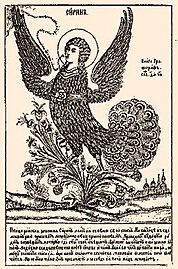
Sirin (postcard), 1908
-
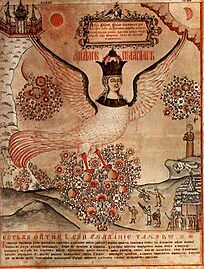
Russian lubok print, 19th century
-
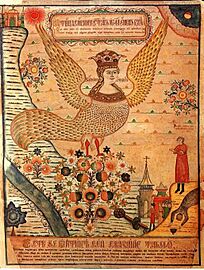
Russian lubok print, 19th century


See Also
- Alkonost
- Gamayun
