
Soleus muscle facts for kids
Quick facts for kids Soleus muscle |
|
|---|---|
 |
|
| Illustration depicting the soleus and surrounding anatomy. 1, Adductor magnus — 2, Lateral head of gastronecmius — 3, Arcuate popliteal ligament — 4, Popliteus — 5, Tendinous arch of the soleus — 6, Soleus — 7, Calcaneus — 8, Plantaris — 9, Achilles tendon — 10, Medial head of gastronecmius — 11, Plantaris — 12, Semimembranus plus bursa — 13, Medial head of gastronecmius. (After Charpy.) | |
 |
|
| The soleus muscle and surrounding structures, from Gray's Anatomy. This is a view of the back of the right leg; most of the gastrocnemius muscle has been removed. | |
| Latin | musculus soleus |
| Artery | Popliteal artery, posterior tibial artery, peroneal artery |
| Nerve | Tibial nerve, specifically, nerve roots L5–S2 |

The soleus is a strong muscle found in the back of your lower leg, which is often called the calf. It stretches from just below your knee all the way down to your heel. This muscle is super important for everyday activities like standing, walking, and running. It works closely with another calf muscle called the gastrocnemius muscle. Together, they are sometimes called the triceps surae. The name "soleus" comes from the Latin word "solea," which means "sandal".
Contents
Understanding the Soleus Muscle
The soleus muscle is located in the back part of your lower leg. It sits deeper than the gastrocnemius muscle, which is closer to the skin. Think of it like layers: the gastrocnemius is the top layer, and the soleus is underneath.
How the Soleus is Built
In humans, the soleus is a complex muscle. Its fibers attach to both the fibula (the smaller bone in your lower leg) and the tibia (your shin bone). These fibers then come together to form part of the calcaneal tendon, also known as the Achilles tendon. This strong tendon connects the soleus and gastrocnemius muscles to the back of your calcaneus, or heel bone.
The way the soleus muscle is structured can be different in various animals. For example, in some animals like rabbits, it's very much joined with the gastrocnemius muscle. However, in humans, these two muscles are mostly separate.
Neighbors of the Soleus
The gastrocnemius muscle is the main muscle you feel on top of your calf, right above the soleus. There's also a smaller muscle called the plantaris muscle that runs between the soleus and gastrocnemius. Deeper inside your leg, beneath the soleus, are other muscles like the tibialis posterior muscle, flexor digitorum longus muscle, and flexor hallucis longus muscle. These muscles help with different movements of your foot and toes.
What the Soleus Muscle Does
The soleus muscle is a powerhouse for your lower leg! Its main job is to help with plantar flexion of the foot. This means it helps you point your toes downwards, like when you stand on your tiptoes or push off the ground when walking or running.
Keeping You Upright
This muscle is incredibly important for keeping your balance and maintaining your standing posture. Without its constant work, your body would simply fall forward! It's always active, even when you're just standing still.
The Body's "Peripheral Heart"
The soleus also plays a special role in helping your blood flow. When you stand upright, the soleus muscle helps pump venous blood (blood that has delivered oxygen and nutrients) back up to your heart from your feet and legs. Because of this important job, it's sometimes called the "skeletal muscle pump" or even a "peripheral heart."
Endurance and Strength
The soleus muscle has many "slow muscle fibers." These types of fibers are great for endurance and can work for a long time without getting tired easily. This is why the soleus is the main muscle used for plantar flexion during regular movements like walking, as it can keep going without quickly fatiguing. It's especially effective when your knee is bent.
How the Soleus Gets Its Signals
The soleus muscle receives signals from your brain through the tibial nerve. This nerve tells the muscle when to contract and relax, allowing you to move your foot.
Keeping Your Soleus Healthy
Sometimes, muscles in the leg, including the soleus, can experience a condition called compartment syndrome. This happens when swelling or pressure builds up inside a muscle compartment, which is a group of muscles surrounded by tough tissue. This pressure can affect blood flow and nerves. If not treated properly, it can lead to serious issues. It's important to listen to your body and tell an adult if you feel unusual pain or swelling in your legs.
Images for kids
-
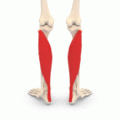
Animation.
-
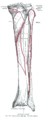
Bones of the right leg. Posterior surface.
-
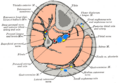
Cross-section through middle of leg.


