
Sporophyla oenospora facts for kids
Quick facts for kids Sporophyla oenospora |
|
|---|---|
 |
|
| Male | |
| Conservation status | |
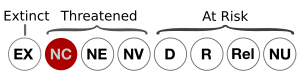 Nationally Critical (NZ TCS) |
|
| Scientific classification | |
| Kingdom: | |
| Phylum: | |
| Subphylum: | |
| Class: | |
| Order: | |
| Family: |
Pyralidae
|
| Genus: |
Sporophyla
|
| Species: |
S. oenospora
|
| Binomial name | |
| Sporophyla oenospora |
|
| Synonyms | |
|
|
The Sporophyla oenospora is a tiny moth that belongs to the Pyralidae family. This special moth is only found in New Zealand, which means it is endemic there. Sadly, the Department of Conservation says it is critically endangered. This means it is very close to disappearing forever.
Contents
How Scientists Name and Group This Moth
Scientists use a system called taxonomy to name and group all living things. This helps us understand how different creatures are related.
This moth was first described in 1897 by a scientist named Edward Meyrick. He gave it the name Crocydopora oenospora. The first example of this moth, called the type specimen, was found at Castle Hill. You can find this important specimen at the Natural History Museum, London. Later, another scientist, George Vernon Hudson, decided this moth fit better into the group of moths called Sporophyla.
What This Moth Looks Like
The Sporophyla oenospora moth is about 17 millimeters (a little over half an inch) long. Its head and body are a mix of dark brown and reddish-brown colors.
Its front wings are long and narrow. They are mostly dark brown with tiny black and grayish-white speckles. There are also reddish-brown patches, especially in the middle of the wing. The front edge of the wing is white towards the back. The back wings are a dark brown color.
Where This Moth Lives
The S. oenospora moth is endemic to New Zealand. This means it naturally lives only in New Zealand and nowhere else in the world. Besides Castle Hill, this moth has also been found in places like Ida Valley, Alexandra, and Ben Lomond.
Why This Moth Needs Our Help
This moth is in serious trouble. It is listed under the New Zealand Threat Classification System as "Nationally Critical." This is the highest threat level, meaning there are very few of these moths left. They need our help to survive and not become extinct.
Images for kids
-

Illustration of male S. oenospora.

