
Steroid facts for kids
A steroid is a special kind of chemical molecule found inside living things. You might have heard the word "steroids" used in sports or medicine, but in science, steroids are actually a huge family of naturally occurring compounds.
In nature, steroids have two main jobs. First, they act as important structural building blocks inside the walls of living cells. Second, they serve as powerful chemical messengers, known as hormones, that send instructions from one part of the body to another.
Hundreds of different steroids exist across the natural world. They are found in humans, animals, plants, and even fungi like mushrooms. Well-known examples include cholesterol, vitamin D, and hormones like testosterone and cortisol.
Contents
Steroids in Animals and Humans
In vertebrates (animals with backbones), steroids are essential for staying alive.
- Cholesterol: This is the most common steroid in animals. It keeps cell membranes flexible and stable. Without cholesterol, our cell membranes would either break or turn completely solid.
- Steroid Hormones: These travel through the bloodstream to control growth, energy usage, and stress reactions.
- Bile Acids: Steroids made in the liver (such as cholic acid) enter the digestive system to help break down dietary fats.
Steroids in Plants
Plants produce their own steroid group called phytosterols.
- Phytosterols help plant cell walls stay strong during hot or cold weather.
- Plants also produce brassinosteroids, which are growth hormones. They tell plant stems to stretch toward sunlight and help seeds sprout.
- Some plants produce bitter or toxic steroids to stop insects and herbivores from eating them.
| Steroid Name | Source in Nature | Primary Function |
|---|---|---|
| Cholesterol | Animals & Humans | Cell membrane structure, precursor for hormones |
| Cortisol | Adrenal Glands | Stress response, energy regulation, calming inflammation |
| Aldosterone | Adrenal Glands | Regulating water, salt balance, and blood pressure |
| Testosterone | Body Tissues | Muscle growth, bone strength, general development |
| Ergosterol | Fungi & Mushrooms | Membrane strength in fungi; converts to Vitamin D2 |
| Vitamin D3 | Skin (via sunlight) | Bone growth and calcium absorption |
How Living Bodies Create Steroids
The process of building steroids from simpler molecules is called steroidogenesis (or steroid biosynthesis). It is an amazing example of natural chemical engineering.
The Mevalonate Pathway
In animals, steroid building begins with a simple molecule called acetyl-CoA, which comes from the food we eat.
- Cells use the mevalonate pathway to turn acetyl-CoA into five-carbon building blocks called isoprene units (IPP and DMAPP).
- Enzymes snap six of these units together to build a long 30-carbon chain called squalene.
- The cell then bends and folds squalene into four connected rings, creating lanosterol.
- Lanosterol is trimmed and reshaped through many small steps to produce cholesterol.

Turning Cholesterol into Hormones
Once cholesterol is made, cells can transform it into all other steroid hormones:
- Inside the mitochondria of specialized cells, cholesterol is cut down into a 21-carbon molecule called pregnenolone.
- Pregnenolone serves as the master starter molecule.
- Different enzyme pathways then convert pregnenolone into cortisol, aldosterone, testosterone, or estrogens, depending on what the body needs.

How Steroids Work Inside Cells
Steroid molecules work differently than many other hormones:
- Because steroids are made of oily lipids, they easily slip right through the fatty outer wall of a cell.
- Once inside, the steroid docks onto a matching receptor protein floating in the cell fluid or resting inside the nucleus.
- The steroid-receptor pair binds directly to DNA strands.
- This tells the cell to turn specific genes on or off, instructing the cell to make new proteins.
Because changing gene activity takes time, steroids usually take hours or days to cause visible changes, but their effects are long-lasting.
Breaking Down and Eliminating Steroids
Steroids are powerful chemicals, so the body must break them down once their job is done.
- The liver contains specialized enzymes known as cytochrome P450 proteins.
- These enzymes attach oxygen and water-loving molecules to old steroids.
- Once neutralized, the transformed steroids are packaged into bile (to be eliminated through digestion) or filtered out by the kidneys into urine.
Modern Medical Applications
Today, synthetic versions of natural steroids are among the most widely prescribed medicines in the world.
- Inhalers for Asthma: Corticosteroid inhalers soothe swelling in the airways, helping people with asthma breathe easily.
- Skin Creams: Mild steroid ointments reduce itching, redness, and swelling caused by bug bites, eczema, or poison ivy.
- Organ Transplants: Steroid medicines calm down the immune system so a patient's body accepts a new transplanted kidney or heart.
- Cholesterol Medicines: Drugs called statins block the first steps of the mevalonate pathway, helping people lower dangerously high blood cholesterol.
History and Nobel Prize Discoveries
Understanding steroids was one of the greatest scientific adventures of the 20th century. Because steroids play such a massive role in health and medicine, many scientists won Nobel Prizes for unlocking their secrets:
- 1927: Heinrich Otto Wieland won the Nobel Prize in Chemistry for discovering the chemical makeup of bile acids.
- 1928: Adolf Otto Reinhold Windaus won the Chemistry Prize for figuring out how sterols connect to vitamins.
- 1939: Adolf Butenandt and Leopold Ružička won for isolating natural steroid hormones and discovering their structure.
- 1950: Edward Calvin Kendall, Tadeus Reichstein, and Philip Hench won the Nobel Prize in Medicine for discovering adrenal hormones like cortisone and using them to treat joint pain.
- 1965: Robert Burns Woodward won in Chemistry for successfully creating complex steroids artificially in a laboratory.
- 1969: Derek Barton and Odd Hassel won for discovering the 3D shapes and folding angles of steroid molecules.
Related Pages
Images for kids
-
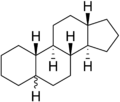
A gonane (steroid nucleus)
-
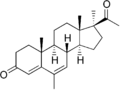
Medrogestone, a man-made medicine similar to progesterone


See also
 In Spanish: Esteroide para niños
