
Territories of the United States facts for kids
Quick facts for kids
Territories of the United States
|
|
|---|---|
.svg) |
|

The 50 states and the District of Columbia
Incorporated, unorganized territory Unincorporated, organized territory Unincorporated, organized territory with Commonwealth status Unincorporated, unorganized territory Sovereign states in Compacts of Free Association with the United States |
|
| Languages | |
| Demonym(s) | American |
| Territories |
9 uninhabited
2 claimed
|
| Leaders | |
| Donald Trump | |
| List | |
| Area | |
|
• Total
|
22,294.19 km2 (8,607.83 sq mi) |
| Population | |
|
• 2020 census
|
3,623,895 |
| Currency | United States dollar |
| Date format | mm/dd/yyyy (AD) |
The Territories of the United States are special areas that are part of the United States but are not states. They are governed by the U.S. federal government. Unlike states, which have their own sovereign powers, the territories get their self-governing powers from the U.S. Congress. This means Congress has the final say over how territories are run.
All U.S. territories are islands or groups of islands. There are three in the Caribbean Sea and eleven in the Pacific Ocean. Five of these territories have people living there permanently: American Samoa, Guam, the Northern Mariana Islands, Puerto Rico, and the United States Virgin Islands. The other nine are mostly small, uninhabited islands. Historically, many territories eventually became states, like Hawaii. However, residents of U.S. territories cannot vote in presidential elections and have only non-voting representatives in Congress.
Contents
How Territories are Classified
Territories are classified in two main ways: "organized" or "unorganized," and "incorporated" or "unincorporated." These classifications determine how much self-governance a territory has and how much of the U.S. Constitution applies to it.
Organized vs. Unorganized Territories
An organized territory has a special law from Congress called an "organic act." This act gives the territory some power to govern itself. It's like a mini-constitution for the territory. An unorganized territory does not have such an act. This means Congress has more direct control over its government.

Today, four of the five inhabited territories (Guam, Northern Mariana Islands, Puerto Rico, and U.S. Virgin Islands) are organized. American Samoa is technically unorganized. All the uninhabited territories are also unorganized.
Incorporated vs. Unincorporated Territories
Congress decides if a territory is incorporated or unincorporated. This is a very important difference.
- An incorporated territory is considered a full part of the United States. The entire U.S. Constitution applies to it, just like it applies to a state. Currently, Palmyra Atoll is the only incorporated territory.
- An unincorporated territory is considered to belong to the U.S. but is not a full part of it. In these territories, only some basic or "fundamental" rights from the Constitution apply automatically. Other parts of the Constitution might apply only if Congress decides they should. All five permanently inhabited territories are unincorporated.
This difference means that people in unincorporated territories might not have all the same constitutional rights as people in states. For example, residents of most unincorporated territories do not automatically get U.S. citizenship by birth, though Congress has granted it to most.
Permanently Inhabited Territories
The U.S. has five territories where people live all the time. These are Puerto Rico and the United States Virgin Islands in the Caribbean Sea, and Guam, the Northern Mariana Islands, and American Samoa in the Pacific Ocean. In 2020, about 3.62 million people lived in these territories. Most of them live in Puerto Rico.

Citizenship and Rights
People born in Puerto Rico, the U.S. Virgin Islands, Guam, and the Northern Mariana Islands are U.S. citizens from birth. People born in American Samoa are U.S. nationals, but not U.S. citizens, unless one of their parents is a U.S. citizen. U.S. nationals can live and work anywhere in the U.S. and carry U.S. passports. However, to become full U.S. citizens, they must go through a naturalization process, similar to people from other countries.
Residents of these territories cannot vote for the U.S. President in general elections. They also elect a non-voting member to the United States House of Representatives. These members can introduce bills and vote in committees, but they cannot vote on the final passage of laws in the House.
Local Government
Each inhabited territory has its own local government with three branches, similar to a state. They have a locally elected governor and a legislature that makes local laws.

The current non-voting members of the House of Representatives (as of April 2026) are:
- Amata Coleman Radewagen (American Samoa)
- James Moylan (Guam)
- Kimberlyn King-Hinds (Northern Mariana Islands)
- Pablo Hernández Rivera (Puerto Rico)
- Stacey Plaskett (U.S. Virgin Islands)
The capitals and governors of the territories are:
- Pago Pago (American Samoa) – Governor Pula Nikolao Pula
- Hagåtña (Guam) – Governor Lou Leon Guerrero
- Saipan (Northern Mariana Islands) – Governor David M. Apatang
- San Juan (Puerto Rico) – Governor Jenniffer González-Colón
- Charlotte Amalie (U.S. Virgin Islands) – Governor Albert Bryan Jr.
Court Systems
Each of the five major territories has its own local court system. Puerto Rico also has a federal district court, similar to those in the states, where judges serve for life. The other territories have federal courts where judges do not have life tenure. American Samoa does not have its own federal court; federal cases from there are handled in Hawaii or Washington, D.C.

Territory Overview
| Name (abbreviation) | Location | Area | Population (2020) |
Capital | Official language(s) | Largest town | Status | Acquired |
|---|---|---|---|---|---|---|---|---|
 American Samoa (AS) American Samoa (AS) |
Polynesia (South Pacific) | 197.1 km2 (76 sq mi) | 49,710 | Pago Pago | Samoan, English | Tafuna | Unincorporated, unorganized | April 17, 1900 |
 Guam (GU) Guam (GU) |
Micronesia (North Pacific) | 543 km2 (210 sq mi) | 153,836 | Hagåtña | English, Chamorro | Dededo | Unincorporated, organized | April 11, 1899 |
 Northern Mariana Islands (MP) Northern Mariana Islands (MP) |
Micronesia (North Pacific) | 463.63 km2 (179 sq mi) | 47,329 | Saipan | English, Chamorro, Carolinian | Saipan | Unincorporated, organized (Commonwealth) | November 4, 1986 |
 Puerto Rico (PR) Puerto Rico (PR) |
Caribbean (North Atlantic) | 9,104 km2 (3,515 sq mi) | 3,285,874 | San Juan | Spanish, English | San Juan | Unincorporated, organized (Commonwealth) | April 11, 1899 |
 U.S. Virgin Islands (VI) U.S. Virgin Islands (VI) |
Caribbean (North Atlantic) | 346.36 km2 (134 sq mi) | 87,146 | Charlotte Amalie | English | Charlotte Amalie | Unincorporated, organized | March 31, 1917 |
History of Inhabited Territories
- American Samoa: Became a territory in 1900. The U.S. Navy controlled it for many years. It has been locally self-governing since 1967.
- Guam: Became a territory in 1899 after the Spanish–American War. The Guam Organic Act of 1950 gave Guamanians U.S. citizenship and a local government.
- Northern Mariana Islands: Became a commonwealth in 1986. These islands were once controlled by Spain, Germany, and Japan before becoming a U.N. trust territory managed by the U.S.
- Puerto Rico: Became a territory in 1899 after the Spanish–American War. Puerto Ricans have been U.S. citizens since 1917. It has been a U.S. commonwealth since 1952.
- U.S. Virgin Islands: Purchased by the U.S. from Denmark in 1917. U.S. citizenship was granted in 1927.
Demographics and Economy
The populations of the U.S. territories are very diverse. For example, American Samoa has a large Pacific Islander population, Guam has many Chamorro and Filipino people, and the U.S. Virgin Islands have a large African American population. Puerto Rico is mostly Hispanic or Latino.
The economies of the territories vary greatly. Some, like Puerto Rico, have larger economies, while others, like American Samoa, are smaller. Many territories face higher poverty rates compared to the mainland U.S.
Minor Outlying Islands
The United States Minor Outlying Islands are small islands, atolls, and reefs that are mostly uninhabited. Most are in the Pacific Ocean, like Midway Atoll and Palmyra Atoll. Navassa Island is in the Caribbean Sea.

Only a few of these islands have temporary residents, usually staff from the United States Fish and Wildlife Service or military personnel. Palmyra Atoll is the only incorporated territory among them. Some of these islands, like Navassa Island and Wake Island, are also claimed by other countries.
| Name | Location | Area | Status | Notes |
|---|---|---|---|---|
| Baker Island | Polynesia (North Pacific) | 2.1 km2 (0.81 sq mi) | Unincorporated, unorganized | Claimed in 1856. |
| Howland Island | Polynesia (North Pacific) | 4.5 km2 (1.7 sq mi) | Unincorporated, unorganized | Claimed in 1858. |
| Jarvis Island | Polynesia (South Pacific) | 4.75 km2 (1.83 sq mi) | Unincorporated, unorganized | Claimed in 1856. |
| Johnston Atoll | Polynesia (North Pacific) | 2.67 km2 (1.03 sq mi) | Unincorporated, unorganized | Last used by the U.S. Department of Defense in 2004. |
| Kingman Reef | Polynesia (North Pacific) | 18 km2 (6.9 sq mi) | Unincorporated, unorganized | Claimed in 1860. |
| Midway Atoll | Polynesia (North Pacific) | 6.2 km2 (2.4 sq mi) | Unincorporated, unorganized | Territory since 1859; a National Wildlife Refuge. |
| Navassa Island | Caribbean (North Atlantic) | 5.4 km2 (2.1 sq mi) | Unincorporated, unorganized | Territory since 1857; also claimed by Haiti. |
| Palmyra Atoll | Polynesia (North Pacific) | 12 km2 (5 sq mi) | Incorporated, unorganized | Partially privately owned, partially federal land. |
| Wake Island | Micronesia (North Pacific) | 7.4 km2 (2.9 sq mi) | Unincorporated, unorganized | Territory since 1898; administered by the U.S. Air Force. Claimed by the Marshall Islands. |
Flora and Fauna in U.S. Territories
The U.S. territories are home to many unique plants and animals that are found nowhere else in the United States. They all have tropical climates and ecosystems.
Forests and Ecosystems

These territories contain almost all of the tropical forests in the U.S. These forests are very diverse, including rainforests, coastal forests, and mangrove forests. They are important for many species but are also at risk from new buildings and invasive species. El Yunque National Forest in Puerto Rico is the only tropical rainforest in the U.S. National Forest system.
American Samoa and the Northern Mariana Islands have very high forest cover, similar to some of the most forested states in the U.S.
Unique Bird Species
U.S. territories have many bird species that live only there. [[multiple image | direction = horizontal | total_width = 390 | image1 = Manycoloured fruitdove male bobbys.JPG | image2 = Golden White-Eye palm.jpg | footer = Left: Many-colored fruit dove (found in American Samoa); Right: Golden white-eye (found only in the Northern Mariana Islands) ]]
- In Guam, the introduction of the brown tree snake has caused nine of twelve native bird species to disappear.
- Puerto Rico has several unique birds, like the critically endangered Puerto Rican parrot.
- The Northern Mariana Islands are home to birds like the Mariana swiftlet and the golden white-eye.
- American Samoa has birds such as the many-colored fruit dove.
- Midway Atoll has the world's largest breeding colony of Laysan albatross.
Other Animals and Marine Life
The territories also have unique reptiles and mammals. American Samoa has the Pacific boa and the Pacific sheath-tailed bat. Guam and the Northern Mariana Islands have the Mariana fruit bat. The fauna of Puerto Rico includes the common coquí frog. The fauna of the U.S. Virgin Islands features many fish species.
Many of these islands are important for marine life, including whales and dolphins.
Protected Natural Areas
To protect these special environments, the U.S. has established several protected areas in its territories:
- National Park of American Samoa
- Virgin Islands National Park
- War in the Pacific National Historical Park on Guam
- Various National Wildlife Refuges, like the Guam National Wildlife Refuge
- El Yunque National Forest in Puerto Rico
- The Pacific Islands Heritage Marine National Monument, which includes the U.S. Minor Outlying Islands.
Galleries
Members of the House of Representatives (non-voting)
-
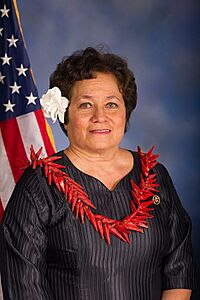
Amata Coleman Radewagen (R), (American Samoa)
-
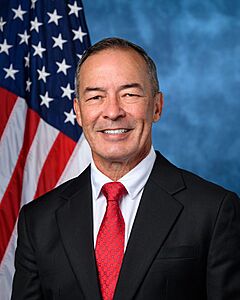
James Moylan (R), (Guam)
-
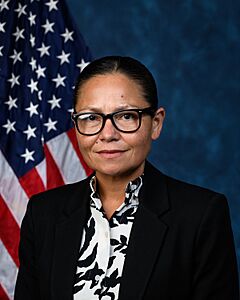
Kimberlyn King-Hinds (R), (Northern Mariana Islands)
-
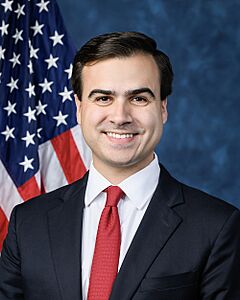
Pablo Hernández Rivera (D), (Puerto Rico)
-
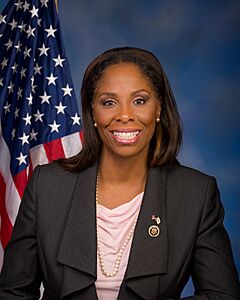
Stacey Plaskett (D), (U.S. Virgin Islands)

.jpg)


.jpg)
Territorial Governors
-
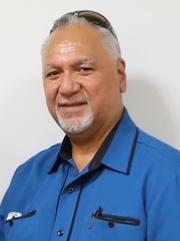
Pula Nikolao Pula (R), (American Samoa)
-
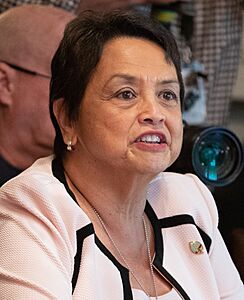
Lou Leon Guerrero (D), (Guam)
-
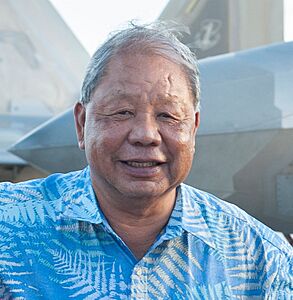
David M. Apatang (I), (Northern Mariana Islands)


.jpg)

Satellite Images
-
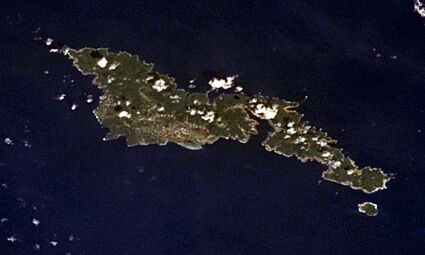
Tutuila and Aunu'u (American Samoa)


Uninhabited Territories (U.S. Minor Outlying Islands)
-
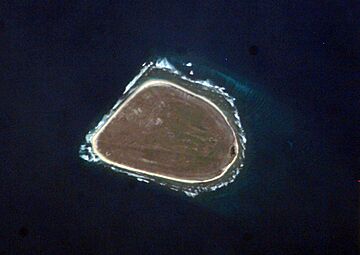
Baker Island
-
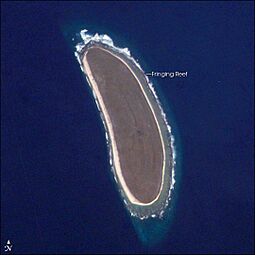
Howland Island
-
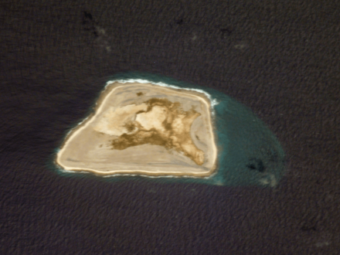
Jarvis Island
-
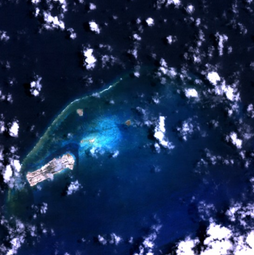
Johnston Atoll
-
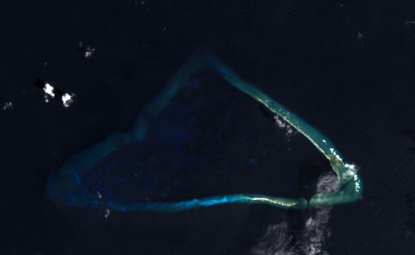
Kingman Reef
-
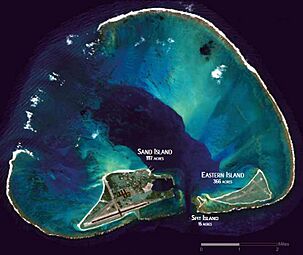
Midway Atoll
-
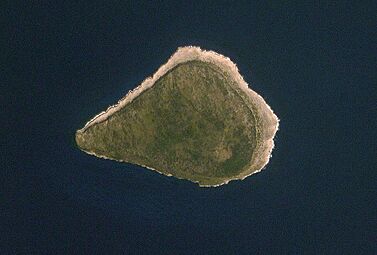
Navassa Island
-
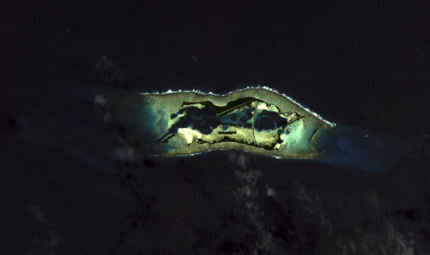
Palmyra Atoll
-
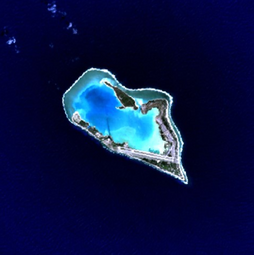
Wake Island


Maps
-
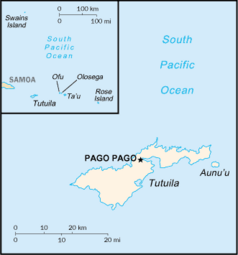
American Samoa
-
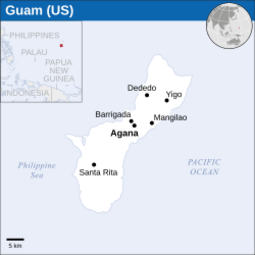
Guam
-
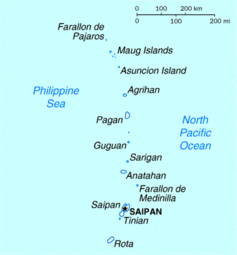
Northern Mariana Islands
-
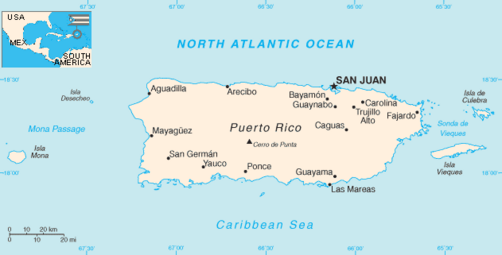
Puerto Rico
-
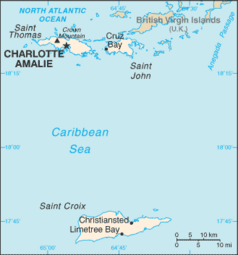
U.S. Virgin Islands
-
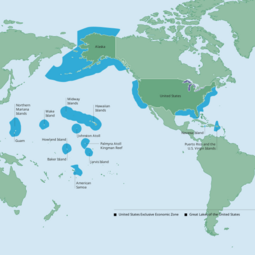
U.S. exclusive economic zone

_-_GUM_-_UNOCHA.svg)

.png)


See also
 In Spanish: Territorios de los Estados Unidos para niños
- Enabling act (United States)
- Historic regions of the United States
- Insular area
- List of extreme points of the United States
- List of states and territories of the United States
- Organic act
- Organized incorporated territories of the United States
- Territorial evolution of the United States
- U.S. Caribbean region
- U.S. territorial sovereignty
- 51st state
