
Welsh heraldry facts for kids
Heraldry is like a special system of symbols and designs, often seen on shields or flags, that families, kingdoms, or groups use to identify themselves. Think of them as ancient logos! In Wales, heraldry has its own unique style, different from the symbols used in England or Scotland. People in Wales were already using these special symbols by the mid-1200s. For example, two sons of Llywelyn the Great, a famous Welsh prince, had their own coats of arms during this time. As Wales became more connected with England in the 1300s and 1400s, the Welsh way of using heraldry started to blend with the English style.
Contents
Ancient Welsh Kingdoms and Their Symbols
.png)
Before King Edward I conquered Gwynedd, Wales was made up of several kingdoms and lands ruled by different princes. These rulers often had their own unique coats of arms. Even kings who lived before heraldry became common were later given symbols that their families used. These symbols were then passed down to their children and future generations in Wales.
The two most important Welsh kingdoms were Gwynedd in the north and Deheubarth in the south. Gwynedd was the most powerful and the last to be taken over. Today, the Princes of Wales use the historic symbols of Gwynedd on their shields. These were the same symbols used by famous Welsh princes like Llywelyn the Great and Llywelyn ap Gruffudd.
The old Kingdom of Powys had a symbol of a red lion standing on its hind legs (called "rampant") on a gold background. This symbol was used by the Mathrafal family when Powys was an independent kingdom. You can still see this red lion on many town and city symbols in Wales today.
In southern Wales, the main family of Deheubarth used a gold lion, also rampant, on a red background. This symbol had a special gold border with jagged edges. Even though this symbol was never part of the English Royal Arms, families descended from the Deheubarth rulers still use it. The Talbot family, for example, who are the Earl of Shrewsbury, started using it after marrying into the Deheubarth family in the 1300s.
Let's look at some of the symbols from these ancient Welsh kingdoms:
| Symbol | Kingdom or Principality | Meaning |
|---|---|---|
 |
Kingdom of Gwynedd | This was the symbol of Llywelyn ap Gruffudd, the Prince of Gwynedd. It shows four lions, two gold and two red, on a background that is split into four sections of gold and red. The lions are "passant guardant," meaning they are walking and looking at you. This symbol has been used by the Princes of Wales since 1911. |
 |
Kingdom of Powys | This is the traditional symbol of Gwenwynwyn, a Prince of Powys. It features a red lion standing on its hind legs (rampant) on a gold shield. |
 |
Kingdom of Deheubarth | This symbol belonged to King Rhys ap Tewdwr Mawr of Deheubarth. It shows a gold lion rampant on a red shield, surrounded by a gold border with wavy edges. |
 |
Kingdom of Morgannwg | This symbol is linked to King Iestyn ap Gwrgant of Morgannwg. It has three silver V-shapes (called "chevronels") on a red background. |
Owain Glyndŵr's Rebellion and Symbols
In the early 1400s, a Welsh leader named Owain Glyndŵr led a major rebellion against English rule. He became a very important figure in Welsh history. During this time, he used powerful symbols to represent his claim as the Prince of Wales and to inspire his followers.
| Symbol | Used by | Details |
|---|---|---|
 |
Principality of Wales | This symbol, showing red lions on a gold banner, was used by Welsh princes who challenged English rule. Owain Glyndŵr famously used it during his fight for Welsh independence in the 1400s. |
 |
Principality of Wales | This is the "Gold Dragon of Wales" flag. Owain Glyndŵr raised this flag during the Welsh War of Independence, showing the ancient Welsh symbol of the dragon. |
How Coats of Arms Were Used
Coats of arms were often combined to show family connections or alliances between different noble houses. Imagine a family tree, but with symbols instead of names! When someone married into another important family, or inherited land, their shield might combine parts of both families' symbols.
For example, the Hughes of Gwerclas family had a very detailed coat of arms. It was divided into many sections, each showing a symbol from a different ancestor or kingdom they were connected to. This showed their long history and important family ties.

Some key things you can see in Welsh heraldry are:
- The Welsh dragon is a very common and important symbol.
- Different colors were used to tell apart different branches of the same family.
- Special designs called "crests" were often placed on top of the helmet in a full coat of arms.
These combined arms showed loyalty to both specific people and to the ancient kingdoms within Wales.
The Royal Badge of Wales Today
In May 2008, a new Royal Badge for Wales was officially approved. This modern badge is based on the historic arms of Llywelyn the Great, the famous Welsh prince from the 1200s.
The badge shows a shield divided into four sections, two gold and two red, with four lions (two gold, two red) that are "countercharged" (meaning their color is opposite to the background section they are on). On top of the shield is a crown. The shield is surrounded by a scroll and a wreath made of the plant symbols of the four countries of the United Kingdom (rose for England, thistle for Scotland, shamrock for Northern Ireland, and daffodil for Wales).
The motto on the scroll says PLEIDIOL WYF I'M GWLAD, which means I am true to my country in Welsh. This motto comes from the National Anthem of Wales. You can also see this badge on the cover of new laws passed by Senedd Cymru (Welsh Parliament), which is the Welsh Parliament.
This current badge continues a long tradition of symbols representing Wales. Before this, many badges featured the Red Dragon, an ancient symbol brought back by King Henry VII, or variations of Llywelyn's arms.
.svg)
Images for kids
-
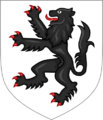
Traditional arms of Madog ap Gruffydd Maelor of Powys Fadog.
-
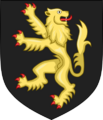
Attributed arms of the mythical King Gwaethfoed Fawr, Prince of Cantref Gwaelod.
-
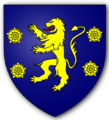
Attributed arms of Prince Gwynfardd of Nanhyfer, Dyfed.
-
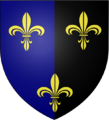
Attributed arms of the Kingdom of Gwent.
-
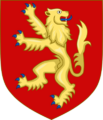
Attributed arms of Elystan Glodrydd, ancestor of many families in Rhwng Gwy a Hafren.
-
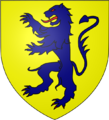
Attributed arms of Prince Cadwgan ap Bleddyn of Powys.
-
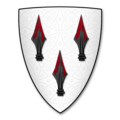
Attributed arms of Nefydd Hardd, Lord of Nant Conwy.
-
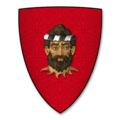
Attributed arms of Marchudd ap Cynan, Lord of Rhos and Abergele.
-
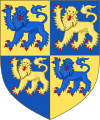
Attributed arms of Dafydd III, Prince of Wales of the House of Aberffraw.
-
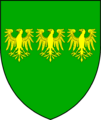
Attributed arms of King Owain ap Gruffydd of Gwynedd.
-
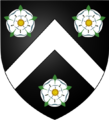
Attributed arms of Dewi Sant (Saint David), the patron saint of Wales.
-
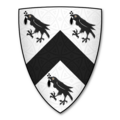
Attributed arms of Llywarch ap Bran, Lord of Menai.
-
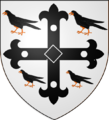
Attributed arms of Edwin, Lord of Tegeingl.
-
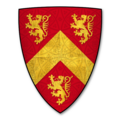
Attributed arms of Hwfa ap Cynddelw, Lord of Anglesey.
-
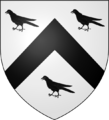
Attributed arms of King Urien of Rheged.
-
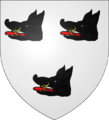
Attributed arms of Cadwgan, son of Elystan Glodrydd.


Learn More
- Armorial of local councils in Wales
- Armorial of schools in the United Kingdom
- Coat of arms of the Prince of Wales
- List of rulers of Wales
- National symbols of Wales
- Welsh Seal
