
Chernobyl disaster facts for kids
 |
|
| Date | 26 April 1986 |
|---|---|
| Time | 01:23 MSD (UTC+04:00) |
| Location | Chernobyl Nuclear Power Plant, Pripyat, Ukrainian SSR, Soviet Union (now Vyshhorod Raion, Kyiv Oblast, Ukraine) |
| Type | Nuclear accident |
| Cause | Reactor design flaws and operator mistakes during a test |
| Outcome | INES Level 7 (major accident) |
| Deaths | 31 direct deaths recorded shortly after the explosion |
The Chernobyl disaster was a major accident at the Chernobyl Nuclear Power Plant in 1986. The power station stood near the city of Pripyat in northern Ukraine, which belonged to the Soviet Union. Early in the morning on 26 April 1986, reactor number four suffered a sudden surge in heat and exploded. This accident destroyed the reactor building and released dangerous radioactive material into the air. Winds quickly blew these particles over Ukraine, Belarus, Russia, and parts of western Europe.
Experts consider it one of the worst nuclear accidents in history. It earned a Level 7 rating on the International Nuclear Event Scale, which indicates a major event. Only one other accident received this highest rating, namely the 2011 Fukushima nuclear accident in Japan. To protect local families, the Soviet government created the Chernobyl exclusion zone and evacuated entire towns. Today, the ruined reactor sits under a massive steel arch, and scientists continue to study the site.
Contents
What Caused the Chernobyl Nuclear Accident?

To understand the accident, it helps to know how a nuclear reactor makes electricity. The plant used uranium fuel to produce heat through a process called nuclear fission. In fission, tiny particles split inside the fuel rods and generate huge amounts of energy. Engineers circulate fresh water through the core to absorb this heat. The boiling water makes steam, which spins a giant steam turbine connected to an electric generator.
Even when operators turn off a reactor, fuel continues to produce heat through radioactive decay. Because of this decay heat, cooling water must keep moving constantly. If cooling stops, fuel rods overheat, bend, and trigger a dangerous nuclear meltdown. The Chernobyl plant relied on special RBMK reactors with 1,661 individual channels that required nonstop pumping. Backup diesel generators were ready to start during a sudden blackout, but took over a minute to speed up.
The Safety Test and Dangerous Delays
Engineers wanted to solve this short delay during an electrical emergency. They wondered if the spinning momentum of the coasting turbine could supply enough power before emergency generators fired up. Similar tests had been attempted in 1982, 1984, and 1985, but none succeeded. In April 1986, plant leaders scheduled a fourth attempt during a planned maintenance shutdown of reactor four.
The test plan called for workers to reduce reactor power between 700 and 1,000 megawatts. Preparations began early on 25 April when operators disconnected the emergency core cooling system. Soon after, electricity managers in Kyiv asked the plant to pause the shutdown to supply evening city power. This unexpected delay left safety systems turned off for many hours, which revealed a weak safety culture. The test was delayed until the night shift took charge, even though night workers had less training for this test.
The Unexpected Drop in Reactor Power

Late that night, operators resumed lowering the power level. As power fell, a byproduct called xenon-135 accumulated inside the reactor core. This chemical element acts as a strong neutron absorber, capturing particles needed to sustain the reaction. Scientists call this problem xenon poisoning. The buildup made the reactor sluggish and caused power to plummet to a very low level.
Senior engineer Leonid Toptunov and supervisor Aleksandr Akimov worked under deputy chief engineer Anatoly Dyatlov. To bring the power back up, the crew pulled out dozens of safety control rods. These rods absorb neutrons, so pulling them out allows fission to increase. By 01:05 on 26 April, the operators had pulled out nearly all rods, violating crucial operating safety rules.
Design Flaws in the RBMK Reactor
The RBMK design had hidden design flaws that made it dangerous at low power. Most modern reactors use water that naturally slows the reaction down if steam bubbles appear. In contrast, the RBMK reactor had a positive void coefficient. When water boiled into steam bubbles inside its tubes, reactivity actually went up. More steam caused more heat, which produced even more steam in an uncontrolled feedback loop.
Furthermore, the control rods had tips made of graphite, a material that acts as a neutron moderator. While the main body of a rod stops the reaction, the graphite tip temporarily boosts fission when first inserted. Engineers had noted a similar power surge at the Ignalina Nuclear Power Plant in 1983, but safety fixes were not installed at Chernobyl. This meant that trying to shut down the reactor suddenly could actually spike its power.
The Reactor Explosion on 26 April 1986

At 01:23:04 on 26 April 1986, the test finally started. Technicians shut off steam to the turbine to watch it spin down. As the turbine slowed, the water pumps slowed with it, reducing cooling water flow inside the reactor. Steam bubbles quickly formed inside the fuel channels. At 01:23:40, an operator pressed the red AZ-5 button to trigger an emergency reactor shutdown.
When the button was pushed, drive motors pushed all control rods downward. As the graphite tips entered the core, they briefly displaced water and caused a runaway power spike. Within seconds, temperatures soared and cracked several fuel rods. High steam pressure burst the metal pipes, and the reactor lost its remaining coolant.
Steam and Chemical Blasts
Trapped steam expanded with incredible force, resulting in a violent steam explosion. This first blast blew the reactor's massive biological shield straight through the roof of the building. Seconds later, a second, more violent explosion tore through the shattered core. This second blast threw pieces of burning graphite and fuel high into the dark night sky.
The explosions destroyed the reactor building and ignited fires on nearby roofs. Oxygen rushed into the open crater, feeding an intense graphite fire that burned for days. The blaze sent a dark plume of radioactive dust, soot, and gases into the atmosphere. Worker Aleksandr Yuvchenko looked up and saw a glowing blue beam of light caused by ionized-air glow.
Emergency Response and Heroic Clean-Up Work

Firefighters from Chernobyl and nearby towns raced to the scene within minutes. Station fire chief Lieutenant Volodymyr Pravyk led his brigade up ladders to battle roof fires. The roof had been built with flammable bitumen, which burned easily. Firefighters focused on saving reactor three from catching fire, successfully protecting its cooling equipment.
The crews worked bravely without proper radiation shielding or working gear. Many received extreme doses of ionizing radiation. The high levels made several responders sick with acute radiation syndrome. Two workers died directly in the explosion, and twenty-eight responders died from intense radiation sickness within months. Many others, like commander Leonid Telyatnikov, survived and were honored for saving reactor three.
Helicopters and the Underground Divers

To smother the burning reactor, Soviet military pilots flew hundreds of dangerous helicopter missions over the open crater. They dropped over 5,000 tonnes of sand, lead, clay, and boron directly onto the ruins. Boron was chosen because it performs neutron capture, which prevents further nuclear reactions.
Underneath the reactor, pools of water sat on lower basement floors. Officials worried that hot molten fuel, resembling lava, would burn through concrete into the water and trigger another explosion. Three plant workers—Oleksiy Ananenko, Boris Baranov, and Valery Bespalov—waded into dark, flooded corridors to open emergency drainage valves. Their courage allowed pumps to empty the water, preventing any further steam blast. Later, miners dug a tunnel beneath the reactor to reinforce the concrete foundation.
The Brave Liquidators

Over the next few years, around 600,000 rescue workers, nicknamed liquidators, helped clean the surrounding land. They shoveled radioactive dirt, washed buildings, buried abandoned machinery, and monitored radiation. The government tried using remote-controlled robots on the damaged roof, but extreme radiation scrambled their electronic circuits.
Instead, human teams wearing heavy lead aprons were called in to clear the roof. Each worker could spend only 40 to 90 seconds shoveling debris into the open reactor pit before retreating. Special helicopters also sprayed sticky chemicals across forests to glue radioactive dust to the ground. These dedicated workers received commemorative medals for their service.
Evacuation of Towns and the Exclusion Zone

The modern city of Pripyat, located less than three kilometers away, housed plant workers and their families. At first, government officials in Moscow kept quiet about the severity of the accident. Local children attended school as normal on Saturday morning, and people fished in the Pripyat River. Ukrainian leader Valentyna Shevchenko was told by ministers that the situation was completely under control.
However, scientists led by Valery Legasov arrived and recognized that radiation levels were unsafe. On the afternoon of 27 April, soldiers and police evacuated all 49,000 residents using over a thousand buses. Families were told they would return in three days, so they left most belongings behind. Soon after, authorities evacuated villages across a 30-kilometer circle, which became the Chernobyl exclusion zone.
How the World Found Out

The Soviet government did not announce the catastrophe right away. On the morning of 28 April, radiation alarms sounded at the Forsmark Nuclear Power Plant in Sweden, over 1,000 kilometers away. Swedish scientists checked their equipment, realized the radioactive dust came from abroad, and questioned Moscow.
Faced with proof from other nations, Soviet television news broadcast a brief 20-second message confirming an accident had occurred. Over following weeks, international news organizations like ABC News covered the global spread of radiation. Many people were moved to new communities, including a newly built town called Slavutych.
Sealing the Ruined Reactor

In late 1986, construction crews completed a giant protective shell around reactor four called the sarcophagus. Made of concrete and steel, it was built quickly to shield neighboring reactors from gamma rays and stop dust from blowing into the wind. Inside the ruins, researchers found hardened fuel that resembled wrinkled tree bark, giving it the nickname the Elephant's Foot.
Because the sarcophagus was built quickly, engineers knew it would not last forever. In 2016, international teams completed the Chernobyl New Safe Confinement, the largest movable land structure in the world. Built on tracks, this arch was slid over the old concrete shell to contain the site. Long-term management of spent uranium fuel continues at the ISF-2 storage site.
Environmental and Long-Term Impact

The accident released chemicals like iodine-131 and cesium into nature. The coniferous forest closest to the blast turned ginger-brown and died, earning the name the Red Forest. Over time, however, the absence of human activity turned the exclusion zone into a thriving wildlife haven. Wolves, wild boars, and rare Przewalski's horses now roam through the empty towns.
Doctors monitored public health closely after 1986. Radioactive iodine caused thousands of cases of childhood thyroid cancer, though most patients made full recoveries with medical care. The United Nations and the Chernobyl Forum determined that up to 4,000 deaths could eventually be linked to radiation among heavily exposed populations.
Global Legacy and Nuclear Safety

The Chernobyl accident changed nuclear energy worldwide. Countries created the Convention on Early Notification of a Nuclear Accident, which requires immediate warnings if an accident threatens other nations. Many nations changed how they built power plants, adding strong outer shells and automated backup systems.
The disaster also influenced world politics. The openness required during clean-up helped encourage glasnost, a policy of transparency that contributed to the peaceful dissolution of the Soviet Union. Today, the story of Chernobyl reminds scientists, engineers, and citizens of the supreme importance of safety, honesty, and care when handling powerful technology.
Images for kids
-
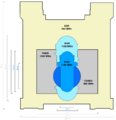
Size comparison of nuclear reactor types
-

Ruins of an abandoned house inside the Chernobyl area
-

Abandoned items left behind in a nursery school
-

Lava-like fuel material discovered under the damaged core
-
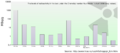
Radiation levels recorded in materials beneath the reactor
-

Official medal awarded to recovery workers
-

Portraits displayed at a memorial ceremony
-

The New Safe Confinement arch covering the damaged reactor
-
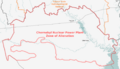
Map of the protected exclusion zone
-

Checkpoint at the entrance to the exclusion zone
-
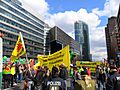
Anti-nuclear protest held in Germany
-

Chernobyl artwork created by Jean Dupuy


See also
 In Spanish: Accidente de Chernóbil para niños
- Individual involvement in the Chernobyl disaster
- List of Chernobyl-related articles
- List of books about the Chernobyl disaster
- List of industrial disasters
- Lists of nuclear disasters and radioactive incidents
- Nuclear fallout effects on an ecosystem
