
Ductility facts for kids


Ductility is a special property that allows a material to stretch out into a long, thin wire without snapping. When engineers pull on an object using pulling force, they watch how it changes shape. If it stretches permanently instead of breaking right away, it goes through plastic deformation. Another closely related property is malleability. A malleable material can be hammered or pressed into thin, flat sheets without cracking. Both of these abilities are very important in building strong tools, cars, and buildings.
When an object bends and stays bent, scientists call this a permanent change. It is different from elastic stretch, which snaps right back like a rubber band. Many metals are famous for being ductile and malleable. For example, gold is the most malleable metal, while platinum stretches into the thinnest wires. Copper is also very ductile, which makes it perfect for electrical cables. However, not every metal behaves this way. Hard materials like cast iron are famous for shattering easily under heavy stress.
Contents
How Ductility Works in Materials Science

In metalworking, materials must bend easily so workers can shape them into useful products. Factories use methods like rolling sheets, hammering parts, and pulling wires through tiny holes. Workers can also shape pieces using a giant mechanical press or a process called pushing through molds. Without ductility, metals would snap into pieces during these steps.
Metals can stretch because of their unique chemical bonds. Inside a metal, tiny particles called electrons leave their outer shells. These free-floating electrons move around easily between atoms. Because these particles flow freely, rows of atoms can slide past one another smoothly. They do not push apart or shatter when hit. In contrast, materials like ceramics have very rigid crystal grids, which makes them crack easily at room temperature.
Other substances can also bend without breaking. For example, many plastics and flexible non-crystalline solids like Play-Doh can change shape quickly. Adding other elements can change these properties in metals. When makers add more carbon to steel, the metal becomes stronger, but its ductility decreases.
Measuring How Far Metals Stretch
Scientists measure how stretchy a material is by doing a pulling test called a tensile test. They hold a sample tight and pull it until it breaks in two. During this test, they track the change in length and the thinning in the middle. The engineers calculate the change with a simple equation:
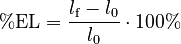
In this math formula,  is the starting length and
  is the final length. A higher percentage means the metal stretched a lot before failing. Scientists also study how materials shrink in width when pulled lengthwise.
Temperature Changes and Brittle Fractures

Temperature has a huge effect on how materials break. When metals are warm, their internal defects, called atomic dislocations, slide around easily. This lets the metal bend smoothly under heavy loads. However, if the temperature drops too low, the atoms lock into place. The metal suddenly turns brittle and can shatter upon impact.
The exact point where this change happens is called the ductile-brittle transition temperature. When ships or bridges get colder than this point, they can crack without warning. During World War II, several cargo ships cracked in freezing ocean waters because their steel became too brittle.
Engineers test materials to make sure they stay safe in cold environments. They use a swinging pendulum machine called a swinging hammer test to smash metal samples. By testing metals at different temperatures, engineers choose the safest materials for airplanes, bridges, and arctic machines.
See also
 In Spanish: Ductilidad para niños
