
Frankenburg Dice Game facts for kids
The Frankenburg Dice Game (called Frankenburger Würfelspiel in German) was a very important event in 1625. It happened just before the Upper Austrian Peasants' War. This event was part of a bigger historical time called the Counter-Reformation. The game took place in a field called Haushamerfeld in Pfaffing. At that time, Pfaffing was part of the Frankenburg area. The name "dice game" was first used much later, in the 1800s. The dice you see on the local coat of arms for Pfaffing are a symbol of this event.
Contents
History of the Dice Game
Upper Austria in the 1600s
In 1620, a big war called the Thirty Years' War began. At this time, the Habsburg rulers needed money for the war. So, they gave control of Upper Austria to Duke Maximilian I of Bavaria.
Changes and Unrest
After taking control, Duke Maximilian sent many tax collectors to Upper Austria. He also sent Catholic priests. This was part of the Counter-Reformation, which aimed to bring people back to the Catholic Church. A rule at the time was "Cuius regio, eius religio" (meaning "whose realm, his religion"). This meant that the ruler decided the religion for everyone in their land.
The Frankenburg Uprising
In May 1625, a Catholic priest was going to be placed in the Protestant church in Frankenburg. This made the local people very angry, and they started an armed uprising. They chased the new priest away. Then, they surrounded the castle where the county's keeper lived. The rebels were promised that they would not be punished if they stopped their siege. So, they gave up.
The Dice Game Event
Count Adam von Herberstorff was the Bavarian governor in the region. He also promised that no one would be harmed. On May 15, he called all the men from the area to Haushamerfeld. This field was between Frankenburg and Vöcklamarkt. About 5,000 men gathered there. Among them were 36 men who were thought to be the leaders of the Frankenburg uprising.
Bavarian soldiers surrounded these 36 men. Herberstorff then told them they were sentenced to death. However, he said he would "pardon" half of them. To decide who would live and who would die, he made the 36 men play a dice game in pairs.
The Outcome
Sixteen of the men who lost the dice game were put to death. Two other losers were pardoned. Later, another person who had helped in the uprising was also caught and put to death. This meant a total of 17 men were punished with their lives.
This harsh punishment did not make the people quiet, as Herberstorff had hoped. Instead, it made them even angrier. It became the main reason for a carefully planned peasant uprising in Upper Austria, which began in May 1626.
Cultural Importance
Theatre Play
Since 1925, the dramatic events of the Frankenburg Dice Game have been re-enacted. Over 400 amateur actors take part every two years. Many of these actors are even descendants of the people involved in the original event. This play has become a popular cultural and tourist attraction in Frankenburg am Hausruck.
In Cinema
The Frankenburg Dice Game has also been featured in a documentary film.
- Alfred Jungraithmayr: Frankenburger Würfelspiel. This is a 98-minute documentary film from Germany, made in 1988.
Images for kids
-
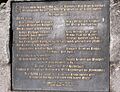
Memorial stone at the scene of the Frankenburg dice game
-
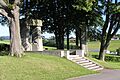
Monument at the placed of the Frankenburg dice game


Sources
- Das Frankenburger Würfelspiel (historisches Laientheater)
- Frankenburg Dice Game in Austria-Forum (at AEIOU)
- Volksbrauchtum und volkskundliche Kostbarkeiten: Frankenburger Würfelspiel in Austria-Forum (postage stamp)
- Der Henker und das bittere Würfelspiel Wiener Zeitung 21 June 2012, Supplement "ProgrammPunkte", S. 7. Retrieved 26 June 2012.
