
Gastrotheca litonedis facts for kids
Quick facts for kids Gastrotheca litonedis |
|
|---|---|
 |
|
| Conservation status | |
Scientific classification  |
|
| Kingdom: | Animalia |
| Phylum: | Chordata |
| Class: | Amphibia |
| Order: | Anura |
| Family: | Hemiphractidae |
| Genus: | Gastrotheca |
| Species: |
G. litonedis
|
| Binomial name | |
| Gastrotheca litonedis Duellman & Hillis, 1987
|
|
| Script error: The function "autoWithCaption" does not exist. | |
Script error: No such module "Check for conflicting parameters".
Gastrotheca litonedis is a special kind of frog that belongs to the family Hemiphractidae. These frogs are sometimes called "marsupial frogs" because the female carries her eggs in a pouch on her back, much like a kangaroo carries its baby! This particular frog is found only in Ecuador, a country in South America. When an animal or plant is found only in one specific place, it is called endemic.
Contents
About the Marsupial Frog
Gastrotheca litonedis was first described by scientists Duellman and Hillis in 1987. It's a small amphibian, meaning it can live both on land and in water. Like all frogs, it starts its life as a tadpole before changing into an adult frog.
Where Does This Frog Live?
This unique frog lives in specific habitats high up in the mountains of Ecuador. Its natural homes include:
- High-altitude shrubland: Areas with small bushes and shrubs found at high elevations.
- High-altitude grassland: Grassy areas also found in the mountains.
- Rivers: It lives near freshwater rivers.
- Intermittent freshwater marshes: These are wet, marshy areas that sometimes dry up and then fill with water again.
These habitats are often cool and misty due to their high elevation.
Why Is This Frog in Danger?
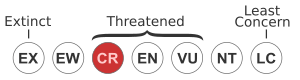
Sadly, Gastrotheca litonedis is considered a critically endangered species. This means it is at a very high risk of disappearing forever. The main reason for this is habitat loss.
What is Habitat Loss?
Habitat loss happens when the natural places where animals live are destroyed or changed. For this frog, it means that the shrublands, grasslands, rivers, and marshes it needs to survive are shrinking. This can happen because of:
- Farming: Land is cleared for crops or livestock.
- Building: New towns, roads, or other structures are built.
- Pollution: Water or land becomes dirty and unsafe for the frogs.
- Climate change: Changes in weather patterns can affect their sensitive habitats.
When their habitat is lost, these frogs have nowhere to live, find food, or reproduce, which makes it very hard for them to survive.
See also
 In Spanish: Gastrotheca litonedis para niños
